
We understand the necessity of forgiving others and ourselves, but what if we don’t? Will it hinder our healing? Does it cause disease?
As a follower of God, we know we have to forgive. The Bible talks about forgiveness many times. But is there a connection between forgiveness and healing?
I can tell you from experience when we live with unforgiveness it tends to grow. unforgiveness leads to bitterness, resentment, retaliation, anger, violence, and murder, not actual murder but we murder with our hearts and tongues.
The relationship between forgiveness and healing
From my reading, these are some things I’ve learned and have helped me understand not only my unforgiveness but the healing that came along with it.
From a nervous system perspective, a lack of forgiveness and all the emotions that come with it can cause us to live in a sympathetic state where there is no healing. It is the fight side or fight vs flight.
From a physiological state of disease, the cortisol and adrenaline drip into our bodies and amplify any symptoms we may live with. Its our body that physiologically prepares for battle.
There’s something called the “polyvagal theory that says that once we are in this place, these thoughts will follow:
“How dare they do this to me… they deserve to suffer…they are evil…I hate them for what they have done to me…”
Most counselors teach that anger follows thoughts. However, according to the Polyvagal theory, it’s the sensation in the body that comes first. Then the thoughts come as a reflection of the emotional state.
All this does is amplify the fight state and make things worse. It’s the turmoil of the heart with no forgiveness that keeps us in a survival state where there is no healing because it goes against God’s design.
Most people when they experience unforgiveness, just want to run away or put up walls because they shut down and get depressed (which is what I did) When this happens, we’ve enter into what is called the “Dorsal” state of the nervous system.
The anger is still there, but we can’t feel it, because we’ve numbed ourselves to it.
When we numb ourselves or put up walls it’s like we are nursing our wounds, rather than exploring why and how we’ve reacted to the offense, we think we are rescuing ourselves by getting angry at the offender and we become the persecutor. But this only masks the real pain.
Does unforgiveness cause sickness?
There’s a quote that helps us understand this,
“Unforgiveness is like drinking poison and waiting for the other person to die.”
You’ve probably heard someone say, “God won’t heal or forgive if we carry unforgiveness in our hearts. I would say that it’s more accurate to say that a lack of forgiveness impacts us at a cellular level making healing difficult.
Basically, we are plugged into ourselves into the energy of the person who hurt us.
Caroline Leaf said,
“We have an experience that is taken in as a form of energy, it changes the brain and the body and changes how we function. So the experience is toxic, it creates a disturbance in us. Forgiveness helps us sever the toxic hold someone who hurt us had over us. It helps us disconnect from the source of our pain and find true healing.”
Our unforgiveness causes us to live in a fight-or-flight response. Our bodies respond to unforgiveness the same way we would respond to trauma.
Karen Lee Swartz is a professor of Psychiatry and Behavioral Science and she puts it this way,
“Chronic anger puts you into fight or flight mode, which results in numerous changes in heart rate, blood pressure and immune response. Those changes, then, increase the risk of depression, heart disease, and diabetes, among other conditions. Forgiveness, however, calms stress levels, leading to improved health.”
We can’t afford to hold onto grudges.
Yes, it’s true that there are plenty of people with unforgiveness who never get sick and plenty of forgiving people who are chronically ill. I’m not saying I have all the answers because I don’t. I can only speak to the experiences I have had. And what I have learned from it,
Here are a few things I’ve learned,
It’s important feel the pain and discomfort. You have to feel in order to heal. I don’t believe in the just let it go mentality because psychologically it doesn’t work.
Sitting with the pain and discomfort allows the emotion that is in the body to move.
If we constantly tell ourselves to just ignore the pain and continue to shove it inside deeper and deeper it only makes things worse. We can’t let go of anything without first really experiencing the discomfort because then the emotional wound will still there lying dormant.
In most households, we learn that anger is wrong and the children get punished for being angry. Angry is a survival state and a God-given emotion. “Be angry and do not sin.” It is okay to be angry but don’t act on it. Every time we are angry, we should check ourselves to see if we are upset at the things God hates. Otherwise, we may be angry without a cause and give opportunity to the devil.
When we hold our anger in we learn to bury the emotion. For many years I held in my anger and rose above it. But the emotional hurt was still there and every time it would surface I would shove in down into my soul again. Now I realize that letting the emotion out is what releases it.
It’s important to realize that a part of us is hurt and it’s good to honor and validate that part. If we can we should have a difficult conversation with the person that hurt us if it is safe to do so. I wish I would have had that difficult conversation with my mother. But it’s too late. I will never know why she did the things she did.
When we recognize that we are in a survival state we need regulation. The prefrontal cortex switches off so we can no longer think rationally.
If there is a lot of energy in your system it’s important to transfer that energy. Have you ever noticed that after a good cry, you feel better? We can transfer that energy by punching a punching bag, a pillow, or anything to get that negative energy out. Then follow that by going for a walk in nature, cuddling with your animal, or doing mind-body exercises.
Forgiveness is only something we can do when we are in the ventral part of the nervous system. It’s the part associated with social valuation and perspective-taking and controls our cognitive areas. The involvement of supposed brain regions may play a vital role in facilitating the transformation from decisional forgiveness to emotional forgiveness.
Forgiveness is always easier when you do it in God’s strength. Feeling the emotion on our body is important to process, but ruminating is a “head thing” which will keep us in survival mode.
When we have unforgiveness, we make the situation worse by telling ourselves stories that either keep us a victim or make us into blamers.
We need to ask our what thoughts we have about ourselves and the situation. If we are not quite sure there’s a practice called free style writing. It’s where you start writing and allow your subconscious to do the writing. Write all you feelings and thoughts down. Don’t try and stop them, just let them flow out of you. After writing you can tear it up and throw it away, or even burn it. the point is to get all your thoughts out of your head.
If you are playing the victim you are in a place of defeat. We tell ourselves that we have the right to feel this way. And we tend to blame the other person. In all actuality, it’s the other person that hurt us, but it’s our response to that hurt that gets us in the end. Our response reinforces the unforgiveness. It tells is that the other person is actually worse than they actually are.
My mother had a reason in her mind for treating me the way she did. Maybe it was brought on by something she experienced in her life. Maybe it’s the way she responded to her own experiences in life. I’m sure there was a reason I just don’t know what that reason was.
Often the story we tell ourselves isn’t the truth. There’s something called the “anger iceberg. There may be a whole heap of emotions going on underneath the anger we feel.
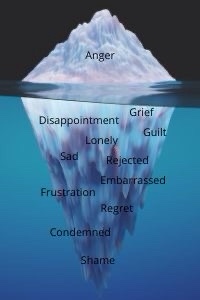
It’s easier for us to be in a state of unforgiveness than to face our deep-down fears and emotions.
We need to know exactly what’s going on in our brains if we are to ever be free. We need to set outside of our own perspective and see the bigger picture.
- Why did they do what they did?
- What kind of childhood did they have?
- Does that person have a different set of values, culture or belief system?
- What role did you play? Did you fail to set a boundary? We’re your expectations go high?
It’s not about being insensitive or excusing any wrongs. Sometimes there are unresolved traumas in the past that contribute to our present-day hurts.
Think of it this way: py may have pulled the trigger, but who is it that loaded the gun? In other words our triggers are messengers be they inform us what parts of us need to heal.
Asking ourselves these questions gives us a bigger picture of the events that happened. It’s easy to filter out contributing factors when we’re upset and in a sympathetic fight-or-flight state.
In order to replace a bad thought it needs to be replaced with a good thought. The key to forgiving others is to stop focusing on what they did to you and start focusing on what God did for you.
We can become defiled your own inner thoughts of accusation.
When you notice an unhelpful thought pop up ask yourself:
- Does this thought it belief serve me?
- What is a thought or belief that would better serve me?
Guard Your Mouth
It’s tempting to go around telling others of the wrong that was done. I’ve actually done this for years. But what does this really achieve? We might want someone to agree with us to justify us feeling the way we feel. Or we enjoy the comfort someone else will give us.
When someone else feels the same way about your enemy, it gives us a sense of connection with them.
It can be healthy to discuss feelings with a therapist or spouse, but slatting people and gossiping about them is unhelpful.
I once read a message about the spirit that put Jesus on the cross. The crowds who wanted to crucify Jesus had never met Him. They judged Him based on hearsay.
I was thinking when we insist on telling people the wrongs of others against us, we are hoping that they will be like the crowd that crucified Jesus
If we choose to teach others about our experiences and mistakes. We are helping people rather than trying to crucify the other person.
The Bible tells is that we hold the power of life and death in our hands with our words.
Matthew 5:44-45 Jesus tells us,
“Love your enemies, bless those who curse you, do good to those who hate you, and pray for those who persecute you, that you may be children of your Father in heaven. For He makes His son to rise on the evil and the good, and sends rain on the just and the unjust.”
This may be an act of obedience, to begin with, but over time your heart and mouth will align.
Bear Fruit
We see to set the intention to not allow the past to dictate our thoughts and feelings.
When we hold onto the past, rather than embracing forgiveness, our present and future will be impacted, even to the point of our healing. We need to experience peace on the inside before we can hope to have peace on the outside.
It took me nearly 30 years to forgive my mother. And I nearly destroyed my life and the others around me in the process. Our behavior must change go bring forth the fruit from our repentance. We need to come to a place of peace regarding what was done to us.
When we repent and genuinely pray for those who hurt us, God changes our hearts so we feel love and compassion for them.
I will never know why the things in my life happened. But I can be at peace knowing God is a just judge and He looks at the hearts of people and not their flesh.
Usually, we see each other in the flesh. I believe that God wants us to learn to see people in terms of who they are in Christ
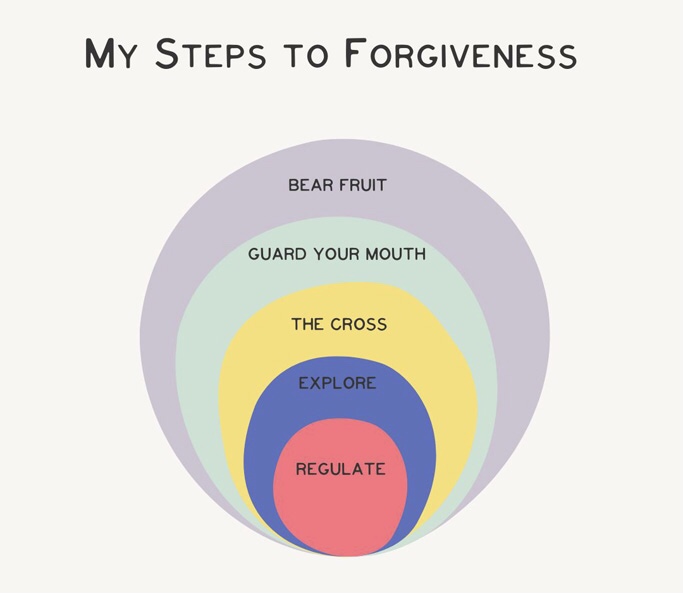
When we refuse forgiveness, we argue with reality, which causes internal stress in our bodies that can cause health issues. Finding a way to peace is essential for emotional and physical healing.
If we’re are not forgiving, it will shape how we see the present and the future, just like trauma. Isn’t life difficult enough without this added stress?
Bitter thoughts precede imprisonment to something that destroys us. To have a healthy life we have to keep the ball out of the hand of the enemy.
When I think of all my wrongdoings, both those I’m aware of and those I am unaware of, Jesus forgave me. How can I not extend the same grace to others?
It’s important to remember to give ourselves grace and forgive ourselves. But it takes practice,
Despite everything I’ve just said, when Jesus healed people there were no doubt some unforgiveness. He healed many, surely some of these people held offenses, grudgesm or anger. To me this shows that we can never disqualify ourselves of others from receiving forgiveness.
I surely did not deserve to be healed of cancer. I’ve done some terrible things in my life. But God chose to heal me and forgave me when I asked.
Healing from the effects of so many years of harboring unforgiveness has taken me years of hard work and tears. It’s not an easy process but it is well worth it. I couldn’t have done it without God’s forgiveness and love. God gave me a helper Holy Spirit which empowered me to forgive others and replace my negative thoughts and feelings with love and compassion.
 From Pity to Praise