
By breaking his vow before God, David also propane His Holy name. He was not to “swear falsely by, My name, so as to profane the name of the God” (Leviticus 19:12). His actions also violated the Third Commandment, “You shall not take the Lord’s name in vain” ( Ex 20:7, Dt 5:11). Even if he had only broken one Commandment, he would have broken them all, “For whoever keeps the whole law and yet stumbles in one point, he has become guilty of all” (James 2:10). David came to appreciate and write Psalm 51 where he sought God’s mercy and grace only after God showed him his sins. David was a man after God’s own heart not because he was perfect. Instead, he was a godly man because he repented of his many sins.
- David’s actions resulted in misery and sorrow. David stated that “my sin is constantly before me” (Psalm 51:3). When someone longs for the things of the flesh, God will eventually hand that person over to their lusts (Romans 1:28). But the pleasure Satan offers for the adulterer does not last long (Hebrews 11:25, Luke 12:19-20). About sinners, David said: God gave them their request but sent leanness into their soul (Psalm 106:105). “So is the one who gets into his neighbor’s wife, whoever touches her will not go unpunished” (Proverbs 6:26-29). God also warns of “curses” for those who submit to covetousness (Lev. 26:14-37, Dt 27:15-28, 28: 15:68). Before Nathan confronted David, God softened his heart for repentance by removing his good health: “When I kept silent about my sin, my body wasted away through my groaning all day long. For day and night, Your hand was heavy on me, my vitality was drained away as with the fever heat of summer. Selah” (Psalm 32:3-4). Poor health can have many causes. Sometimes, people who are mostly blameless in their walk can suffer terrible afflictions. But if we have hidden sins our health is suffering. God is likely trying to reach us.
- Repent of your sins. God spared David’s life because he repented (Psalm 51:4, 2 Samuel 12:13). To be saved we must also repent to Jesus. In preparation for Jesus, John the Baptist called all sinners to repent: “Repent, for the kingdom of heaven is as hand” (Matthew 3:2). Jesus began His ministry with a call to repentance: “From that time Jesus began to preach and say, Repent, the kingdom of heaven is a hand” (Matthew 4:17). But the tax collector, standing some distance away, was even unwilling to lift his eyes to heaven but was beating his breast, saying, “God be merciful to me the sinner!” (Luke 18:13). His disciples also called on sinners to repent so that Jesus could wipe away their sins: “Therefore repent and return, so that your sins may be wiped away, in order that times of refreshing may come from the presence of the Lord” (Acts 3:19). If you confess your sins, Jesus promises to forgive you: “If we confess our sins He is faithful and righteous to forgive us our sins and to cleanse us from all unrighteousness” ( 1 John 1:9). If you have hidden sin, confess them to Jesus without delay.
- Give thanks that God is merciful. David appealed to God’s mercy: “Be gracious to me, God, according to the greatness of Your compassion wipe out my wrongdoings” (Psalm 51:1, Ex 34:6-7). God is merciful each time you repent and return to Him: “The Lord’s acts of mercy indeed do not end, for His compassion do not fail. They are new every morning, great is His faithfulness” (Laminations 3:22-23). “Then you will say on that day, “I will give thanks to You, Lord, for although You were angry with me. Your anger has turned away, and You comfort me” (Isaiah 12:1). “For a brief moment I abandoned You, but with great compassion, I will gather you” (Isaiah 54:7). He is merciful in the face of our sins because He is filled with compassion and love. “For the Lord, your God is a compassionate God, He will not abandon you not destroy you, not forget the covenant with your fathers which He swore to them” (Deuteronomy 4:31). Doesn’t God deserve our praise because He is filled with compassion and mercy?
2. Honesty: Restoration Requires honesty regarding your sinful nature.
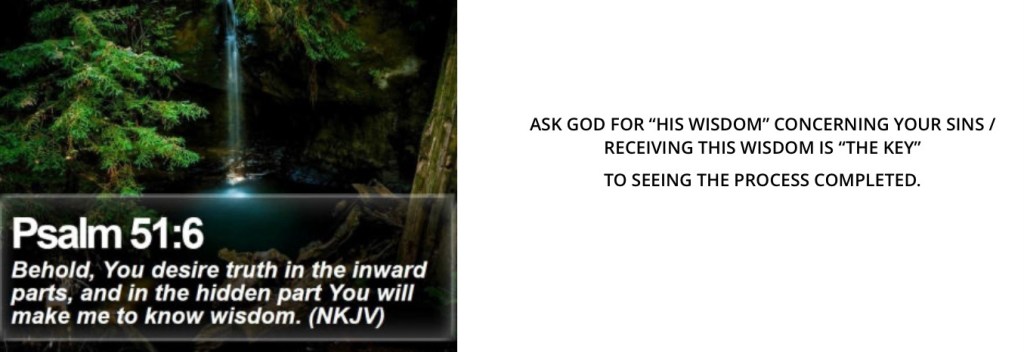
- David was honest before God regarding his sinful nature and his need for God’s help. David confessed that he was a sinner and that he needed God to keep him from sinning again: “Behold, I was brought forth in guilt, and in sin my mother conceived me. Behold, You desire truth in the innermost being, and in secret You will make wisdom known to me” (Psalm 51:5-6). When Adam sinned, he blamed Eve (Genesis 3:12). Eve in turn blamed the serpent for deceiving her (Genesis 3:13). David offered no such excuses. David confessed his sins.
- All have fallen short and need salvation. David confessed that he was sinful by nature (Psalm 51:5). He later proclaimed that all mankind is evil from birth: “The wicked have turned away from the womb those who speak lies go astray from birth” (Psalm 51:3). He, therefore, proclaimed that not is righteous before God: “They have all turned aside, together they are corrupt, there is no one who does good, not even one” (Psalm 14:3). “Do not enter into judgment with Your servant, for no person living is righteous in Your sight” (Psalm 143:2). Through his mistakes and his God-given wisdom, Solomon also declared that all have sinned: “Indeed there is not a righteous man on earth who continually does good and never sins” ( Ecclesiastes 7:20). “When they sin against You (for no person who does not sin). and You are angry with them and turn them over to an enemy, so that they take away captive to the land of the enemy, distant and near” (1 Kings 8:46). “Who can say, I have cleansed my heart, I am pure from my sin?” (Proverbs 20:9). God only spared Solomon’s end-of-life revelations to form two of the central tenants of universal sin and the need for salvation (Romans 3:23). The prophet Jeremiah made a similar revelation about our sinful hearts: “For My people are doing evil, but they do not know how to do good” (Jeremiah 4:22). If you believe that you are without sin, the truth is not within you: “If we say that we have no sin, we are deceiving ourselves and the truth is not in us” (1 John 1:8). Every person must be honest regarding their sins with God.
- Acknowledge that your salvation is not earned according to your works. Moss was a murderer. He was a sinner who did not deserve to be God’s Lawgiver. Likewise, David, Solomon, and Jehoram were also murderers, and every king from Solomon to Jehoram either tolerated or practiced idolatry. They were all sinners and none of them deserved to be king. But God uses these sinners out of mercy and grace. You or I do not earn our salvation. “For by grace, you have been saved through grace of the Lord Jesus, in the same way as they also are” (Acts 15:11). “being justified as a gift by His grace through the redemption which is in Christ Jesus” (Romans 3:24). If you feel that you will be saved based on your good works or for being a good person, “then Christ died needlessly” (Galatians 2:21).
- There is no sin that we can hide from God. Nathan told David that his secret sins would be made public (2 Samual 12:12). Unlike David, Jospeh did not give in to the advances of Potiohars wife because he knew God would have known (Genesis 39:9). “The eyes of the Lord are in every place, watching the evil and the good” ( Proverbs 15:3). “And there is no creature hidden from His sight, but all things are open and laid bare to the eyes of Him with whom we have to do” (Hebrews 4:13). “But if you will not do so, behold, you have sinned against the Lord, and be sure your sin will find you out” (Nahum 32:23). If was a lack of fear and respect for God that brought David into temptation: “The fear of the Lord is the beginning of knowledge, fools despise wisdom and instruction” (Proverbs 1:7, Psalm 110:10, Job 28:28). And, to fear the Lord we must hate evil: “The fear of the Lord is to hate evil” (Proverbs 8:13). Are there any sins that you are trying to hide? I know I have a few I would like to keep under lock and key. But God sees everything.
- A godly person only speaks truth. Davis stated “You desire truth in the innermost being” (Psalm 51:6). Solomon warns that “life and death are in the power of the tongue” ( Proverbs 18:21). And “a wholesome tongue is a tree of life” (Proverbs 15:4). God condemned those who refuse to repent of their lies: “For He said, surely, they are My people, sons who will not deal falsely” ( Isaiah 63:8). “ You shall not deal falsely, not lie to one another” Leviticus 19:11). “Therefore, laying aside falsehood, speak truth each one of you with his neighbor, for we are members of one another” (Ephesians 4:25).
- God’s hidden wisdom is found in His Word and the Spirit. David depended on God to stay free from sin. “In secret You will make known to me” (Psalm 51:6). He needed the wisdom of God’s Word to guide him: “Your Word is a lamp to my feet and lights my path” (Psalm 119:105). “Your Word is truth” (John 17:17). When we read the Word and pray, the Spirit will give you wisdom: “But the Helper, the Holy Spirit whom the Father will send in My Name, He will teach you all things, and remind you of all that I said to you” (John 14:26). When we read the Word and pray for the Spirit to give us wisdom we find the guidance to live life abundantly. “But if any of you lacks wisdom, let him ask God, who gives to all generously and without reproach, and it will be given to him” (James 1:5).
 From Pity to Praise