
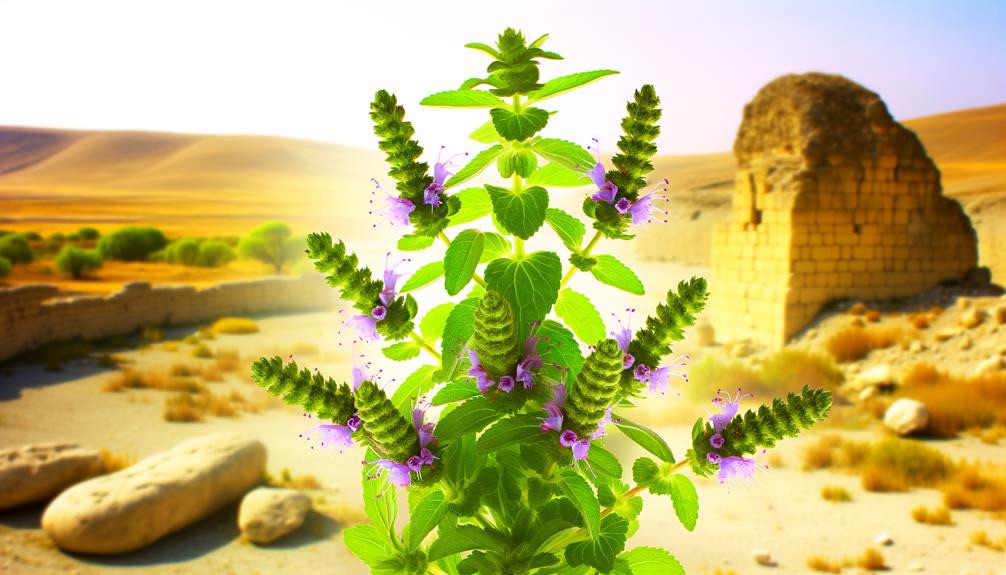
In the Bible, the hyssop plant is primarily used for purification and spiritual cleansing, a ritual to apply blood or water to remove ritual impurity.
It was famously used to paint lamb’s blood on the doorpost during the first Passover (Exodus 12:22) and to offer Jesus vinegar on the cross (John 19:29).
Here are key biblical uses and significance:
- Ritual Cleansing: Hyssop as used in ceremonies to purify people from leprosy (Leviticus 14:4-6) and for verification from contact with the dead (Numbers 19:18), often in combination with cedar wood, and scarlet yarn.
- Symbol of Purity: In Psalm 51:7, King David cries, “Purge me with hyssop, and I shall be clean,” highlighting its symbolic role and seeking forgiveness and spiritual cleansing.
- Passover (Exodus 12:22): The Israelites use a branch of hyssop as a “paintbrush” to apply the blood of the lamb to their doorposts, signifying protection from the plague of death.
- The Crucifixion (John 19:29): Hyssop is mentioned when the Roman soldiers offer Jesus a sponge dipped in wine vinegar on a stalk of hyssop, which closes the loop on the theme of sacrifice.
The connection between Jesus saying “It is finished” and the hyssop stalk used to offer Him wine in John 19:29-30 is a profound link to the Old Testament. The hyssop branches were used to apply the lamb’s blood to the doorposts to escape death in Exodus 12:22, and identifying Jesus as the final Passover Lamb, whose death “finished” the need for further sacrifice and purchased salvation.
I find it amazing that throughout the Bible the hyssop plant was used intentionally to prove Jesus was in control of His death, fulfilling prophecy, rather than being a helpless victim.
The final act of consuming the wine using a hyssop branch immediately precedes Jesus’s declaration that the mission of salvation and forgiveness for us is finished.
Remember, hyssop as used in biblical rituals as a tool for ceremonial cleansing, purification, and protection.
 From Pity to Praise