There are many times in our lives when trials and tribulations seem to consume us. David in Psalm 42:3 said, “My tears have been my food day and night, while they say to me all day long, ‘Where is your God?” David was longing for God’s presence here.
God certainly has not forsaken His people, but at low moments all of us could testify that there are times when it feels like He has. So, what can be done to be reassured that He did not forsake us? How do we find the hope of God’s care when we are feeling low, and in the grind of inner turmoil? I know what David did, he talked to himself. In Psalm 42:4 he says,
“These things I remember and I pour out my soul within me, how I used to go with the crowd, and led them to God’s house, with a voice of joy and praise, a multitude keeping a holy day.”
David said these things to himself. Sometimes healthy positive self-talk is good therapy. He was saying in Psalms, 42 that when he is blue, he will call to remembrance the past days of victory when he felt God’s presence. In effect saying, “those were the days, those were the days of blessing, joy, and thanksgiving.” After remembering these days, he asks his own soul,
“Why are you in despair, my soul? Why are you disturbed within me? Hope in God! For I shall still praise Him for the saving help of His presence.”
David’s remembrance of God’s past faithfulness should really encourage him.
When our souls are in turmoil it helps to look back to past victories and call to mind specific things God has done for us. Remember the Lord of your past is the Lord right now -God is unchanging.
One thing I’ve learned, is to not only focus on your immediate circumstances or you will likely miss God’s work in your life.
When life gets hard, step back remind yourself of God’s promises. Widen your perspective to what He might be doing through a time of difficulty, remind yourself that you just don’t want to faithful when things are easy. Ask God for wisdom, and then resolve yourself to pass the test in front of you with unwavering faith.
Interview someone — a friend, another blogger, your mother, the mailman — and write a post based on their responses.
My interview would be with a police officer. A do know a few police officers. Family friends I’ve heard about the life they have chosen.
Being a police officer is an incredibly demanding job, both physically and emotionally. It’s not just about enforcing the law, it’s about handing the aftermath of violence, crime, and often heart wrenching situations.
Overdose calls -officers often are the first on the scene, having something called Narcan that is used to save their lives.
They strive to arrest the people who sell drugs that don’t care who they kill, or what they do for their money. Police officers are thrown into violent confrontations and tense stand offs.
Violence is part of the landscape for many officers. Domestic violence, gang violence, death and trauma. They are part of that.
The mental and emotional burdens they endure is intense. They have ways to cope with the trauma they see everyday that the public eye sometimes doesn’t understand. And this trauma can lead to PTSD, anxiety or depression. This is compounded by societies expectation of how “people think they should act.”
Being a police officer is constant strain and exhaustion as they are often forced to move from one crisis to another. It’s a fast paced, high pressure environment that doesn’t leave much room for self care.
The human toll of this job it real, and the emotional scars aren’t always visible. They end up carrying a heavy burden that is not only difficult for them but is full of hard to understand for people that live outside the profession.
It’s a life full of difficulties, moments of heroism, and the ever present weight of knowing that the next call could bring something tragic.
The way some people treat police offenders is down right pathetic.
It’s a life they have chosen to protect us. Yet they are disrespected by so many. It’s about time people start realizing what they go through for us -the law abiding citizens.
The police officers I know wouldn’t trade their jobs for anything. But they also have to deal with the aftermath of societies baggage.
People wrongly believe a whole group is bad based on the actions of one person due to a combination of cognitive biases or evolutionary instincts. Our brains can mistakenly apply negative attributes to make all members of the group. It’s an awful way to think.
There’s a saying most Americans know, “You can’t pour from an empty cup.” But in a world that glorifies hustle, selfishness, and constantly showing up for others this wisdom often gets lost in the noise. We are praised for being available, responsive, and productive. Rarely are we encouraged to pause, refill, and recharge. But the truth is when we fill our own cup first, we don’t just serve ourselves, we can serve the world better.
Giving all your time, energy, and emotional bandwidth doesn’t equal love and success. Wearing burnout like a badge of honor, and convincing ourselves that self-sacrifice is noble and necessary isn’t the answer. Over time we can find ourselves unraveling, our patience wearing thin, and our sense of self grows distant.
Realizing that we’ve been running on empty for far too long can be a powerful lesson to teach us that we must fill our own cup first -then and only then can the world truly benefit with what we have in overflow.
I think many of us are taught from an early age that putting others before us is a noble act, and self-sacrifice isn’t a virtue, in fact it’s a fast track to burnout.
Our ability to give to others is only as strong as our ability to stay nourished -emotionally, mentally, physically, and spiritually. Giving should come from a place of abundance, not depletion.
There’s a difference between giving and people pleasing. Between kind and bring available 24/7. Between life and self-neglect.
It took me many years to realize there is a huge difference.
You’re not selfish for needing space.
You’re not cruel for setting boundaries.
You’re not less loving for saying Not today.
The most compassionate thing we can do for the world is to come back to ourselves.
Refill your cup.
Filling you’re cup doesn’t mean a spa day or vacations though those things do help. It’s about tending to you’re needs in ways that are sustainable and soul-nourishing.
Things like:
Setting boundaries without guilt.
Prioritizing sleep and rest.
Saying no to preserve your yes.
Spending time with God to reconnect with yourself.
Choosing relationships that energize rather than exhaust.
Choosing yourself every single day is not a selfish act, it’s a sacred one.
When our cup is full -truly full we are able to radiate calm, clarity, and creativity. Our energy can become contagious.
It’s true our words carry weight, but it’s important to know that our presence can comfort and uplift. People are not drawn to exhaustion, or effort, they are Drawn to peace and authenticity.
When we no longer feel the need to overextend or overcompensate. We’re not giving out of duty, but offering from the overflow. And that overflow can become a gift for others.
We don’t need to keep giving from emptiness, or stretch our soul thin, hoping that someone will finally see how much you care. You don’t need to prove your worth by how exhausted you are at the end of each day.
Because real love, real joy, and real presence doesn’t come from depletion it comes from overflow.
We have been taught to internalize guilt about rest and pleasure. We have come to think that doing nothing is being lazy. But rest is not unproductive it’s regenerative .and pleasure isn’t indulgent it’s vital.
Begin by making space for yourself, and model what its means to live with integrity. And give others permission to do the same.
It’s not about overhauling your life overnight, it’s about beginning with one small step that says “I matter.” Maybe it’s about giving yourself 10 minutes before you check your phone, or going for a walk to enjoy nature, or sitting down having a cup of coffee or tea before multitasking, or spending 10 minutes with God praying or reading His Word before you begin your day.
One small act can begin to restore the trust you have in yourself they burnout steals.
Our well-being is not a luxury it’s a foundation. We are vessels in which live, wisdom, and impact flow. But we are also the source, and when we honor both we can create a life that just doesn’t survive -it thrives.
Remember you are not only the cup, you are the fountain.
In life, we often forget that it doesn’t matter what happens to us or where we come from. It matters what we do with what happens with what we’ve been given.
Part of everyone’s journey in life is we’ve all been in your in someway. There’s a biblical perspective that helps us become more resilient as we work through life challenges with God’s help.
Dealing with our woundedness is a skill we must master. Failure to do so could lead to a life of mental, emotional, and spiritual impairment.
Whether our woundedness comes from a relationship, a business failure, moral failure, or our stupidity and lack of wisdom, or even a preponderance of pride we must learn how to overcome it.
I have made some dumb mistakes, but I’ve also been wounded by others. No matter how the wound occurred it became a time of trial. But it can also be part of God‘s refining process.
Woundedness is part of what it means to be human. Life wounds, all of us to one extent or another.
And there lies the problem. Culture wants us to hide everything inside and pretend it doesn’t exist. But I don’t think that’s the answer. I’ve healed more by opening up about my woundedness, then I ever have pushing it down inside further and further.
The Bible and Trauma
The scriptures reveals that trauma and trials are a normal part of being human. God can use the pain to draw us into a deeper and more intimate relationship with Him. As we work through our issues, we experience them.
In 2 Corinthians 1:3-4 Paul gives us a dose of help. “Blessed be the God and Father our Lord Yeshua the Messiah, the Father of mercies and God of all comfort. Who comforts us in all our affliction that we may be able to comfort those who are in any affliction, through the comfort with which we ourselves are comforted by.”
From the book of Genesis we see deeply seated family, bitterness, and resentment. In addition to Jacob being a ruthless, and determined man he was also a con man and a liar. His name literally means “deceiver” and if we dig a little deeper we see his name also means “grabber.” Which explains why he stole his brother’s (Esau) blessing from their father.
Scripture also reveals that Jacob‘s life was a constant struggle. While God had promised him, he would be the father of a company of nations, he also dealt with a lot of fear and anxiety.
There was a tipping point in Jacob’s life. Jacob had to come face to face with Esau again, and he was fearful of the outcome.(Genesis 27: 1-28, 7).
Jacob hopes that he wouldn’t be killed when he met Esau. So, he bribes his brother by sending a caravan of gifts along with the women and children of his household. His plan worked. But Jacob was exhausted from all the worry and anxiety directly resulting in his lying deceitful ways. And he fell into a deep sleep.
Something was about to change. He fell asleep in the desert. If you’ve ever slept in a desert, it can be an all inspiring experience, but you are also vulnerable.
You can also feel small compared to the grandeur of the sky. It almost feels like you’re in another world. I like camping in the desert because I can connect with God better and have peace that I don’t find anywhere else.
In Jacob‘s case, I think he was an exhausted desert dweller who did not know what a life altering experience it would be. I’m sure that his less than stellar family history had been really tough. But when he wrestled with a angel of God who did Jacob, it was a life changer.
Jacob told the angel I will not let go of you and tell you bless me. When he was asked, what is your name? He said Jacob. The angel of God told him, “your name will no longer be Jacob, but Israel” because he fought with God and with men and won. Jacob named the desert place where he fought with the angel of God, Peniel, which man’s “face of God.” Because he felt like he saw the face of God yet was spared from death.
As a result of this, Jacob‘s life was changed forever. His name was changed from the deceiver to Israel.
Like Jacob it’s easy to see our woundedness and struggles, fears, wellness, and feeling like an imposter, sometimes feeling exhausted and powerless. But when we look closer, we can see growth, hope, and transformation.
America celebrates, wealth, prestige, power, strength, and confidence. But there are still people that live day today, feeling vulnerable, depressed, anxious, and doubt ridden, as think of themselves as a failure. But I think these people are dead wrong. Deep inside everyone’s woundedness lies the simple optimism of growth and the victory of success. And Jacob’s story should keep us living in reality, one that’s filled with hope.
No matter what we face, God gives us power, the will, and the insight to remain resilient in every situation.
“For I am persuaded that neither death, nor life, nor angels, nor principalities, nor things present, nor things to come, nor powers, nor height, nor depth, nor any other created thing will be able to separate us from God’s love which is in Messiah Yeshua our Lord” -Romans 8:38-39
Life is always changing. And we all carry woundedness, but the worst thing we can do is try and handle it on our own.
While your current situation may be awful, you have to accept it as reality. As a result, you will then be able to take personal action to change it. It’s not about being in denial or blame shifting. It’s not about buying into a victim mentality. Instead, it’s about getting off your butt And taking action to move forward.
CS Lewis once wrote, “ God whispers to us in our pleasures, speaks to us in our conscience, but shouts in our pains. Pain is His megaphone to rouse a deaf world”
God is more concerned with our character than our comfort. At times, He chooses to use tragedy to refine us.
I try to be an upbeat person and project my love and joy towards others. But right now I’m feeling humbled
Over the course of 2 weeks my husband has lost 2 dear friends. One being his boss of 30 years, and other being a friend he has worked with and stayed in contact with for years.
I have been trying to support my husband cope with his grief.
But the truth of the matter death makes us think about our own. The fact that at any moment God can call us home.
If God were to call me home, what would I leave behind, and what would I wish I had done differently?
If makes me reflect on any words are left unsaid. What relationships need healing? And whether I have been living to honor God, or honoring my flesh.
In life, we are not in control of the clock. Life is not promised not even our next breath. These are the things that bring a deep awareness of how fragile and sacred our time really is.
I’m feeling a wave of sadness thinking about who has already been called home, the people you miss, whose absence aches. It reminds me of how suddenly life can change.
This awareness stirs a powerful desire to love more intentionally to both forgive and reconnect, to say things that matter now, not later.
I’ve never liked anyone to tickle my ears or sugarcoat anything. Just tell me like it is, so I can have the correct information up front.
Sadly many people in churches today seek out messages or teachings that are pleasing and comfortable. There is a Bible term associated with “itching ears” in 2 Timothy 4:3, “For the time will come when they will not listen to the sound doctrine, but, having itching ears, will heap up for themselves teachers after their own lusts, and will turn away their ears from the truth, and turn away to fables.”
I hear people talk about how Jesus is so sweet and nice “he would never do that, but the fact is Jesus talked more about judgment in the Bible than accepting everyone in their sin. I can love a person, but I don’t have to love their sin.
The concept of ticking ears it itching ears is about people rejecting difficult truths and embracing false teachings that align with their desires. It can result in a superficial understanding of faith, where people prioritize personal feelings over the truth of what Jesus accomplished.
The Bible challenges us to live according to God’s will, even when it’s difficult. It may involve warnings, corrections, and calls for repentance, as well as messages of hope and encouragement.
No one likes to feel uncomfortable, but it get to heaven it is necessary. Jesus spoke often about the importance of our discomfort. He called people “blessed” who are grieving, hungry, poor in spirit, or suffering persecution for His sake (Matthew 5:1-22). We cannot be “hungry for righteousness sake” if we are too comfortable.
There were many times Jesus asked pointed questions or told stories that greatly disturbed people.
Finley Peter Dune summed this up nicely when he said “Jesus came to comfort the afflicted and afflict the comfortable.”
What daily habit do you do that improves your quality of life?
My habit of being in daily prayer improves the quality of my life.
It boosts my mental and emotional well being because it calms my mind and gives me a break from daily pressures as well as boosting gratitude, positivity and promotes inner peace.
It encourages the habit of mindfulness and deepens a spiritual connection with God.
Prayer reminds me of what truly matters beyond the temporary frustrations or distractions. It helps me rise above the noise and reconnects me with deeper values.
Prayer doesn’t necessarily remove life’s difficulties, but it can transform how we see them and offer peace, strength.
My no complaining rule involves increasing my awareness of negativity, and promoting gratitude that shifts my focus towards solutions rather than problems.
I do this through gratitude journaling, and thanking God for the good things that I have. Because there’s a cost for negativity I established a complaint-solution process.
My action plan:
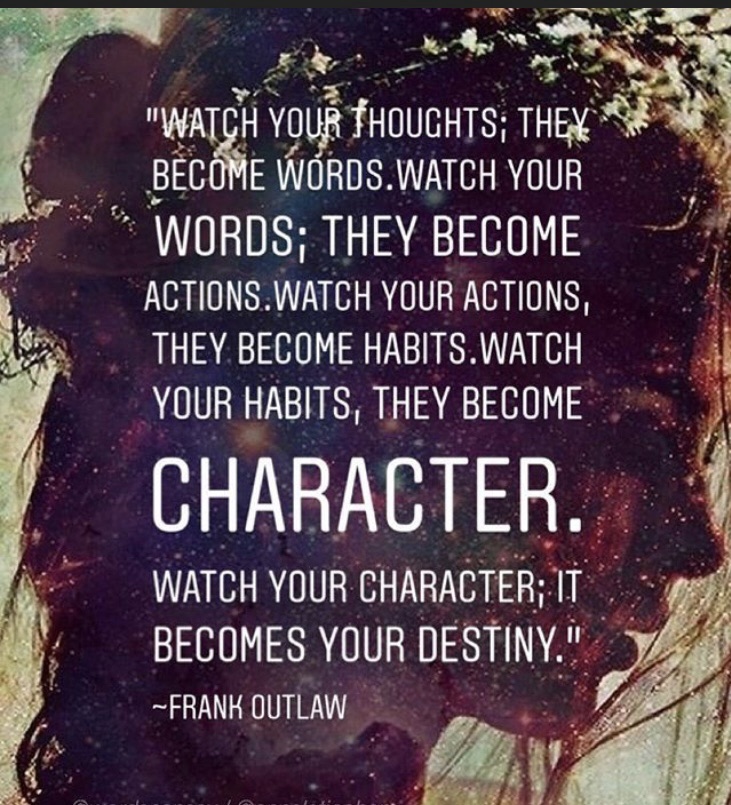
I monitor my thoughts and my words, by staying aware of my internal dialogue and outward expressions of negativity. This makes it easy to notice when I complain, and then I can identify the patterns in my complaining habits.
When I catch myself complaining, I shift my focus, by rejecting my focus to positive aspects of the situation and then find a solution to the problem.
When I do catch myself complaining, I add “but” and then follow it with a positive thought or action. Instead of dwelling on problems, I try focusing on identifying solutions and taking actionable steps.
It’s not about suppressing all complaints, but about transforming mindless complaining, into constructive action.
“God doesn’t call the equipped, He equips the called” -Rick Warren
God often calls us then crafts us over time I preparation to serve Him. There are many examples in the Bible, Abraham, Joseph, Moses, Joshua, Elijah, Paul, Ester, Deborah, Mary Magdalene etc…
Our abilities to fulfill our callings often accompany the Holy Spirit’s nudging. If we think of Paul, who was a Pharisee and a fierce persecutor of Christians before God called him. Being an apostle for God was way out of his comfort zone. And he had to be put through several tests that equipped him to fully step into his monumental calling. Maybe you can relate:
1 A time of waiting
Paul waited at least ten years after his calling before he began ministering to the Gentiles. While none of us know the details of what Paul did I’m sure God did not waste this time of waiting.
2. A test of spiritual opposition
Paul’s spiritual opposition came during his first journey for God. It came from forces of darkness in Cyprus in Acts 13:6-12. It’s a reminder to make sure we grow our roots down deep before asking God to send us to graft the gospel into new soil, through writing and speaking.
3. A test of emotional opposition
After Paul traveled to a place called Iconium his motives were questioned and his character slandered.
This makes me think I will never be equipped to serve God. I can still cry at the drop of a hat. I don’t know if I will ever be ready for others to downplay, desecrate or discredit me as Paul was.
But God calls us to lean on Him emotionally in our time of calling. He wants us to bring our emotional hurts to Him, where He will enable us to serve with pure motives and a clear vision. So, even if I don’t think I can handle whatever God calls me to do, I will eventually have to step out of my comfort zone.
4. A test of praise
When Paul traveled to Lystra where they were worshipped as gods God began to do the unexplainable through Paul. The people began to praise the messenger over the miracle-working God. Paul passed the test. Can you pass the test or will you think you’re something special? It’s a fact that nothing collapses a calling like our pride.
Some people think I’m doing something special by writing this blog. I don’t think so, I just read and research things that pop into my head, and then share what I’ve found. Nothing special here, I just share my findings from my overthinking brain. Anything good comes directly from God.
5. A test of release
I’m sure that Paul wondered what effect he would have on the churches he visited on his journey. It would have been tempting to stay at some places he visited. But he knew there was more God called him to do. And that meant letting go and letting God.
It’s easy to fall into the trap of thinking we are needed, as if God’s kingdom plans rest solely on our ability or involvement. It’s about doing good, planting seeds, and then walking away and letting God handle the rest.
Intentional Preparation
Whether you feel as though you are walking in your calling or waiting for it to be fulfilled, God calls us to intentionally prepare ourselves for what’s ahead. Passing tests in life will never be easy, but I think it will be worth it in the end. One thing is for sure we were not meant to endure life or our calling alone. God uses others to help us grow and prepare us for everything He has in store for us.