Forgiveness is often seen as weakness, an act of surrender, or denial. Yet, true forgiveness is neither passive nor gullible. It is an act of strength, a deliberate choice to release a grip of pain and allow healing to begin. It’s like a river that carves its path through mountains and deserts. Forgiveness can flow through hardened landscapes of a human heart.
I wasted so many years in unforgiveness being too stubborn to release the secrets that I chose to keep to hide a past I didn’t want anyone to see. Not knowing if I let go of the bitterness in my heart, I would be able to heal and move on. That it wasn’t excusing or forgetting my past.
At the core, forgiveness is not about excusing the harm. It’s about acknowledging the pain we feel without allowing it to define us. It’s doesn’t erase what was done, its about reclaiming our power to move forward without dragging the weight of bitterness behind us.
A river is wide, persistent, and unyielding. Perhaps it begins in a small place with hesitation or resistance, just like the thoughts of forgiveness that rise in us quietly in our hearts, a place that’s still bruised. A place where we confront our pain, but still wonder if there is any ounce of humanity left in us in others and ourselves. Maybe there’s a trickle of hope that some forgiveness will be possible. One day we will be able to forgive ourselves as well as others.
One day there their be a river instead of a wall that was used to block further pain. A river that swells with empathy, clarity, and courage. That it is strong enough to carry away resentment and fear.
Forgiveness requires humility, the willingness to accept that we, too are capable of making mistakes. That we deserve grace for our mistakes just as we are called to extend it. This reciprocity doesn’t mean ignoring justice or accountability, it means recognizing that holding onto hatred often punishes the bearer more than the offender. Understanding that peace is more valuable than pride in this way forgiveness becomes a form of wisdom.
When we see that forgiveness is an act that is seen as a path to peace and also a force for healing. The process is never easy, but it is always possible. A reconciliation through the river of forgiveness.
We are often driven by retribution, and a decision to forgive can feel like we are swimming against the current. But, when we choose to forgive, not once but again and again, we can find ourselves carried forward by something larger than ourselves.
Forgiveness is not the end of the story, but the beginning of a new one. One that’s shaped not by wounds, but by the wisdom we gained from them.
To forgive is a decision to live freely, and to trust that even the deepest pain can be transformed. Like a river, forgiveness will always find a way forward.
Share a story about the furthest you’ve ever traveled from home.
The furthest I’ve ever been from home was to San Antonio Texas. Driving it is about 18 hours from where I was living.
This state was founded in 1718 by Spanish missionaries. And it is where “The Alamo” and, “The River Walk“ is located.
I was there for a 5 day conference for a volunteer veteran organization. While there wasn’t much time for sight seeing, I did manage to see a few sites and do some shopping.
I spent 5 days returning home and did see some sites. Fredericksburg Texas, and took in its beauty.Roswell New Mexico where the ufo/alien lore is known.
It was a memorial trip . One I hold on too for sure.
I know a lady who speaks of doubt and unbelief once in a while. I never really thought about it before. The last few days it’s been on my mind – do we really understand what doubt and unbelief are? So, I began reading about it. And you know I have to share.
I have heard the unbelief comes from not having “enough faith.” Yet, the Bible is clear that God honors faith. I think maybe our understanding of how doubt and unbelief specifically hinder that faith in our, lives is lacking.
On the subject of faith, we hear that it is anything from “a living channel of trust between us and God,”and even a spiritual force. But, faith is not how we get God to work in our lives. Faith comes with communication from God concerning His will in the situation, based on the promises in the Bible. And believing is a process of being consistent with what we hear from God. I believe having faith is not enough. Having the ability to believe is not enough. We must act on that ability by being consistent with what we believe.
If we look at the account of Peter walking on the water in Matthew 14:22-33, we can see that Faith is hearing Jesus say, “come,” and believing is actually throwing his leg over the side of the boat.
When Peter began sinking Jesus stretched out his hand, and took hold of him and said to him, “you of little faith, why did you doubt?”
It comes down to knowing God’s will and then knowing we have a choice. How we respond to God’s voice determines whether we are in faith, doubt, or unbelief.
The definition of doubt is “a feeling of uncertainty or lack.”
Jesus says in Matthew 21:21, “Most certainly I tell you, if you have faith, and don’t doubt, you will not only do what was done to the fig tree, but even if you told this mountain, “Be taken up and cast into the sea, it would be done. All things, whatever you ask in prayer, believing, you will receive.
When I was diagnosed with bladder cancer, the doctor told me I had 1 year to live if they couldn’t get all the cancer removed. After a baseball-sized tumor was removed from my bladder, it was touch and go for a while. To say I was scared was an understatement. My children were still relying on me, and I wasn’t ready to die. I had all but given up when I decided that I was not going to let Satan win. From that point on I began getting better. Every time I would get a cancer treatment or checkup, I would tell the doctor “I am healed.” Eventually, my checks would come back “cancer-free.” I was healed. That was faith without doubt.
James 5:15 says,
“And the prayer of faith will save the one who is sick, and the Lord will raise him up, and if he had committed sins, he will be forgiven.”
This verse emphasizes the power of faith-filled prayers offered by the elders of the church, that can lead to healing, and restoration by God. This is the scripture I stood on for years. Having people from church pray for me weekly.
I believe that too many people think that all roads lead to God, and all good people go to heaven. People rely on the man behind the altar at church too much, we’ve gotten lazy, too many think that once a week a church or watching a teacher on the internet constitutes getting into heaven. It takes more than 1 day at week to get into heaven. It takes more than believing what the man behind the alter is saying. It takes studying the message he puts out there.
Unbelief is described as a lack of faith, a refusal to trust in God, and can hinder blessings, limit God’s work, and even lead to eternal separation from God.
Unbelief throws us down when we are lifted up. Faith brings us near to God when we are far from Him, and unbelief puts us far from God when we are near to Him. We shouldn’t let ourselves be destroyed because of our unbelief in God.
Brokenness leading to strength is recognizing your own imperfections and vulnerabilities which allows for greater self-awareness, a deeper dependence on God, and an increased compassion for others which ultimately leads to a more authentic and purposeful life.
It involves a humble surrender of pride, a transformation from self-reliance to reliance on divine grace, and a shift from despair to growth and healing.
To make this happen I think you need to want to change -really change. Want it so bad your teeth ache.
It’s all about surrender and humility. Having recognition of your personal limitations and surrendering those things to God.
Choosing to have a different perspective on life that offers mercy, love, and provision. A perspective to foster a deeper dependence on God.
It’s a process of acknowledging your own weaknesses, failures, and addictions that leads to an honest understanding of yourself. It can be a long and painful process, but if you don’t give up it can lead to a full and peaceful life.
Through brokenness, you can allow God to work, bringing healing, recovery, and the power to overcome past hurts.
When we have a godly sorrow instead of a worldly sorrow we can rise from, a brokenness that can lead to true repentance and a life that leads us out of worldly sorrow that only leads to despair and spiritual death.
I spent too many years in worldly sorrow, blaming God for my brokenness. But, what I didn’t recognize was that God sometimes uses brokenness to deepen our understanding of who Jesus is. When I realized this I knew I had to allow Him into my heart (and soul) I didn’t just have to gain a new perspective of His mercy and provision, but I had to learn to depend on Him. To develop a more complete comprehension of who I was.
Experiencing suffering and brokenness helped me to cultivate empathy and compassion and a deep understanding of the way others struggle.
Many years ago someone prophesied over me, that I would become a bridge for others. Since then I have tried to be that bridge to help others through their struggles. A bridge that leads others to hope, love, and mercy. A bridge that offers blessings instead of insults.
Tears of joy are born from love, hope and deeply emotional connections.
I am an emotional person. I can cry tears of joy, with something good that has happened to a person who has been struggling.
When someone decides to be water baptized. They have said the sinners prayer, but seeing it, and knowing they died to their self and has chosen a renewed life.
Something about pet adoptions -that second chance at love pulls on my heart strings.
Some say joy is quiet, but sometimes, it shouts through the silence, and runs down your face in the form of tears.
I began this blog so I could get my thoughts out of my head. I began to blog because I knew there was someone out there who had similar experiences in life that I had. And maybe, just maybe they could not feel so alone.
But this blog has turned into a way to share knowledge about Jesus. And how to live according to God. They Bible. Basic instructions before leaving earth.
Too many people seem lost on how to walk with Jesus. I think this problem can’t or won’t fix itself. We must learn. Most churches are not teaching the basic principles on what it is to truly follow Jesus.
Action is a necessary part of our relationship with Jesus. Many people think it’s okay to go to church one a week or listen to a sermon online and they are good with God. But if you read the Bible at all you will realize that God wants us to be active, not passive.
There are many times in our lives when trials and tribulations seem to consume us. David in Psalm 42:3 said, “My tears have been my food day and night, while they say to me all day long, ‘Where is your God?” David was longing for God’s presence here.
God certainly has not forsaken His people, but at low moments all of us could testify that there are times when it feels like He has. So, what can be done to be reassured that He did not forsake us? How do we find the hope of God’s care when we are feeling low, and in the grind of inner turmoil? I know what David did, he talked to himself. In Psalm 42:4 he says,
“These things I remember and I pour out my soul within me, how I used to go with the crowd, and led them to God’s house, with a voice of joy and praise, a multitude keeping a holy day.”
David said these things to himself. Sometimes healthy positive self-talk is good therapy. He was saying in Psalms, 42 that when he is blue, he will call to remembrance the past days of victory when he felt God’s presence. In effect saying, “those were the days, those were the days of blessing, joy, and thanksgiving.” After remembering these days, he asks his own soul,
“Why are you in despair, my soul? Why are you disturbed within me? Hope in God! For I shall still praise Him for the saving help of His presence.”
David’s remembrance of God’s past faithfulness should really encourage him.
When our souls are in turmoil it helps to look back to past victories and call to mind specific things God has done for us. Remember the Lord of your past is the Lord right now -God is unchanging.
One thing I’ve learned, is to not only focus on your immediate circumstances or you will likely miss God’s work in your life.
When life gets hard, step back remind yourself of God’s promises. Widen your perspective to what He might be doing through a time of difficulty, remind yourself that you just don’t want to faithful when things are easy. Ask God for wisdom, and then resolve yourself to pass the test in front of you with unwavering faith.
Interview someone — a friend, another blogger, your mother, the mailman — and write a post based on their responses.
My interview would be with a police officer. A do know a few police officers. Family friends I’ve heard about the life they have chosen.
Being a police officer is an incredibly demanding job, both physically and emotionally. It’s not just about enforcing the law, it’s about handing the aftermath of violence, crime, and often heart wrenching situations.
Overdose calls -officers often are the first on the scene, having something called Narcan that is used to save their lives.
They strive to arrest the people who sell drugs that don’t care who they kill, or what they do for their money. Police officers are thrown into violent confrontations and tense stand offs.
Violence is part of the landscape for many officers. Domestic violence, gang violence, death and trauma. They are part of that.
The mental and emotional burdens they endure is intense. They have ways to cope with the trauma they see everyday that the public eye sometimes doesn’t understand. And this trauma can lead to PTSD, anxiety or depression. This is compounded by societies expectation of how “people think they should act.”
Being a police officer is constant strain and exhaustion as they are often forced to move from one crisis to another. It’s a fast paced, high pressure environment that doesn’t leave much room for self care.
The human toll of this job it real, and the emotional scars aren’t always visible. They end up carrying a heavy burden that is not only difficult for them but is full of hard to understand for people that live outside the profession.
It’s a life full of difficulties, moments of heroism, and the ever present weight of knowing that the next call could bring something tragic.
The way some people treat police offenders is down right pathetic.
It’s a life they have chosen to protect us. Yet they are disrespected by so many. It’s about time people start realizing what they go through for us -the law abiding citizens.
The police officers I know wouldn’t trade their jobs for anything. But they also have to deal with the aftermath of societies baggage.
People wrongly believe a whole group is bad based on the actions of one person due to a combination of cognitive biases or evolutionary instincts. Our brains can mistakenly apply negative attributes to make all members of the group. It’s an awful way to think.
There’s a saying most Americans know, “You can’t pour from an empty cup.” But in a world that glorifies hustle, selfishness, and constantly showing up for others this wisdom often gets lost in the noise. We are praised for being available, responsive, and productive. Rarely are we encouraged to pause, refill, and recharge. But the truth is when we fill our own cup first, we don’t just serve ourselves, we can serve the world better.
Giving all your time, energy, and emotional bandwidth doesn’t equal love and success. Wearing burnout like a badge of honor, and convincing ourselves that self-sacrifice is noble and necessary isn’t the answer. Over time we can find ourselves unraveling, our patience wearing thin, and our sense of self grows distant.
Realizing that we’ve been running on empty for far too long can be a powerful lesson to teach us that we must fill our own cup first -then and only then can the world truly benefit with what we have in overflow.
I think many of us are taught from an early age that putting others before us is a noble act, and self-sacrifice isn’t a virtue, in fact it’s a fast track to burnout.
Our ability to give to others is only as strong as our ability to stay nourished -emotionally, mentally, physically, and spiritually. Giving should come from a place of abundance, not depletion.
There’s a difference between giving and people pleasing. Between kind and bring available 24/7. Between life and self-neglect.
It took me many years to realize there is a huge difference.
You’re not selfish for needing space.
You’re not cruel for setting boundaries.
You’re not less loving for saying Not today.
The most compassionate thing we can do for the world is to come back to ourselves.
Refill your cup.
Filling you’re cup doesn’t mean a spa day or vacations though those things do help. It’s about tending to you’re needs in ways that are sustainable and soul-nourishing.
Things like:
Setting boundaries without guilt.
Prioritizing sleep and rest.
Saying no to preserve your yes.
Spending time with God to reconnect with yourself.
Choosing relationships that energize rather than exhaust.
Choosing yourself every single day is not a selfish act, it’s a sacred one.
When our cup is full -truly full we are able to radiate calm, clarity, and creativity. Our energy can become contagious.
It’s true our words carry weight, but it’s important to know that our presence can comfort and uplift. People are not drawn to exhaustion, or effort, they are Drawn to peace and authenticity.
When we no longer feel the need to overextend or overcompensate. We’re not giving out of duty, but offering from the overflow. And that overflow can become a gift for others.
We don’t need to keep giving from emptiness, or stretch our soul thin, hoping that someone will finally see how much you care. You don’t need to prove your worth by how exhausted you are at the end of each day.
Because real love, real joy, and real presence doesn’t come from depletion it comes from overflow.
We have been taught to internalize guilt about rest and pleasure. We have come to think that doing nothing is being lazy. But rest is not unproductive it’s regenerative .and pleasure isn’t indulgent it’s vital.
Begin by making space for yourself, and model what its means to live with integrity. And give others permission to do the same.
It’s not about overhauling your life overnight, it’s about beginning with one small step that says “I matter.” Maybe it’s about giving yourself 10 minutes before you check your phone, or going for a walk to enjoy nature, or sitting down having a cup of coffee or tea before multitasking, or spending 10 minutes with God praying or reading His Word before you begin your day.
One small act can begin to restore the trust you have in yourself they burnout steals.
Our well-being is not a luxury it’s a foundation. We are vessels in which live, wisdom, and impact flow. But we are also the source, and when we honor both we can create a life that just doesn’t survive -it thrives.
Remember you are not only the cup, you are the fountain.
In life, we often forget that it doesn’t matter what happens to us or where we come from. It matters what we do with what happens with what we’ve been given.
Part of everyone’s journey in life is we’ve all been in your in someway. There’s a biblical perspective that helps us become more resilient as we work through life challenges with God’s help.
Dealing with our woundedness is a skill we must master. Failure to do so could lead to a life of mental, emotional, and spiritual impairment.
Whether our woundedness comes from a relationship, a business failure, moral failure, or our stupidity and lack of wisdom, or even a preponderance of pride we must learn how to overcome it.
I have made some dumb mistakes, but I’ve also been wounded by others. No matter how the wound occurred it became a time of trial. But it can also be part of God‘s refining process.
Woundedness is part of what it means to be human. Life wounds, all of us to one extent or another.
And there lies the problem. Culture wants us to hide everything inside and pretend it doesn’t exist. But I don’t think that’s the answer. I’ve healed more by opening up about my woundedness, then I ever have pushing it down inside further and further.
The Bible and Trauma
The scriptures reveals that trauma and trials are a normal part of being human. God can use the pain to draw us into a deeper and more intimate relationship with Him. As we work through our issues, we experience them.
In 2 Corinthians 1:3-4 Paul gives us a dose of help. “Blessed be the God and Father our Lord Yeshua the Messiah, the Father of mercies and God of all comfort. Who comforts us in all our affliction that we may be able to comfort those who are in any affliction, through the comfort with which we ourselves are comforted by.”
From the book of Genesis we see deeply seated family, bitterness, and resentment. In addition to Jacob being a ruthless, and determined man he was also a con man and a liar. His name literally means “deceiver” and if we dig a little deeper we see his name also means “grabber.” Which explains why he stole his brother’s (Esau) blessing from their father.
Scripture also reveals that Jacob‘s life was a constant struggle. While God had promised him, he would be the father of a company of nations, he also dealt with a lot of fear and anxiety.
There was a tipping point in Jacob’s life. Jacob had to come face to face with Esau again, and he was fearful of the outcome.(Genesis 27: 1-28, 7).
Jacob hopes that he wouldn’t be killed when he met Esau. So, he bribes his brother by sending a caravan of gifts along with the women and children of his household. His plan worked. But Jacob was exhausted from all the worry and anxiety directly resulting in his lying deceitful ways. And he fell into a deep sleep.
Something was about to change. He fell asleep in the desert. If you’ve ever slept in a desert, it can be an all inspiring experience, but you are also vulnerable.
You can also feel small compared to the grandeur of the sky. It almost feels like you’re in another world. I like camping in the desert because I can connect with God better and have peace that I don’t find anywhere else.
In Jacob‘s case, I think he was an exhausted desert dweller who did not know what a life altering experience it would be. I’m sure that his less than stellar family history had been really tough. But when he wrestled with a angel of God who did Jacob, it was a life changer.
Jacob told the angel I will not let go of you and tell you bless me. When he was asked, what is your name? He said Jacob. The angel of God told him, “your name will no longer be Jacob, but Israel” because he fought with God and with men and won. Jacob named the desert place where he fought with the angel of God, Peniel, which man’s “face of God.” Because he felt like he saw the face of God yet was spared from death.
As a result of this, Jacob‘s life was changed forever. His name was changed from the deceiver to Israel.
Like Jacob it’s easy to see our woundedness and struggles, fears, wellness, and feeling like an imposter, sometimes feeling exhausted and powerless. But when we look closer, we can see growth, hope, and transformation.
America celebrates, wealth, prestige, power, strength, and confidence. But there are still people that live day today, feeling vulnerable, depressed, anxious, and doubt ridden, as think of themselves as a failure. But I think these people are dead wrong. Deep inside everyone’s woundedness lies the simple optimism of growth and the victory of success. And Jacob’s story should keep us living in reality, one that’s filled with hope.
No matter what we face, God gives us power, the will, and the insight to remain resilient in every situation.
“For I am persuaded that neither death, nor life, nor angels, nor principalities, nor things present, nor things to come, nor powers, nor height, nor depth, nor any other created thing will be able to separate us from God’s love which is in Messiah Yeshua our Lord” -Romans 8:38-39
Life is always changing. And we all carry woundedness, but the worst thing we can do is try and handle it on our own.
While your current situation may be awful, you have to accept it as reality. As a result, you will then be able to take personal action to change it. It’s not about being in denial or blame shifting. It’s not about buying into a victim mentality. Instead, it’s about getting off your butt And taking action to move forward.
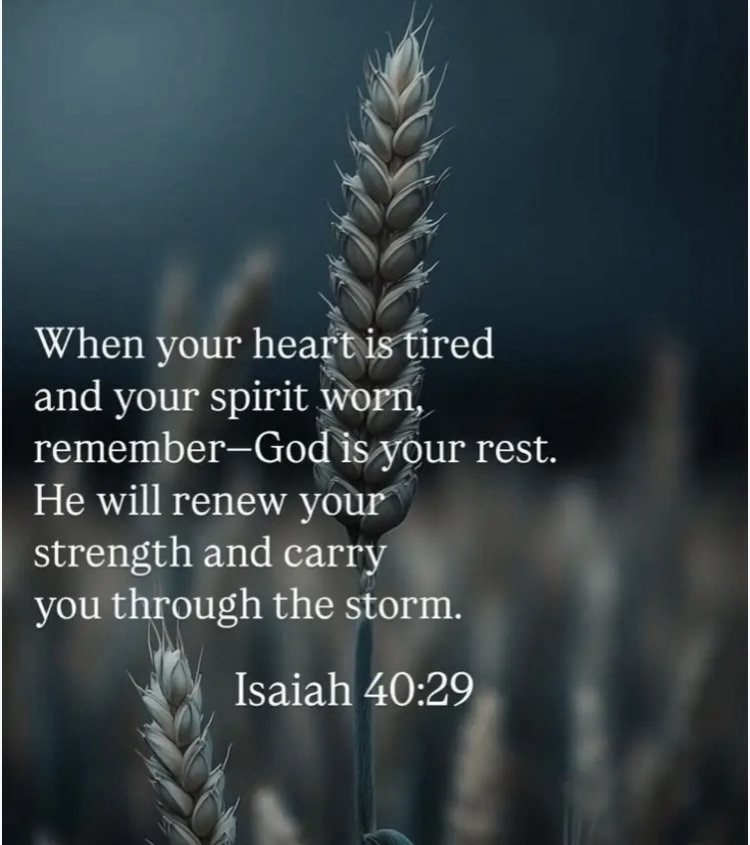
CS Lewis once wrote, “ God whispers to us in our pleasures, speaks to us in our conscience, but shouts in our pains. Pain is His megaphone to rouse a deaf world”
God is more concerned with our character than our comfort. At times, He chooses to use tragedy to refine us.







 From Pity to Praise