Writing helps me put my overthinking down on paper.
There’s a problem with being an overthinker. silence speaks to me. I hear the judgement in it. The disinterest, or nothing at all but somehow it is still something.
I over analyze everything. I have since I was young. So I write not to silence the noise but to give it a voice.
I wish I could be one of those people who just live. Say what they feel and move on. People think I’m chill and quiet but on the inside I constantly rewrite things, and constantly second- guessing everything.
I know this is how God made me. Because overthinking is often tied to strengths like deep empathy, that creates creativity foresight, and intelligence.
I write not to silence the noise but to give it a voice.
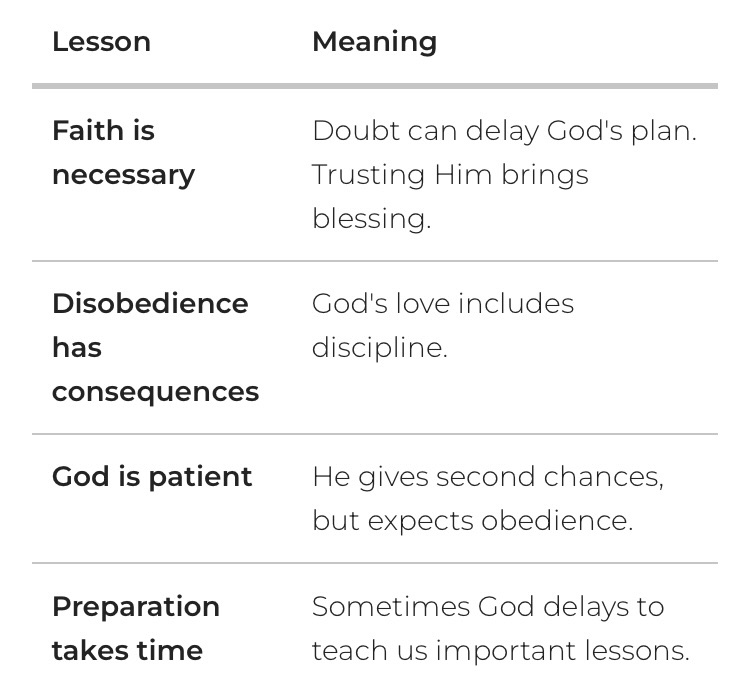
The journey from Egypt to the Promised Land should have taken only 11 days. But for the Israelites it took 40 years. This wasn’t because of distance -it was because of disobedience, fear, and lack of faith in God’s promises.
The Bible tells us that the journey from Mount Sinai (Horeb) to Kadesh-barnea should have taken only 11 days.
“It is eleven days journey from Horeb by the way of Mount Seir unto Kadesh-Barnea” -Deuteronomy 1:2
Kadesh-Barnea was the edge of the Promised Land it was the spot where the Israelites first stood ready to enter Canaan. But they didn’t go in.
What took so long?
The 40 year delay was not due to geography. It was because the people didn’t trust God. They sent spies to check the land. Ten of the twelve spies came back afraid. They said the people of the land were too strong.
Instead of bleeding, God‘s promises, the people panicked. They refused to go forward. This rebellion caused God to judge them.
In Numbers 14:34 God is speaking to the Israelites addressing their grumbling and disbelief, “After the number of the days in which you spied out the land, even forty days, for every day a year, you will bear your iniquities, even forty years, and you will know my alienation.”
They wandered in the wilderness one year for each day the spies explored Canaan.
God was teaching them something:
The 40 year delay was also a time for discipline and testing. God prepared their hearts and removed the old generation that didn’t trust Him.
In Deuteronomy 8:2, Moses is speaking to the Israelites. He is recounting their journey in the wilderness, reminding them of God’s guidance and testing.
“You shall remember all the way which the Lord your God has led you these forty years in the wilderness, that He might humble you, to prove you, to know what was in your heart,whether you would keep His commandments, or not.”
This time tested their faith, refined their obedience, and prepared a new generation to enter the promised land with courage.
Only two men from the original adult generation entered Canaan: Joshua and Caleb. Because they trusted God when others did not.
Joshua showed strong faith and later led Israel across the Jordan.
There are lessons for us today we can learn from the Israelites 40 year journey. A few I have learned the hard way over the years.
God always has a way of testing and humbling us on this journey through life.
Lessons for us today
An 11 day journey took 49 years because of fear, not faith. God’s promise was sure, but the people’s hearts weren’t ready. Today we are also called to walk by faith, not by sight.
“For we walk by faith, not by sight” – 2 Corinthians 5:7
I love where I live because of there a unique blend of natural, beauty, and outdoor adventure. There are many national parks, diverse landscapes, and bodies of water.
You can from the mountains to the dessert in a weekend.
“Only take heed to yourself, and diligently keep yourself, lest you forget the things your eyes have seen, and lest they depart from your heart all the days of your life. And teach them to your children and your grandchildren” –Deuteronomy 4:9
Jesus said in Matthew 22:36 what was His greatest command, “You shall love your God with all your heart, with all your soul, and with all your mind.” The more fully we grasp the wonder of God’s love, the more fully we love Him, and the more we can accept and love ourselves.
I spend years, hating myself -my personality, my appearance, everything about me. It took along time to get past the negative beliefs I got from my mother. I have to admit I still struggle with letting go of negative thinking.
The Bible emphasizes the power of our thoughts can shape our lives and He encourages us to focus on positive, God honoring thoughts. Proverbs 23:7 says, For as he thinks in his heart so is he.”
How to begin to love your soul:
Forgive yourself
Psalms 103:12 tells us “As far as the east is from the west, so far has He removed our transgressions from us.”
There is something to be said about how I can forgive others at the drop of a hat, but have a hard time forgiving myself. I’ll ask God to forgive me, but it’s like the enemy sneaks in and yes, “no so fast.”
Forgive others
Refusing to forgive others is like drinking poison and expecting someone else to die. Unforgiveness can hold you hostage. Bitterness is like cancer it eats us away from the inside out.
It’s important to remember that God is pleased with what He is doing in you. When we are secure in the Love of God, we will be able to release the fear that God is disappointed with us.”
It is only when we have mastered the art of loving ourselves that we can truly love others.
I haven’t always had felt positive emotions in my life. Most of my life I felt overwhelmed by negative emotions with a few positives sprinkled in from time to time.
But then something changed inside me and I began to have hope that was feeler with joy and peace.
This joy and peace were not dependent on external circumstances, they had a deep connection with the God of the universe. A deep trusting the God always had my back.
Through all circumstances whether it is. Whether I was struggling or thriving I always knew God was there
Discovering how amazing your life in Christ is meant to be.
The Bible tells us the truth about who God created us to be and how He wants us to live.
We are complete in Him who is the head over all rule and authority of every angelic and earthly power. -Colossians 2:10
We are free from the law of sin and death -Romans 8:2
We are far from oppression, and we will not live in fear – Isaiah 54:14
We are born of God, and evil one does not touch me -1 John 5:18
We are Holy and without blame before Him in love -Ephesians 1:4, 1 Peter 1:16
We have the mind of Christ Jesus -1 Corinthians 2:16, Philippians 2:5
We have peace that surpasses all understanding -Philippians 4:7
The Spirit of God, who is greater than the enemy in the world, lives in us -1 John 4:4
We have received abundant grace and the gift of righteousness and reign in life through Jesus Christ -Romans 5:17
We have received the Spirit of wisdom and revelation in the knowledge of Jesus, the eyes of our hearts enlightened, so that we know the hope of having life in Christ Jesus -Ephesians 1:17-18
We are renewed in the knowledge of God and no longer want to live in our old nature before I accepted Christ Jesus -Colossians 3:9-10
God supplies all our needs according to His riches in glory in Christ Jesus -Philippians 4:19
In all circumstances, we live by faith in God and extinguish all the attacks of the enemy -Ephesians 6:16
We are chosen by God who called us out of the darkness of sin and into the light and life of Christ Jesus so we can proclaim the excellence and greatness of Who He is -1 Peter 2:9
Here is just a sample of who God says we will become if we follow Him. When we are born again we become spiritually transformed, renewed, and set apart for God’s purpose through our living and everlasting God. This is what 1 Peter 1:23 tells us.
Accepting God into our lives leads to a sense of peace, purpose, and a changed perspective on life. It can bring about a feeling of being loved, forgiven, and empowered to live a more empowered life.
“And I will pray the Father, and He shall brings you another comforter, that He may abide with you forever” -John 14:16
Jesus taught His disciples about the Holy Spirit during their last night together in the upper room, He referred to the Holy Spirit as the “Comforter” on four occasions in John 14:16, 14:26, 15:26, and John 16:7.
For Jesus to repeat this title four times in three chapters tells me this point must be very important. When a phrase is repeated in scripture it has emphasis. Jesus was trying to get this point across to their hearts as well as our hearts what the truth of the Holy Spirit’s role as a “Comforter” so they would fully understand this truth.
Jesus’ promise in His teachings, spoke of sending the Holy Spirit as a “Helper” or “Comforter“ to His followers after He ascended to heaven.
If we look at the Greek translation for Comforter or Helper it can mean “advocate, counselor, or comforter,” highlighting the multifaceted role of the Holy Spirit.
The Holy Spirit as a comforter is understood to console and encourage -to provide comfort and strength in times of sorrow and difficulty
He is with us to remind us of Jesus’ teachings. To bring to mind the words and truths of Jesus and guide us in our faith.
He intercedes for us with God. He prays on our behalf, especially when we are struggling to find the right words.
He indwells within us, offering constant companionship and support.
He guides us in our daily lives and empowers us to live according to God’s will.
A personal relationship with the Holy Spirit is not just a concept but a living presence that believers can connect with personally to seek comfort and guidance.
We can experience the Holy Spirit’s comfort by inviting Him into our lives, surrendering our pain, and trusting in His presence.
The first thing in preparing for emergencies is to understand the types of emergencies would likely happen in the area you live. For example the area I live we are susceptible to floods and wildfires. And the human caused ones like terrorizing, or shooting. Which I suspect will get worse because the state government is sending people to my town for rehab “rehabilitation” programs from prison because we are out of the way, thinking people will not re-offend.
We need to have a way to stay informed. Having a 2-way radio with plenty of batteries.
Building an emergency kit is also important. Water, non perishable foods, flashlights, batteries, first aid kit, medications, copies of important document, cash, hugging supplies, multi tools, or knives, hygiene supplies, where to charge cell phones, like solar or power banks. It’s important to have contact information written down and a meeting place in case you get separated.
We all hope we won’t need an emergency preparedness plan, but it is essential to protect yourselves and your family. It’s important to have an organized plan.
Have you ever wondered how to align your thoughts, words, and actions with the teachings of the Bible? Here are a few of the basics that will put you on the path to do just that.
It begins with the importance of the consistency of our thoughts, words, and deeds. By understanding and applying this to your life you’ll be on your way to experiencing greater harmony and alignment with God’s will.
Most preachers and teachers will tell you why you need to do things without telling you how to do these things. Hopefully, my writings give you some pointers on how to live out your faith with God.
The concept of living out one’s faith in thought, Word, and deed is a central theme throughout the Bible. This principle emphasizes the importance of aligning our beliefs with our actions, and our speech, which ensures that our entire being reflects the love and teaching of God.
One key scripture that summarizes this idea is Colossians 3:17 which says, “And whatever you do, whether in word or deed, do it all in the name of the Lord Jesus, giving thanks to God the Father through Him.” This powerful scripture serves as a reminder for us to conduct ourselves in a manner that glorifies God in every aspect of our lives.
In addition, James 1:22 reinforces the significance of not only hearing the Word of God but also acting on it. “Do not merely listen to the Word, and so, deceive yourselves. Do what it says.” This scripture underscores the importance of translating our beliefs into tangible actions, and demonstrating our faith through our deeds or actions.
Matthew 5:16 goes on to say that Jesus instructs His followers to let their light shine before others, so that they will see their good works and glorify God. “In the same way, let your light shine before others, that they may see your good deeds, and glorify your Father in heaven.” This scripture highlights the transformative power of living out our faith in a visible and impactful way.
The Bible consistently emphasizes the interconnectedness of our thoughts, words, and actions with the teachings of Jesus, and we can truly embody the message of love, compassion, and righteousness that God calls us to live out each day.
Our thoughts, works, and deeds refer to the three aspects of human actions that are often discussed in morality and ethics. These terms are used to encompass the entirety of a person’s behavior and intentions.
Thought: refers to one’s internal mental processes, including beliefs, attitudes, and intentions. Our thoughts can lead to our actions and reveal the true nature of a person’s heart.
Word: refers to the spoken or written expressions of one’s thoughts. Words are powerful and significant because they can impact others and reflect the condition of a person’s heart.
Deed: refers to the actions and behavior that a person carries out. Deeds are often seen as the most tangible and visible aspect of a person’s character, because they demonstrate how one’s beliefs and intentions are put into practice.
Putting together these three components is often used to emphasize the importance of aligning one’s beliefs with one’s actions, and living a life of integrity or righteousness according to biblical teachings.
The Bible emphasizes the importance of our thoughts and words in several scriptures. For instance, Philippians 4:8 says, “Finally, brothers and sisters, whatever is true, whatever is noble, whatever is right, whatever is pure, whatever is lovely, whatever is admirable -if anything is excellent or praiseworthy -think about such things.” This scripture highlights the significance of focusing on positive and uplifting thoughts.
Proverbs 18:21 speaks of words, saying, “The tongue has the power of life and death, and those who love it will eat its fruit.” This scripture underscores the impact of our words on ourselves and others. Similarly, Ephesians 4:29 advises us, “Do not let any unwholesome talk come out of your mouths, but only what is helpful for building others up according to their needs, that it may benefit those who listen.”
Ultimately, the Bible teaches us that our thoughts and words have the power to shape our lives and influence those around us. It encourages us to be mindful of what we think about and speak. Promoting positivity, kindness, and encouragement in all aspects of our lives. I learned this concept of whether I am speaking a blessing or a curse over someone.
We can apply the concept of “In thought, Word, and deed” in our daily lives by ensuring that our thoughts words, and actions align with the teachings and values in the Bible. This means being mindful of our inner thoughts and intentions, speaking truthfully and with love, and behaving in a way that reflects our faith and beliefs in God.
“Watch your thoughts, for they become words. Watch your words, for they become actions. Watch your habits, for they become character. Watch your character, for it becomes your destiny.”
Do you find yourself in chaos, whether it’s in your mind or your circumstances? If you’re like me it’s hard not to give more than you receive, and sometimes we find ourselves empty and deflated with nothing left to give. But there’s a way to protect our peace.
Proverbs 4:23 reminds us to “above all else, guard your heart, for everything you do flows from it.
This scripture is telling us to be careful what we let into our hearts and minds.
Think about conversations you enter into. Maybe a conversation where you know someone is going to try and tear you down. That we feel like you have to defend yourself. We can choose not to engage with that person.
Protect your peace by thinking about the people you allow in your life. Choose who you are going to have a “place at your table” or speak into your life this place has to be earned by people. They just don’t get to have it because of who they are.
There are only certain people who have earned the right to speak into my life. And it doesn’t have anything to do with the title they hold.
Think about who has shown you they don’t have the right to be at your table or speak into your life. Is there anyone you’ve been allowing into your life who hasn’t earned it? Do you need to set some boundaries to protect your peace?
Protecting your peace is also about guarding what you think about. What we think about has a lot to do with our peace.
Sometimes we can just get tired and let the negative thoughts come and it’s hard to fight them off.
Some things I put into practice are: questioning the validity of my thoughts.
Is it true?
Is there any evidence for that thought or is it just my emotions or me being tired?
What does God say about this in His Word?
I am not perfect at this. But, I have found that I can usually guard my heart and mind by having boundaries around the conversations I enter into,
I am aware of who I let into my life and who has earned the right to speak into it and who has not.
I can guard my heart from negative thoughts by questioning whether there is really evidence for that thought and comparing it to what the Bible says about my situation.










 From Pity to Praise