My favorite month used to be July. My children and I used to be fond of fireworks. When they were home, we would go off looking at fireworks throughout our town. It was a special bond we had when they were young. After they were raised and out of the house, those times were no more.
I’ve grown older I have become fond of November. The scent of crisp air and the crunch of the leaves under my feet is like a soothing melody. I can almost get lost in the crunching of the leaves.
I live in a small town, so there is not much to see and the bulk of the town are restaurants and bars with a mix of mom-and-pop stores. Not much to see in a coal-mining and railroading town.
Have you ever heard anyone say “You just know that you know when something is right? Like knowing when you’re in love, or when God speaks to you.
For most people, “knowing that you know” is an unhelpful description. What is that supposed to mean? But there is help, at least for knowing if you’ve heard God.
It’s a myth that hearing God’s voice is just open to a spiritual elite or a select few. There are a few things you need to know to learn how to hear God’s voice.
Who does God talk to?
God is a loving Father who wants to speak to everyone. In John 1027, Jesus said: “My sheep hear My voice.” If you’re a follower of Jesus, you can hear Him.
Throughout the Bible, and in history since, there are clear examples of God speaking to all types of people from all walks of life.
How does God Speak?
If you look at Hollywood for example, you are probably expecting a “big booming” voice from the clouds. But in 1 Kings 19, God shows Himself in quite the opposite way. When Elijah wanted to hear God he didn’t hear Him in the wind, an earthquake, or a fire, but in a gentle whisper.
Of course, God is able to get our attention in that vivid resounding voice, but that’s not always the way it happens. Only a few times have I been awoken from a dead sleep, with the vivid voice of God and it’s usually because I have been missing the more subtle one. It’s like Him telling me, “You better listen and do it now.”
In the Bible, God speaks through dreams, visions, pictures, scriptures, prophets, His subtle voice, angels, miracles, and even a donkey. God is not limited in the ways He can communicate with us. We are the ones who limit Him.
Who are you listening to?
Hearing God is about learning to listen for a whisper, asking God to speak in the quiet of your mind. But what if other inner voices seem much louder and clearer? How can we tell if we are hearing God, and not something else?
There are three options for who we might hear when we’re listening out for what God is saying. Yourself, Satan, or God. Let’s hope you can differentiate between the three:
Yourself
Your one thought is probably going to sound logical, or analytical. It will sound like the kind of things you often think.
2. Satan
Satan always condemns us. His purpose is to steal, kill, and destroy. So if the thoughts you’re hearing are negative, destructive, vicious, or accusing it’s the enemy.
3. God
When God speaks, it always lines up with the Bible -His character and His actions. He is kind, loving, and does not condemn.
My Pastor always says that “God speaks to us every day.” We just need to listen and obey.
There are four keys to hearing God’s voice, that people from all over the world can use:
Be Still: Quiet Yourself Down.
In our crazy- bust lives, it’s important to take some time out to find peace and listen to God without any distractions. Find a quiet spot, get comfortable, and get rid of any distractions like computers, cell phones, etc… Keep a paper and pen close by for the items on your to-do list, that will inevitably pop into your mind.
Welcome the Holy Spirit, simply by saying, “Holy Spirit, I welcome You. Come and be here with me.”
Look: Fix Your Eyes On Jesus
Use the eyes of your imagination to picture Jesus. You might see in black and white or color, or a still image or a movie on the screen in your mind.
Most of us have been told at some point in our lives that it’s not good to use our imagination. But, if it’s so bad why do we have one? It’s important to remember that people heard from God through visions all throughout the Bible. Jesus even used vision to connect with the Father. “The Son can do nothing by himself, he can do only what He sees His Father doing” ( John 5:9).
As you picture Jesus, ask Him a question, “Jesus what do you want to say or do today?
Listen: Tune To The Spontaneous Flow
Listen to what Jesus is saying. His voice might not be audible, but God often speaks in our thoughts. It might sound like your own thoughts at the start, but as you practice, you’ll be able to more clearly distinguish God’s voice.
This is where the last key comes in.
Remember It
Write it down if you have to. write it down just as you heard it -unfiltered. Don’t worry about spelling correctly or grammar, and don’t try and correct it with your own beliefs or views.
The last thing you should do it to obey what God told you. What’s the point of hearing God’s voice if you’re going to ignore it and not act on it?
Believe me when I tell you, I have brushed off somethings that God has told me, and I have always regretted it.
One of my favorite Christmas songs is, “I heard the bells on Christmas Day.” By Casting Crowns is my favorite version.
If you’re one of those people like my husband who says no Christmas music or Decorations until after Thanksgiving I say “Bah humbug.”
Seriously though I was just listening to this song and at the end, there was a little bit of history into its background. I thought I would share.
This song was actually a poem by poem by Henry Wadsworth Longfellow about the contrast between the message of peace on earth and the horrors of war.
The poem is set on Christmas Day during the American Civil War. The narrator hears the bells ringing but is also aware of the violence and injustice happening around him.
The message behind this song is that peace on earth will prevail, despite the horrors of war. The poem’s final lines declare that “God is not dead, not does He sleep” and that “peace on earth, good will toward man” will come to be.
Longfellow wrote this poem in response to his son, Charles Appleton Wadsworth when he received a near-fatal wound, during the Mine Run campaign in Virginia.
This poem was first published in February 1865.
Just a little bit of history, to a much-loved Christmas song.
Learning this I will never see this song the same way again.
You will see a renewed heart attitude toward God and improved sensitivity to the Holy Spirit,
4. Holy Spirit: Restoration Includes Transformation Through the Holy Spirit.
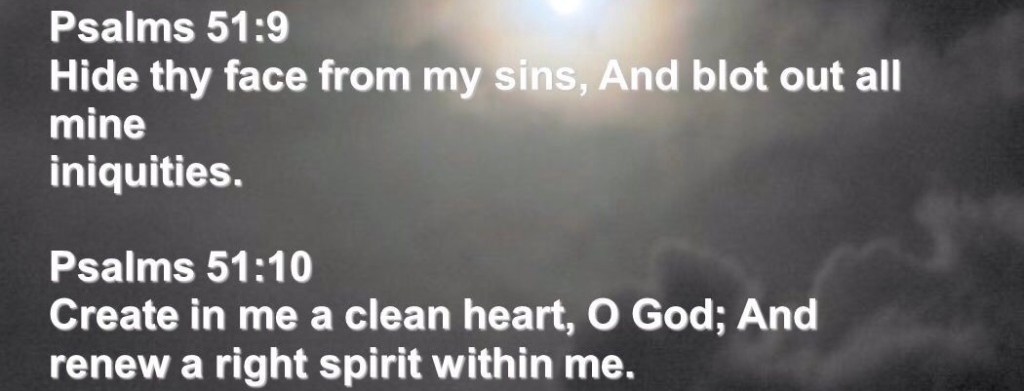
David asked for the Holy Spirit to transform his heart. To remain free of his sin, David asked for God’s Holy Spirit to transform his heart and to stay with him. “Create in me a clean heart, God, and renew a steadfast spirit within me. Do not cast me away from Your presence, and do not take Your Holy Spirit from me” (Psalm 51:10-11). Under the old covenant, David enjoyed the anointing of the Spirit as Israel’s king. Saul had previously enjoyed the same, but when he sinned the Holy Spirit was taken away from him. When David was anointed the Holy Spirit came on David, Saul was rejected, and David was established as his replacement (1 Samuel 16:13-14). David then asks the Lord not to do to him what he did to Saul, -remove the Holy Spirit, and end his reign as king, and banish him from God’s presence. Under the new covenant, believers experience not only the new heart for which David prays, that believers are also the temple of the Holy Spirit (1 Corinthians 3:16). David’s words easily translated into a new covenant for those who seek the renewal only God can provide and the presence that will be enjoyed only by those who have experienced the transforming power of God’s holiness.
Turn to Jesus and let Him renew your mind
God promised a new covenant would include transformation through the Holy Spirit. God made a covenant through Abraham (Genesis 17:7), Abraham’s descendants through Moses (Exodus 19:24, Dt 28) and then a covenant with David (2 Samuel 7). But David recognized that he (along with God’s people could not keep their promises to God, and asked for God to “create in me a clean heart” (Psalm 51:10). God later promised that He would make a new and even greater covenant with His people (Jeremiah 31:32, Hebrews 8:8-9). This foreshadowed the “new covenant” through Jesus (Luke 22:20, 2 Corinthians 3:6). We are no longer judged by our failures (Hebrews 8:7). Under the new covenant, our salvation is tied to our faith in Jesus (Romans 7:6, Galatians 3:13-14). As part of this “new covenant,” God promised us a “new heart” and a “new spirit” to convict us and help us maintain our promise to Him. “And I will them one heart, and put a new spirit within them. And I will remove the heart of stone from their flesh and give them a heart of flesh” (Ezekiel 11:19). “ over I will give you a new heart and put a new spirit within you and I will remove the heart of stone from your flesh and give you a heart of flesh” (Ezekiel 36:26). “ I will give them a heart to know Me, for I am the Lord, and they will be My people, and I will be their God, for they will return to Me wholeheartedly” (Jeremiah 24:7). This foreshadowed the Holy Spirit. He will transform our hearts. “ being revealed that you are a letter of Christ, served by us, written, not with ink, but with the spirit of the living God, not in tablets of stone, but tablets that are hearts of flesh” (2 Corinthians 3:3). Jesus answered, “truly truly, I say to you, unless someone is born of water and the spirit, he cannot enter the kingdom of God” (John 3:5).
Repenting without the Spirits transformation will likely result in a backslidden walk. Like David Saul also repented when God‘s prophet confronted him (1 Samuel 15:24). Yet, moments later, saw revealed that he cared more about what the people thought of him than what God thought of him (1 Samuel 15:30). he also at times confessed his sins to David for trying to kill him (1 Samuel 24:17, 26:21). But he would then go back to pursuing David, even pharaoh once confessed his sins before God (Exodus 9:27). But then go back to persecuting. God’s people David’s repentance was real because it also brought a change in his behavior. He never took another wife or concubine after Bathsheba. The spirit gave him strength to do this, when we confess our sins and mean it, we will not backslide and let the spirit transform us.
Let the Holy Spirit transform You and leave your old life behind. Through faith in Jesus, the Holy Spirit transforms our hearts and makes us a “new creation” “As a new creation, you should not allow any provision for your old sinful self: “ but put on the Lord Jesus Christ and make no provision for the flesh in regard to its lusts” (Romans 13:14). “But I say, walk by the Spirit, and you will not carry out the desire of the flesh (Galatians 5:16). Out of gratitude for Jesus’s mercy and grace, our lives should become a “living sacrifice” for Him (Romans 12:1).
Expect God to use You and your testimony to bring sinners to Him by teaching them the process of receiving God’s mercy
5. Service: Restoration includes serving Jesus and others in need.
David promised that he would express his joy by teaching others how to find restoration. To show his appreciation, David promised to teach others how to find God‘s restoration. “Restore to me the joy of Your salvation, and sustain me with a willing spirit. Then I will teach wrongdoers Your ways, and sinners will be converted to You” (Psalm 51:12-13).
God’s promise of salvation brought David joy. David sought to have his joy restored through the reassurance that God accepted his confession and atonement. (Psalm 51:12). David’s joy came from the hope of his salvation: “So that I may tell of all Your praises, that in the gates of the daughter of Zion, I may rejoice in your salvation” (Psalm 9:12). “ but I have trusted in Your faithfulness, my heart shall rejoice in Your salvation” (Psalm 13:5). “ So my soul will rejoice in the Lord, it shall rejoice in His salvation” (Psalm 35:9).
 Through Jesus, we also have the hope in His promised salvation. (1 Corinthians 15:19).
Jesus offers us joy through the Holy Spirit. As a down payment for our salvation, Jesus offers us an abundant life when we seek His fellowship. “The thief comes to steal, kill, and destroy, I came that they may have life and have it more abundantly” (John 10:10). The abundant life that He offers includes the peace and joy that only the Holy Spirit can provide. “The kingdom of God is not meat and drink, but righteousness, peace, and joy in the Holy Spirit” (Psalm 13:5). “In Your presence is fullness of joy” (Psalm 16:11, 21:6). Joy is also a fruit of the Spirit (Galatians 5:22, romans 14:17, 15:13). Living your faith and walking with Jesus, also involved sharing the joy of the Spirit. “Make my joy complete by being in the same mind, maintaining the same love, united in spirit, intent on one purpose” (Philippians 2:2). When you suffer pain, seek out the joy that He offers through the Holy Spirit.
Jesus saves us to serve His kingdom, not our own. David sought redemption so that he could serve God by helping to restore other people (Psalm 51:23). Jesus also died so that you could do good works for His kingdom. “For we are His workmanship, created in Christ Jesus for good works, which God prepared beforehand so that we would walk in them” (Ephesians 2:10).
The Holy Spirit will empower us to teach fellow sinners the path to restoration. David’s desire to teach others how to be transformed (Psalm 52:13) would have required humility and courage. Many would have viewed him as a hypocrite based upon his past sins. But the Apostle Paul followed David’s example. With the power of the Holy Spirit, he confessed to others that the same Savior who he once persecuted was in fact the only path to salvation. Paul immediately began to proclaim Jesus in the synagogue saying, “He is the Son of God.” All those hearing him continued to be amazed, and we’re saying: “Is this not the one who in Jerusalem destroyed those who called on this name and had come here for the purpose of bringing them bound before the chief priests?” (Acts 9:21-21). Jesus wants us to share our testimony. Your testimony regarding your path to redemption will help others. Like David and Paul, the Holy Spirit will strengthen you when you need to do so (2 Timothy 1:17).
Keep praising God with these words and meditate on them to keep your heart right with God
6. Gratitude: Restoration requires humble gratitude before Jesus.
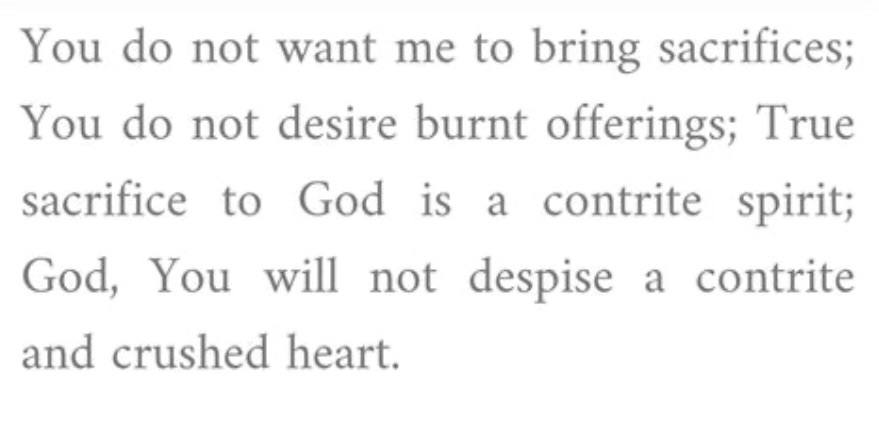
Out of gratitude, David promised to sing God’s praises. David promised to express his gratitude through songs of praise, worship, and humility before God: “Save me from the guilt of bloodshed, God, the God of my salvation, then my tongue will joyfully sing of Your righteousness. Lord, open my lips, so that my mouth may declare Your praise. For You do not delight in sacrifice, otherwise I would give it. You do not take pleasure in burnt offerings. The sacrifices of God are a broken spirit, a broken and contrite heart, God, Yoy will not despise” (Psalm 51: 14-17). David praised God’s forgiveness because he did nothing to deserve it. Instead, he knew he deserved death.
Restoration requires humility. If you have a “contrite heart” Jesus will restore you: “But You, Lord, are a shield around me. My glory and the One who lifts my head (Psalm 3:3). “Whoever exalts himself shall be humbled, and whoever humbled himself shall be exalted” (Matthew 23:12, Lk 1:52, 14:11, 18:14, Jam 4:6, 4:10, 1 Pet 5:6, Prov 29:23). When we stay humble Jesus will restore us and lift us up.
Sing Jesus’s praise for His forgiveness, mercy, and grace. David wrote Psalm 51 for generations to sing so that all could follow his example in seeking God’s restoration after sin. Like David, each of us has a story to tell about their deliverance. When Jesus healed the demon-possessed man, he ran, proclaiming praise for what Jesus did for him. “And he went away and began to proclaim in Decapolis what great things Jesus had done for him, and everyone was amazed” (Mark 5:20).
Sing praises for your undeserved salvation. The Psalms encourage us to sing praises for our underserved salvation. “Come and hear, all who fear God, and I will tell of what He had done for my soul” (Psalm 66:16). “My mouth shall tell of Your righteousness and of Your salvation all day long, for I do not know the art of writing” (Psalm 72:15). It’s up to us to express our gratitude to Jesus for our salvation in any way we can.
A life of obedience is a measure of your gratitude. David stated that God desired the sacrifices of “a broken contrite heart” (Psalm 51:16-17). This translates to a life of humility and spirit-filled obedience to God, Samuel said, “Does the Lord have much delight in burnt offerings and sacrifice as in obeying the voice of the Lord? Behold, to obey is better than a sacrifice, and to pay attention is better than the fat of rams” ( 1 Samuel 15:22). “ You have not desired sacrifice and meal offering, You have opened my ears, You have not required burnt offerings and sin offering” (Psalm 40:6). Obedience also shows our love for Jesus, “and to love Him with all the heart, and with all the understanding, and with all the strength, gratitude to Jesus visible through a life of humble obedience and all the strength, and to love one’s neighbor as oneself, is much more than all the burnt offerings and sacrifices” (Mark 12:33).
Gratitude to Jesus is visible through a life of humble obedience to His will for you.
Psalm 51:18-19
7. Fellowship: Restoration requires a desire to live in Jesus’s fellowship.
David desires a restored relationship with God. David delighted in the prospect that his forgiveness, restoration, and renewed leadership would also restore God’s fellowship with him. “By Your favor do good to Zion, build the walls of Jerusalem. Then You will delight in righteous sacrifices, in burnt offering and whole burnt offering, then bulls will be offered on Your alter” (Psalm 51:18-19).
The walls of Jerusalem refers to the real defense of the nation and the guarantee of divine favor -the moral defense. David’s forgiveness and spiritual renewal to proper attitudes and decisions would be a true and moral defense of the city and the nation. God’s work of spiritual renewal would enable the people to worship correctly. We like David can and must have complete cleansing before we can fully and freely serve God in any capacity. Our eternal destiny may not be in doubt when we sin, and neither was David’s because he appealed to that covenant relationship, but our fellowship and service will be. God will not tolerate unconfessed sin, but will discipline for it. And if we harbor unconfessed sin in our lives, we cannot teach others about forgiveness, we cannot praise God, we cannot come to His table, and we will not have the joy that we knew when we were walking with the Lord. We may still need these things with finding forgiveness, but it will be hypocrisy, and therefore not accepted or blessed by God.
Jesus offers His fellowship if we seek Him in faith. God promises His fellowship to anyone who earnestly seeks Him in faith. “And you will seek Me and find Me when you search for Me with all your heart” (Jeremiah 29:13). “But from there you will seek the Lord your God, and you will find Him if you seek Him with all of your heart and all of your soul” ( Deuteronomy 4:29).
Jesus made this same offer to believers at Laodicea. They were saved. But they were not walking in fellowship with Him.
“Behold I stand at the door and knock, if anyone hears My voice and opens the door, I will come into Him and will dine with him, and he with Me” -Revelation 3:20
I know this was a very long deep study on forgiveness. It took me a long time to get everything together. I only hope it will help you grow in the Lord, and realize what He has truly sacrificed for you.
What’s the first impression you want to give people?
The first impression I want to give someone is I’m friendly and confident. This usually makes them feel at ease.
I almost always stand up when I meet if I’m in a sitting position when I meet someone make direct eye contact, and speak in a firm voice. this makes the person I’m meeting know I will not be disrespected.
3. Atonement: Restoration Requires Faith In Jesus’s Atoning sacrifice.
David asked God to atone for his guilt. Knowing that an apology was not enough, David asked God to atone for him and purify him of his guilt under the law. Praying Psalm 51:7-8 as above. Psalm 51:9-10:
David looked for God to do a work of spiritual and moral cleansing, and to do it in connection with the atoning sacrifice of a substitute Hyssop was used to apply the blood of the Passover Lamb (Exodus 12:22). Hyssop was also used to sprinkle the priest’s purifying water (Numbers 19:19). In the Levitical law it was the priests who used the hyssop to sprinkle the purifying water…David didn’t think for a moment that he could cleanse himself. He needed God to cleanse him, and to don’t through the blood of the perfect sacrifice anticipated by animal sacrifices…David knew that God’s cleansing was effective. His sin was a deep stain but purity could be restored. There is a sense that David spoke with the voice of faith, it can be difficult for the convicted sinner to believe in such complete cleansing. It’s takes faith to believe in God despite the doubt and difficulty. (Psalm 51).
David’s many crimes carried multiple death sentences. Saying that he was sorry would not free him from his punishment under God’s law. The penalty for adultery was death: “If there is a man who commits adultery with another man’s wife, the one who commits adultery with his friend’s wife, the adulterer, and the adulteress shall surely be put to death” (Leviticus 20:10). “If a man is found lying with a married woman, then both of them shall die, the man who lay with the woman, and the women, this you shall purge the evil from Israel. (Deuteronomy 22:22).
The punishment for David’s intentional murder was also death: “Whoever sheds man’s blood, by man his blood shall be shed, for in the image of God He made man” (Genesis 9:6). “He who strikes a man so a man he does shall surely be put to death” (Exodus 21:12). “If a man takes the life of any human being, he shall surely be put to death” (Leviticus 24:17). “If anyone kills a person, the murderer shall be put to death…” (Nahum 35:30).
Nathan also accused David of “despising” God’s Word (2 Samuel 12:9). His actions blasphemed God’s Holy Name. “Therefore, son of man, speak to the house of Israel and say to them, thus says the Lord God, yet in this, your fathers have blasphemed Me by acting treacherously against Me” (Ezekiel 20:27). “For the name of God is blasphemy among the gentiles because of you, just as it was written” (Romans 2:24). For someone who blasphemed God’s name through his conduct as David did, the penalty for this was also death: “Because he has despised the Word of the Lord and has broken His commandment, that person shall be completely cut off, his guilt will be on him” (Nahum 15:31).
David could not appreciate his need for God’s mercy and grace until he recognized the penalty for his sins. Not could he atone for his sins on his own.
Faith in Jesus brings atonement for sins. There can be no forgiveness without the shedding of blood (Lev 17:11, Heb 9:22). Jesus was the lamb without defect who fulfilled all the sin offerings for us (Isa 53:7, John 1:29, Heb 10:12-24, 1 Pet 1:18-19). If God accepted the blood of animals “how much more will the blood of Christ (Jesus), who through the eternal Spirit offered Himself without blemish to God cleanse your conscience from dead works to serve the living God?” (Hebrews 9:14). “But if we walk in the Light as He Himself is in the Light, we have fellowship with one another, and the blood of Jesus His Son cleanses us from all sin” (1 John 1:7). All that is needed is our faith in Him as both our Lord and Savior” ( John 3:16, 3:18, 3:36, 6:40, 11:25).
Jesus will blot out your sin. David asked for God to purify, cleanse, and then wipe out his guilty deeds (Psalm 51:2m 7, 9). Through faith in Jesus’s atonement, God promises to do these things: “I have wiped out your wrongdoings like a thick cloud and your sins like a heavy mist. Return to Me, for I have redeemed you” (Isaiah 44:22). If God could make David as if he never sinned at all what can He do for us?
“Such is the power of the cleansing work of God upon the heart that He can restore innocence to us, and make us as if we had never been stained with transgression at all“ (Spurgeon on Psalm 51).
Riget now I’m reading a book by Ryan Pitterson called, “The Final Nephilim.”
This book is about how the anti-Christ will be the Final Nephilim. The Nephilim happened just before the Flood in Genesis 6:4. It’s a in depth exploration into the biblical case for the supernatural interpretation of Genesis.
In Matthew 24 :37-39 Jesus tells us that as the days of Noah were, so shall also the coming of the Son of Man be. The truth that the world will be just as wicked when Jesus returns for His second coming as it was during the days of Noah before the flood was sent upon earth.
By breaking his vow before God, David also propane His Holy name. He was not to “swear falsely by, My name, so as to profane the name of the God” (Leviticus 19:12). His actions also violated the Third Commandment, “You shall not take the Lord’s name in vain” ( Ex 20:7, Dt 5:11). Even if he had only broken one Commandment, he would have broken them all, “For whoever keeps the whole law and yet stumbles in one point, he has become guilty of all” (James 2:10). David came to appreciate and write Psalm 51 where he sought God’s mercy and grace only after God showed him his sins. David was a man after God’s own heart not because he was perfect. Instead, he was a godly man because he repented of his many sins.
David’s actions resulted in misery and sorrow. David stated that “my sin is constantly before me” (Psalm 51:3). When someone longs for the things of the flesh, God will eventually hand that person over to their lusts (Romans 1:28). But the pleasure Satan offers for the adulterer does not last long (Hebrews 11:25, Luke 12:19-20). About sinners, David said: God gave them their request but sent leanness into their soul (Psalm 106:105). “So is the one who gets into his neighbor’s wife, whoever touches her will not go unpunished” (Proverbs 6:26-29). God also warns of “curses” for those who submit to covetousness (Lev. 26:14-37, Dt 27:15-28, 28: 15:68). Before Nathan confronted David, God softened his heart for repentance by removing his good health: “When I kept silent about my sin, my body wasted away through my groaning all day long. For day and night, Your hand was heavy on me, my vitality was drained away as with the fever heat of summer. Selah” (Psalm 32:3-4). Poor health can have many causes. Sometimes, people who are mostly blameless in their walk can suffer terrible afflictions. But if we have hidden sins our health is suffering. God is likely trying to reach us.
Repent of your sins. God spared David’s life because he repented (Psalm 51:4, 2 Samuel 12:13). To be saved we must also repent to Jesus. In preparation for Jesus, John the Baptist called all sinners to repent: “Repent, for the kingdom of heaven is as hand” (Matthew 3:2). Jesus began His ministry with a call to repentance: “From that time Jesus began to preach and say, Repent, the kingdom of heaven is a hand” (Matthew 4:17). But the tax collector, standing some distance away, was even unwilling to lift his eyes to heaven but was beating his breast, saying, “God be merciful to me the sinner!” (Luke 18:13). His disciples also called on sinners to repent so that Jesus could wipe away their sins: “Therefore repent and return, so that your sins may be wiped away, in order that times of refreshing may come from the presence of the Lord” (Acts 3:19). If you confess your sins, Jesus promises to forgive you: “If we confess our sins He is faithful and righteous to forgive us our sins and to cleanse us from all unrighteousness” ( 1 John 1:9). If you have hidden sin, confess them to Jesus without delay.
Give thanks that God is merciful. David appealed to God’s mercy: “Be gracious to me, God, according to the greatness of Your compassion wipe out my wrongdoings” (Psalm 51:1, Ex 34:6-7). God is merciful each time you repent and return to Him: “The Lord’s acts of mercy indeed do not end, for His compassion do not fail. They are new every morning, great is His faithfulness” (Laminations 3:22-23). “Then you will say on that day, “I will give thanks to You, Lord, for although You were angry with me. Your anger has turned away, and You comfort me” (Isaiah 12:1). “For a brief moment I abandoned You, but with great compassion, I will gather you” (Isaiah 54:7). He is merciful in the face of our sins because He is filled with compassion and love. “For the Lord, your God is a compassionate God, He will not abandon you not destroy you, not forget the covenant with your fathers which He swore to them” (Deuteronomy 4:31). Doesn’t God deserve our praise because He is filled with compassion and mercy?
2. Honesty: Restoration Requires honesty regarding your sinful nature.
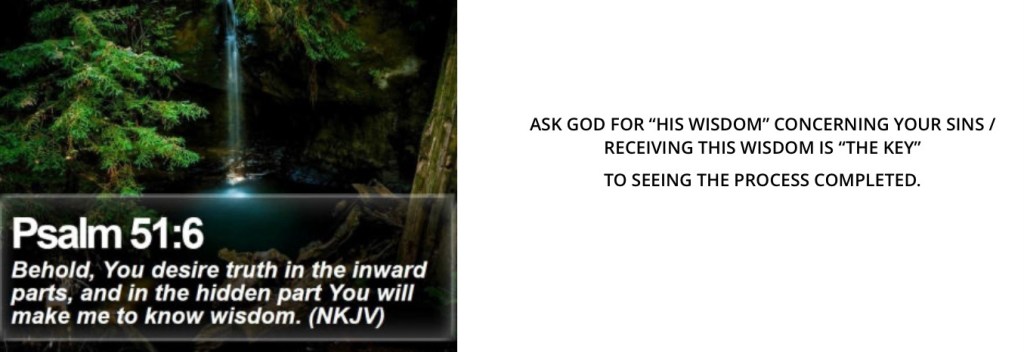
David was honest before God regarding his sinful nature and his need for God’s help. David confessed that he was a sinner and that he needed God to keep him from sinning again: “Behold, I was brought forth in guilt, and in sin my mother conceived me. Behold, You desire truth in the innermost being, and in secret You will make wisdom known to me” (Psalm 51:5-6). When Adam sinned, he blamed Eve (Genesis 3:12). Eve in turn blamed the serpent for deceiving her (Genesis 3:13). David offered no such excuses. David confessed his sins.
All have fallen short and need salvation. David confessed that he was sinful by nature (Psalm 51:5). He later proclaimed that all mankind is evil from birth: “The wicked have turned away from the womb those who speak lies go astray from birth” (Psalm 51:3). He, therefore, proclaimed that not is righteous before God: “They have all turned aside, together they are corrupt, there is no one who does good, not even one” (Psalm 14:3). “Do not enter into judgment with Your servant, for no person living is righteous in Your sight” (Psalm 143:2). Through his mistakes and his God-given wisdom, Solomon also declared that all have sinned: “Indeed there is not a righteous man on earth who continually does good and never sins” ( Ecclesiastes 7:20). “When they sin against You (for no person who does not sin). and You are angry with them and turn them over to an enemy, so that they take away captive to the land of the enemy, distant and near” (1 Kings 8:46). “Who can say, I have cleansed my heart, I am pure from my sin?” (Proverbs 20:9). God only spared Solomon’s end-of-life revelations to form two of the central tenants of universal sin and the need for salvation (Romans 3:23). The prophet Jeremiah made a similar revelation about our sinful hearts: “For My people are doing evil, but they do not know how to do good” (Jeremiah 4:22). If you believe that you are without sin, the truth is not within you: “If we say that we have no sin, we are deceiving ourselves and the truth is not in us” (1 John 1:8). Every person must be honest regarding their sins with God.
Acknowledge that your salvation is not earned according to your works. Moss was a murderer. He was a sinner who did not deserve to be God’s Lawgiver. Likewise, David, Solomon, and Jehoram were also murderers, and every king from Solomon to Jehoram either tolerated or practiced idolatry. They were all sinners and none of them deserved to be king. But God uses these sinners out of mercy and grace. You or I do not earn our salvation. “For by grace, you have been saved through grace of the Lord Jesus, in the same way as they also are” (Acts 15:11). “being justified as a gift by His grace through the redemption which is in Christ Jesus” (Romans 3:24). If you feel that you will be saved based on your good works or for being a good person, “then Christ died needlessly” (Galatians 2:21).
There is no sin that we can hide from God. Nathan told David that his secret sins would be made public (2 Samual 12:12). Unlike David, Jospeh did not give in to the advances of Potiohars wife because he knew God would have known (Genesis 39:9). “The eyes of the Lord are in every place, watching the evil and the good” ( Proverbs 15:3). “And there is no creature hidden from His sight, but all things are open and laid bare to the eyes of Him with whom we have to do” (Hebrews 4:13). “But if you will not do so, behold, you have sinned against the Lord, and be sure your sin will find you out” (Nahum 32:23). If was a lack of fear and respect for God that brought David into temptation: “The fear of the Lord is the beginning of knowledge, fools despise wisdom and instruction” (Proverbs 1:7, Psalm 110:10, Job 28:28). And, to fear the Lord we must hate evil: “The fear of the Lord is to hate evil” (Proverbs 8:13). Are there any sins that you are trying to hide? I know I have a few I would like to keep under lock and key. But God sees everything.
A godly person only speaks truth. Davis stated “You desire truth in the innermost being” (Psalm 51:6). Solomon warns that “life and death are in the power of the tongue” ( Proverbs 18:21). And “a wholesome tongue is a tree of life” (Proverbs 15:4). God condemned those who refuse to repent of their lies: “For He said, surely, they are My people, sons who will not deal falsely” ( Isaiah 63:8). “ You shall not deal falsely, not lie to one another” Leviticus 19:11). “Therefore, laying aside falsehood, speak truth each one of you with his neighbor, for we are members of one another” (Ephesians 4:25).
God’s hidden wisdom is found in His Word and the Spirit. David depended on God to stay free from sin. “In secret You will make known to me” (Psalm 51:6). He needed the wisdom of God’s Word to guide him: “Your Word is a lamp to my feet and lights my path” (Psalm 119:105). “Your Word is truth” (John 17:17). When we read the Word and pray, the Spirit will give you wisdom: “But the Helper, the Holy Spirit whom the Father will send in My Name, He will teach you all things, and remind you of all that I said to you” (John 14:26). When we read the Word and pray for the Spirit to give us wisdom we find the guidance to live life abundantly. “But if any of you lacks wisdom, let him ask God, who gives to all generously and without reproach, and it will be given to him” (James 1:5).
I have been doing this study for quite some time, but because of the extensive bulk of it. It is a deep study, that teaches about what David’s life and how he became a man after God’s own heart. What can we learn from David’s mistakes? We don’t have to be adulterous, or murders to want restoration from our sins. This is a deep study so I will be doing multiple posts so I can meditate in it, and let in soak in. I thought would be a great lesson for anyone who is struggling with sin and needs complete restoration.
At his lowest point, King David committed terrible acts of adultery, under, and lies. After David became blind to his sins, God used the prophet Nathan to expose his sins and convict him. (2 Samual 11, 12). For the rest of his life, David endured ongoing consequences for his sin. But God eventually restored him. Overcome with gratitude for God’s mercy and grace, David wrote Psalm 51 to help sinners find God’s restoration after sin. His Psalm pointed to Jesus Christ. Through Psalm 51 and the whole counsel of God, the Bible reveals seven lessons for finding Jesus’s full restoration after we sin.
These lessons include:
Repentance
Honesty
Faith in Jesus’s atonement
The Holy Spirit
Service
Gratitude
Fellowship with Jesus
First, after Nathan confronted him, David openly confessed his sins and repented to God. Our restoration through Jesus also begins with the confession of our sins. Second, instead of making excuses, David confessed his sinful nature and his need for God’s wisdom to guide him. Restoration through Jesus also requires honesty, regarding our sinful nature and our need for His guidance through the Word and the Spirit. Third, David asked God to purify him, something that required faith in the blood sacrifice at the cross fulfilled the need for blood sacrifices. But our restoration requires faith the Jesus paid the price for our sins through His atoning sacrifice. Fourth, David asked for a clean heart and a renewal of the Spirit within him. Restoration through Jesus includes allowing the Holy Spirit to transform us to renew our minds on a daily basis. Fifth, restored with the joy of His undeserved salvation, David promised to teach sinners about God’s ways and how to be converted in their faith. Restoration through Jesus includes being a living sacrifice for Him. This includes evangelizing the lost and teaching God’s Word. Sixth, out of gratitude for His underserved restoration, David promised to sing God’s praises. Restoration through Jesus should also include gratitude for His deliverance. Finally, David looked forward to an ongoing relationship with God where He would delight in His sacrifices. Restoration also requires a desire to live in fellowship with Jesus.
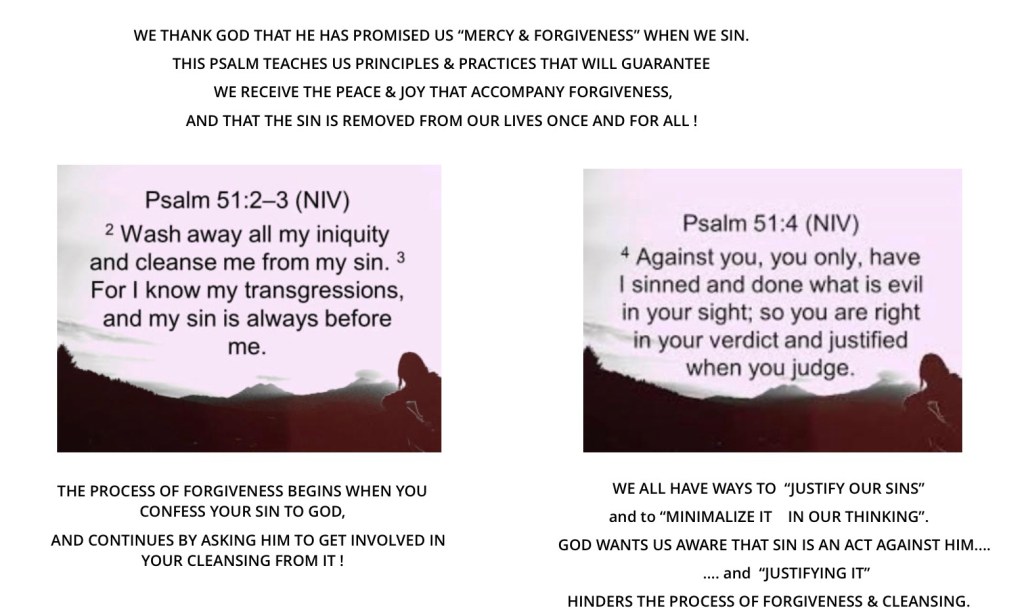
We thank God that He has promised us mercy and forgiveness when we sin. This Psalm teaches us principles and practices that will guarantee we receive the peace and joy that accompany forgiveness, and that sin is removed from our lives once and for all.
Repentance: Restoration Begins With The Confession of Your Sins.
David openly confessed and repented of His sins before God. After Nathan confronted him, David admitted to terrible sins against God that included adultery, murder, and lies. This Psalm of David is when Nathan the prophet came to him after he had gone into Bathsheba. After writing Psalm 51:1-4 David was a broken man at this point. He acknowledged his “guilt” once, his “wrongdoings” twice, and his “sin” three times. He offered no defense. All he could do was to appeal to God’s compassion and forgiving character (Ex 34:6-7).
David’s blindness to sin seven deadly sins. Through his adultery, murder and lies, David violated at least seven of God’s Ten Commandments. First, by lusting after his neighbor’s wife, he violated God’s Tenth Commandment against coveting (Exodus 20:17; Deuteronomy 5:21). Second by repeating giving into his lusts of his flesh,he made an idol out of attractive women and violated God’s Second Commandment (Exodus 20:4-5 Deuteronomy 5:18). Third, by sleeping with a married woman, he violated God’s Seventh Commandment against adultery (Exodus 20:14). Fourth, he violated God’s Sixth Commandment against murder he violated God’s Ninth Commandment when he killed Uriah (Ex 20:13). Fifth, by engaging in lies and deceit to cover up his neighbor Uriah’s murder, h violated God’s Tenth Commandment against bearing false witness (Ex 20:16, DT 5:20). Sixth, after he later married Bathsheba, he violated God’s law against a leader having more than one wife: He shall not multiply wives for himself, or else his heart will turn away…” (Deuteronomy 17:17. He further violated God’s purpose of marriage by joining himself together by more than one person (Matthew 19:4-6, 1 Timothy 3:2). To become king, he would have made a public vow to uphold the Torah (Bible).













 From Pity to Praise