
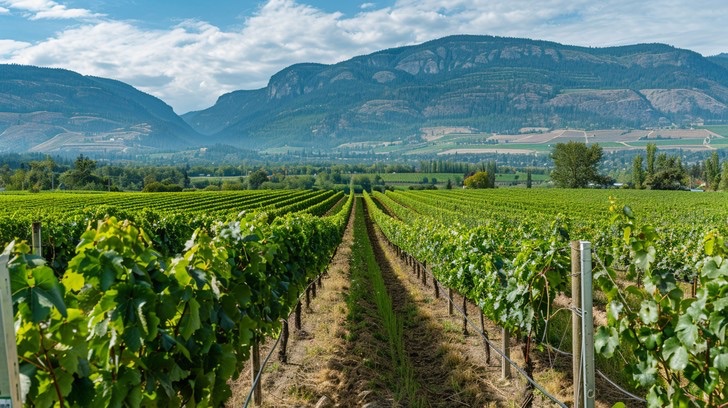
God has given us everything we need for life and godliness and in retire God expects us to bear fruit as faithful tenants.
In Genesis 1:11 God said, “Let the land produce vegetation, seed bearing plants and trees on the land that bear fruit with seeds in it, according to their various kinds, and so it was so.” Think about the variety of fruits – Pineapple, mango, pears, kiwi fruit, papaya, grapes and apples. God has made a world of fruits and vegetables all of them from seeds, the genetic code of which God created at the beginning.
In the beginning God created man, male and female, in His image, this is the command He gave them. “God blessed then and said to them, “Be fruitful and multiply and fill the earth.” Fruitfulness that mean’t having children, who themselves, would be made in God’s image, that they would be fruitful and multiply and fill the world with human beings so that the earth would be filled with knowledge of the glory of God as the waters cover the sea. Throughout the scriptures is that God has lavished on us many advantages and blessings, everything we need for life, godliness, and faithfulness. In return God expects a return on His investment.
Many scriptures speaks on this issue of required fruit. With the coming of the Kingdom of God, John the Baptist preached a very fiery message. He said to His generation, “Produce fruit and keep with repentance.” He also said a few verses later, “The ax is already at the root of the trees. And every tree that does not produce good fruit will be cut down and thrown into the fire.” In Matthew 12:33 Jesus said, “Either make the tree good, and it’s fruit good, or make the tree corrupt, and make it’s fruit corrupt, for the tree is known by its fruit. In John 15, He gives an image of a vine with many branches. He said, “I am the vine, you are the branches. The one who remains in me and I in him, produces much fruit, because you can do nothing with me. While every branch that does bear fruit, He prunes so that it will be even more fruitful.”
Mark 12 teaches this vital lesson, that Almighty God expects fruit from His people. He expects a return on His investment in our lives.
Jesus taught the parable of the vineyard to help us understand this in context:
The last week of Jesus life, He told this story directly to the chief priests, scribes, and elders of the Jewish. The situation the religious leaders had just confronted Jesus and angrily demanded to know by what authority He was teaching and clearing the temple.
It is the Passover. Thousands of pilgrims, Jewish worshippers were flooding from all over to Jerusalem. Jesus had already entered Jerusalem to shout of acclaim and triumph to the praise of the people. But, Jesus’s enemies are there as well. They were there to attack Him, and tear His down. The next morning Jesu saw the “fig tree,” with a lot of leaves. Jesus went to get fruit from it but found nothing. He said to the tree, “May you never bear fruit again.”
I think His prophetic cursing of the fig tree with its judgment and its immediate withering was connected to the spiritual fruitlessness of the nation of Israel, because He was just about to go in there and cleanse the temple of all its wickedness, its wicked corruption. This cleansing of the temple involved driving out greedy money changers and corrupt religionists who are making money on religion.
Jesus then begun to teach in the temple. He was doing miracles, healing in the temple, and because of His powerful presence and action, the religious leaders opposed Him to His face. They demanded to know by what authority He was doing these things. He would Andrew with a question. If they answered He would answer their question with authority. He answered with John’s baptism, where did it come from? Was it from heaven or from men?
A very wise answer on Jesus’s part because the same one who sent John to baptize in water sent His son into the world to do what Jesus was doing.
Keep in mind that the vineyard is Israel, the landowner is God, and the tenants were the corrupt religious leaders, and the landowner’s son who is killed by the tenants is Jesus Himself.
Jesus told of a vineyard, there choice vines, and the protective wall around it. There is a wine press, a watchtower. And there is also a very disappointed outcome for the owner of the vineyard.
In Mark 12:1-11 Jesus began to speak to them in a parable. “A man planted a vineyard. He put a wall around it, dug a pit for the wine press and built a watchtower. Then he rented the vineyard to some farmers and went away on a journey. At harvest time, he sent a servant to the tenants to collect from them some of the fruit of the vineyard, but they seized him, beat him, and sent him away empty handed. Then he sent another servant to them. They struck him on the head and treated him shamefully. He sent another, and that one they killed. After a few more servants. He sent his son, saying they will respect my son. The tenants said ‘This is his heir, let’s kill him and the inheritance will be ours.’ So they took him and killed him and threw him out in the vineyard. The owner of the vineyard came to kill those tenants and gave the vineyard to others.” (Paraphrased).
There are details in this parable that are very valuable. The main idea of Jesus’s parable of the vineyard is that fruitlessness produces judgment from God if the vineyard is absent from the landowner.
Ordinarily, it would take three years to begin getting return on the landowners vineyard. Every advantage as given to this vineyard.
First there’s a wall around it for protection to keep out wild animals and thieves. There’s also a wine press, which is an anticipation of the prophet from the vineyard. Generally, there would have been two basins carved out of rock and lines with plaster, an upper one and a lower one, the servants would have put the grapes in the upper one and tread them out with their feet. Then the wine -the grape juice, would run down into the lower basic where it would begin the process of fermentation. Then their is the watchtower, which enables guards to look out over the vineyard and make sure it’s protected, a constant vigil looking out over the terrain
In this parable there are “tenants” tenants are hired laborers who are brought into work the vineyard. It’s not theirs it the landowners. Their skill and labor are essential to the success of the vineyard. The vineyard doesn’t belong to them, but if they work well, they will share in its profits. This is the key concept: The vineyard belongs to the landowner. The tenants are farmers just working the vineyard in the hopes of sharing its harvest.
It’s essential to pay attention to Luke’s version, that the owner goes away on a long journey. He is not visibly there managing it. So the tenants are on their own. They have to remember and be faithful to him in their hearts.
Jesus crafted this parable to maximize shock. The judgment is there. The details are repulsive. The violence gets worse with each successive messages. The first servant is beaten, the second one is crushed in the head and treated shamefully, and humiliated, and the next is murdered outright.
Even more amazing is how patient the landowner is. The people listening to Jesus, probably thought, ‘How much more of this will the owner going to put up with this. Jesus said the owner actually sent many others. Some of them they killed and abused. Others the beat. Each one got treated shamefully and not one of them got his return on the investment. And then Jesus’s plot twist was he sent his son who he loved. He sent him last saying, “They will respect my son. But the workers said ‘let’s kill him and take his inheritance.
The hearers of Jesus parable were probably thinking, ‘wait don’t do that, it’s obvious what’s going to happen.” Remember that at Jesus’s baptism in Mark it says, “You are my Son, whom I love, with you I am well pleased. That’s the message spoken directly from God to Jesus.
The landowner said, “They will respect my Son.” And that’s exactly what should have happened, they should have respect His Son.
They should have listened to His Son.
They should have honored His Son.
They should have worshipped His Son.
They should have followed His Son.
Instead they rejected Him. They despised Him. They opposed Him, and in the end the killed Him.
In this parable, what is the tenants farmer’s motive? The tenants did not want the owner ruling over them, they rejected His authority. They didn’t want to give Him anything. They wanted full ownership of the vineyard themselves. They wanted all the proceeds from themselves. They wanted control of the vineyard. They thought if we kill the heir and take His inheritance (meaning the vineyard) it will be ours then.
This is clearly prophecy of Jesus’s rejection and His crucifixion outside of the city gates, completely rejected by His own people. He died outside the city.
The ending is what the owner will do to those tenants. Matthew 21:41 tells us “He will miserably destroy those miserable men, and will lease out the vineyard to other farmers who will give him the fruit in its season.”
In Verse 42 He said, “Did you never read the scriptures. The stone which the builders rejected, the same was made the head of the corner. This as from the Lord. It is marvelous in our eyes.
We are supposed to produce the fruit of the kingdom. It’s our time.
Many are made to believe that Jesus is coming back the same way He came as gentle as a lamb, but they will be sadly mistaken. He is coming back as a lion to conquer sin and evil. The final judgment and renewal of all creation.
Scripture defines good as that which is aligned with God’s nature, will, and creation, while evil represents rebellion against God. Goodness is eternal, whereas evil originates from rebellion of created beings.
Evil does not balance or compliment good, it is an intrusion into a perfect creation that will ultimately be eliminated.

