I admit I used to be horrible at budgeting my money. But over the years I’ve learned a few things. Every 2 weeks I sit down and make a budget. The first thing on my list is tithing -giving God His share. The Bible tells us that all gold and silver belong to Him. We are considered stewards, not owners, entrusted to manage these resources. When we give tithes and offerings blessings will come to us. Then the bills, food come out, the car payment, and gas as budgeted in. After that if there is any money left that’s money for me to spend on myself.
I wish they would teach finance in high school, it would lead students down a good path to enrich their lives.
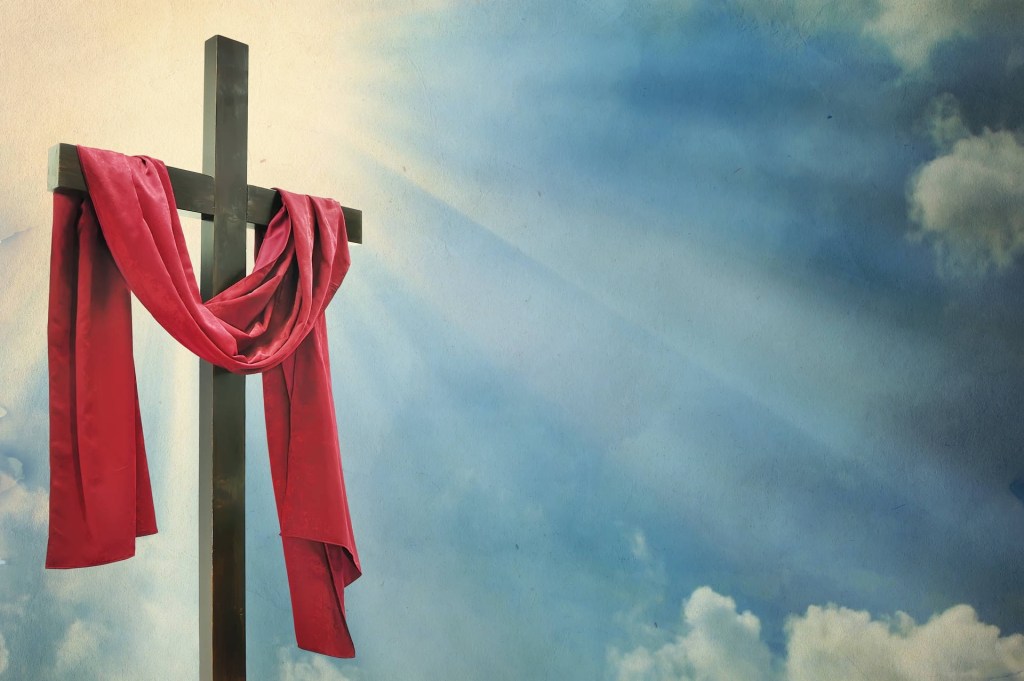
It’s common for people to focus on Jesus standing in place of our punishment. The Bible talks about the substitution, but there are others. Jesus created a tapestry on the cross that we often miss, because we focus on one part of the cross and Jesus.
These are all mentioned in the Bible. They are facets of the atonement and they all fit together.
1. Substitution
Jesus stands in our place, so that as Martin Luther King put it the “Great Exchange,” we gain His righteousness while He takes our sin. This is our cross to bear, our rightful death, and He takes it instead of us.
Jesus died so we don’t have to, even though our sin causes death. This is found in Isaiah 53:6, 1 Peter 2:24, and 2 Corinthians 5:21
2. Propitiation
This is often lumped together with substitution but it’s a distinctly different thing. It means the turning aside of wrath. Jesus’s death turns aside the wrath of God so that His anger is not poured out at those who trust in Jesus’s death.
Therefore, God’s wrath is not poured out against any of us who believe even though He is just and we deserve it. This is found in Romans 3:35, 1 John 4:10.
3. Expiation
Jesus cleanses our filth so that our sin is taken far away from us. If we think of the second goat (the scapegoat) on the “Day of Atonement” or Yom Kippur who is sent out into the wilderness to be eaten by goat demons. He is identified with the people’s sin and cast out of the camp with their uncleanliness on him. Jesus cleanses us not just from the penalty of sin but from its pollution, sending it far away.
Even though of sins make us filthy, Jesus cleanses us. This is found in 1 John 1:7, Leviticus 16.
4. Ransom
Jesus paid the price for our sin. He paid the price to the Father.
We are free from the price of our sin. This is found in Matthew 20:28, Colossians 2:14.
5. Redemption
Some church teachers or preachers use the example of redemption using slave markets and say that being redeemed is like being bought from slavery. I think this is half right, but the referent can be wrong. If we look at Exodus. God didn’t buy Pharaoh off, He crushed Him under the weight of the Red Sea. Jesus forcibly brings us from the oppression of this world’s snake-king into a promised land.
We are set free from our bondage to sin. This is the narrative of the whole Bible. Read Galatians 3:13, and Exodus 6:6.
6. Reconciliation
This is the classic “bridge to life” analogy. If we follow Jesus, we are no longer enemies of God but we are at peace. Our warfare with heaven has ended. And more than that we are given the greatest love, the love of the age to come. Jesus declares us as friends.
We can have a relationship with God despite our sin. This is found in 2 Corinthians 5:18, John 15.
7. Sacrifice
The Cross acts like the Levitical sacrifice of Purification, Ascension, and the Peace Offering. We are made Holy, our sin is covered, and we are lifted to the heavens, and a table is laid in the Lord’s Supper with the meat of the sacrifice.
Jesus takes us to the Father and feeds us a meal. This is found in Hebrews 9:13-14, and Leviticus.
8. Recapitulation
This is the climax of the Cross. The Resurrection, Ascension and the Gift of the Holy Spirit. Jesus consciously re-done Adam’s failure at the tree in the Garden, and being spiritually killed on wisdoms tree so that we will have access to the tree of knowledge of good and evil.
9. Demonstration
Jesus’s death is a demonstration of God’s justice. This is found in Romans 3:24-25, Romans 5:8, 1 Corinthians 1:22-25, and 1 Timothy 1:15-16. It is in the death of Jesus, that we discover who God is.
10. Example
Jesus’s death is an example of how we are supposed to live, self-forgetfully and self-sacrificially. Because some people have taught that Jesus’s death was only an example, others scoff at it. But, it’s a Biblical idea, ad we look at God dying for us, we can learn who God is and who we can turn to.
We are called to live like Jesus. 1 John 3:16, 1 Peter 2:21.
11. Victory
Jesus conquered death. Death is dead in the death of the living. He has wrestled the keys of hell from the enemy’s cold hands and now rules over death. Satan, sin, and death died on the Cross and Jesus won.
Satan was defeated in the way Zechariah 3:1-4 described it. The true accusations of the accuser are made to be false because Jesus stood in our place on the Cross. Found in Colossians 2:15, Genesis 3:15.
12. The Gift
The Cross was not required by the laws of God had set to govern the universe. No one forced Him to do it. Jesus chose to freely offer Himself in our place. He hung in the air, arms wide outstretched to embrace the world. Found in Isaiah 53:10, Galatians 2:20
God loves us. And that’s good news.
“My life is but a weaving Between God and me. I cannot choose the colors He weaves steadily. Oftentimes times He weaves sorrow. And in my foolish pride forget He sees the upper and I the underside. Not until the loom is silent and the shuttles cease to fly will God unroll the canvas and reveal the reason why” -Life is but a weaving by Corrie Ten Boom.
Where we only see the messy underside God sees the beautiful finished pattern on the top.
I am patriotic because I love my country and what it stands for. Life, liberty, and its inalienable rights. I believe that these rights are not granted by the government, but are inherent to every human being. Patriotism is an act of protecting these rights for myself and my fellow citizens.
The government’s only “just powers” come from the people it serves. A true patriot ensures the government remains a tool to secure these rights rather than a force that infringes upon them.
In the hustle and bustle of everyday life, it’s easy to lose sight of our calling and purpose. To live in the light of God‘s love. I’ve learned a few ways through trial and error to cultivate a deep relationship with God to allow His life to illuminate my path.
Our journey through life often leads us to crossroads. Either a path of light or darkness. Our choice is significant because it shapes our relationship with God and spiritual development.
The Bible is full of examples of people who chose to follow God‘s path. For example, Moses, who abandoned the riches of Egypt, to lead his people to freedom in Hebrews 11:24-26. Or Ruth, who chose to follow Naomi and her God despite uncertainty. (Ruth 1:16). their choices were not easy, nor were they without sacrifice, but they chose God’s light.
Choosing the path of Light.
Choosing God’s light is a leap of faith, it’s about trusting that His ways are better than ours (Isaiah 56:9).
Sometimes we choose early in life to follow God’s light, other times you do what I did. After I tried everything else and failed I chose to give God a try.
Choosing to follow God’s light is about believing that no matter how dark or difficult the path seems, His light will always guide us home (Psalm 119:105).
Building a spiritual community
God’s is light. His light not only guides us but also connects us. It fosters a connection with other believers, creating a spiritual community. Just as one candle can light many others without diminishing its light, God’s light within us can inspire and encourage others.
Having a spiritual community plays a vital role in our journey through life. Ecclesiastes 4:9-10-11 reminds us, “Two are better than one because they have a good reward for their labor. For if they fall, the one will lift up his fellow, but woe to him who is alone he falls, and doesn’t have another to lift Him up.” In times of doubt or struggle, our spiritual community lifts us, prays for us, and reminds us of God’s promises.
We can help this along by being transparent about our spiritual journey and sharing our victories and struggles. Doing this allows God’s light to shine in our lives. And serves as a beacon of hope and encouragement to others.
From sin to sanctification
Sin separates us from God. It darkens our spirit and prevents us from fully experiencing God’s grace and love. Thankfully, God’s love has the power to forgive all sin. 1 John 1:7 tells us, “But if we walk in the light, as He is in the light, we have fellowship with one another, and the blood of Jesus, His Son, purifies us from all sin.”
Sanctification is not a one time event but an ongoing process. As we continually choose to walk in God’s light, we allow His truth to expose our sins and Hid grace to cleanse us. We learn to let go of our sinful habits and cultivate habits that are pleasing to Him.
Living in alignment with God’s nature
As we choose the path of light, we foster fellowship, listen, and allow God’s light to purify us, and we align our lives more closely with God’s nature. This alignment is the ultimate goal of our spiritual journey.
When we walk in the light, we are challenged to embody love, truth, and holiness daily. We can learn to love unconditionally, live truthfully, and strive for holiness in all we do.
This is a process and we shouldn’t aim for perfection but growth and transformation. It’s about becoming more like Jesus each day. Paul describes this process in 2 Corinthians 3:18, “And we all, who with unveiled faces contemplate the Lord’s glory, and being transformed into His image with every increasing glory, which comes from the Lord, who is the Spirit.“
Walking in God’s light is a lifelong journey. It can be filled with challenges and obstacles, but it is also filled with abundant blessings and profound joy. Through it all we need to press on and keep our eyes fixed on Jesus, the author and perfector of our faith.
“For in His light, we truly find our purpose, identity, and home.”
If I received some great news, the first thing I would do is probably cry, because that’s who I am. But then we would celebrate with food, because that’s what most human beings do.
Reacting is often quick and emotionally charged, and it can occur without much conscious thought or reflection. It can be influenced by past experience, conditioned responses, or the activation of the fight or flight response in the face of perceived threats.
In contrast to this, responding typically involved a more deliberate and thoughtful approach. Taking time to process information, consider different perspectives and choose the course of action consciously. When we learn to respond, we are more likely to experience more positive outcomes in our daily interactions.
Reactions are often based in the moment, and driven by emotion, they are often aggressive and fuel disagreement, this triggered psychological responses in the body, such as increased heart rate or sweating. While a response to a well-thought-out reaction can result in a positive outcome.
We can control the urge to react by practicing mindfulness. Mindfulness involves acceptance and nonjudgmental awareness of present-moment experiences that can help us respond rather than react in difficult situations. By pausing and being mindful, we can be present with our thoughts and feelings to identify our triggers so we can choose how to respond rather than react.
I learned a little trick years ago that has worked for me in difficult situations. It is taking 10 deep breaths to calm and relax my body to avoid reacting.
The benefits of being mindful lead to:
Less emotional reactivity
Reduce stress and rumination
Increased cognitive flexibility
Higher relationship satisfaction
Learning to respond and empower you to become a better person. Here are a few ways I respond rather than react:
Name your emotions
Verbalize them out loud or write them in a journal. This helps your brain realize the situation is temporary.
Recognize how your body feels
Pay attention to any physical symptoms you’re having. This helps you in the future to know when you’re being triggered. For example I can the tension in my neck when I’m feeling triggered.
Use your breath to regain control
Take 10 deep breaths. This helps slow your breath to a calm rhythm.
Ask yourself why you reacted
This helps identify and deal with what triggered you so you can respond, not react.
Practice mindfulness regularly
This helps improve your awareness of your body and brain responses, which helps you respond rather than react. Reacting and responding are both natural human tendencies, developing your ability to respond thoughtfully can lead to more positive outcomes. This helps in conflict resolution and decision-making. With practice and self-awareness, you can cultivate the skills necessary to respond mindfully.
There is a spiritual and physical pilgrimage that believers undertake in their walk with God. This journey is marked by growth, trials, faith, and the pursuit of divine wisdom.
The Bible provides us with numerous examples and teachings that illuminate the nature of this journey, it offers guidance and insight for those who are seeking to navigate their path in accordance with God’s will.
There are 3 Biblical foundations I want us to take a look at:
The journey of faith
The journey of faith is a central theme throughout scripture. This is exemplified by Abraham in Genesis to left his homeland and journeyed into a land that God would show him. Abraham’s obedience and trust in God’s promises set a precedent for understanding the journey as one of faith and reliance on divine guidance.
2. The Exodus
The Israelites’ Exodus from Egypt is a profound illustration of a collective journey. In Exodus 13:21-22, I believe that when God leads His people with a cloud by day and a fire by night, it symbolizes His constant presence and guidance. This journey from slavery to the promised land is a metaphor for spiritual liberation and a transformative process of following God.
3. Pilgrimage Psalms
The Psalms of Ascent are Psalms 120-134 are songs sung by pilgrims traveling to Jerusalem for their feasts. These Psalms reflect the physical and spiritual ascent towards God, emphasizing themes of trust, protection, and worship.
One of my favorite Psalms is Psalm 121:1-2, which declares, “I lift up my eyes to the hills. Where does my help come from? My help comes from the Lord, who made heaven and earth.”
There are key themes that go along with understanding our journey:
Growth and Maturity
James 1:2-4 encourages us to, “Consider it all joy when you fall into trials, knowing that the testing of your faith produces patience. But let patience have its perfect work, that you may be perfect and complete.” This is the perseverance that leads to maturity in Christ Jesus.
2. Wisdom and Understanding
Proverbs 3:5-6 advises us, “Trust in the Lord with all your heart, and lean not on your own understanding, in all your ways acknowledge Him, and He will make your ways straight.” Our journey requires us to seek God’s wisdom and understanding, rather than relying only on our human insight.
3. Endurance and Perseverance
Our journeys are without challenges. Hebrews 12:1-2 urges us to, “Run with endurance the race set out for us, fixing our eyes on Jesus, the author and perfector of our faith.” Endurance is essential for completing our journeys through life to teach the ultimate goal of eternal life.
The Bible illuminates our journey, guides us through life challenges, and uncertainties we would do well to embrace the Bible as our daily compass and let it light our way.
If you count speeding, then yes. Those times when I’m cruising down the road and I look down and I’m going ten miles over the speed limit. Or forget to buckle my seat belt and think why am I so comfortable in this seat.
Scripture tells us that when Jesus died on the cross, the veil in the Temple was torn in two from the bottom.This means that the barrier between God and humanity granting direct access to God’s presence for all people without needing human priests. The fact that it was torn from the bottom indicates it as a divine act, signifying the completion of Jesus’s sacrifice.
The thick curtain that separated the Holy of Holies from the rest of the temple was removed. It signifies that Jesus’s death was the final, perfect sacrifice, abolishing the need for animal sacrifices.
It also marks a transition from the Old Testament laws and rituals to an era of direct relationship with God, accessible to everyone rather than just the high priest.
This is mentioned in the gospels of Matthew, Mark, and Luke to show the immense theological impact of the crucifixion.
Paul wrote in Ephesians 2:13-14, “But now in Christ Jesus you who once were far off have been brought near by the blood of Christ. For He Himself is our peace, who has made us both one and had broken down in His flesh the dividing wall of hostility.”
Paul tells us that Jesus’s death tore down the walls of hostility. While we were, by nature, objects of wrath, Jesus’s sacrifice tore down the Holy Veil so we can approach the throne of grace. He removed the dividing walk between Him and us, making us a kingdom of priests.
Regardless of where we are from, what we look like, or how many resources we have, we can be reconciled to God. But this isn’t the only wall that wall broken -all the walls of the Temple were broken. Paul’s point is this: if, through Jesus and believing Gentiles (us) have no grounds to keep their own dividing walls of hostility between them.
We as individuals have a lot of differences, pursuits, likes, and dislikes. We come from various backgrounds and diverse cultures, but there is one commonality between us, the things that brings us together, is our love for Jesus. And it’s when we come back to that truth of who Jesus is in His Word that we are truly unified.
When different perspectives might challenge us, it is the one perspective that Jesus is Lord, that God’s Word is true, living, and active, that brings us back to our common perspective. It is in that commonality that we can truly make a difference for Jesus in this world.
At 58 years old my father was still painting vehicles for a living and coming home to cook him and my mother supper. And my mother still doing what we always did, keeping a clean house.











 From Pity to Praise