I was listening to a podcast the other day where the teacher said something that I haven’t been able to stop thinking about.
His analogy was the earthly realm serves as the preparation space -the bridal chamber for a divine union in the heavenly realm – the wedding). This a deeply mystical concept rooted in the early church.
In ancient texts like the Gospel of Philip, this imagery suggests that earthly life is a place where our souls are purified and intend with divine wisdom. Just as a bridal chamber is a place of preparation and intimacy, earthly existence is viewed as the necessary space to prepare our inner selves.
The ultimate “wedding” is our souls resurrection and final, eternal communion with the divine in the Kingdom of Heaven.
In the Gospel of Philip, the “bridal chamber” is the highest sacramental mystery. It symbolizes the spiritual reunion of the soul with its heavenly counterpart, overcoming the separation caused by duality and granting the initiate eternal light and immortality.
A song that stays at the forefront of my mind is a song by David Crowder it’s called “Good God Almighty.” The cord is “ Good God Almighty, I hope you’ll find me praising Your name no matter what comes, ‘ cause I know where I’d be without you mercy..’ I love that it’s a short sticky phrase that acts as a vow of trust and devotion to God.
“For the revelation awaits an appointed time, it speaks of the end and will not prove false. Though it will linger, wait for it, it will certainly come and will not be delayed” -Habakkuk 2:3
With God a day is like a thousand years, and a thousand years like a day. God is not slow in keeping His promises as some understand slowness ( 2 Peter 3:8-9).
Waiting on God’s timing is often described as a “passive pause,” but as an active season of spiritual growth.
This means relinquishing control and trusting that God is preparing us for circumstances for our ultimate benefit.
While our wait can be difficult, we can find it to be an invitation to lean into our faith. We can be in active preparation. Rather than just marking time, the waiting period can be a time for personal refinement. A period to deepen our faith, develop character, and align our goals with what is truly meant for us.
We can learn to let go of any anxiety. And trust the divine timing that involves surrendering the need to know the future or force outcomes. By doing this, we can experience peace even when life feels delayed.
We can find encouragement in Scripture and draw strength from verses like Psalm 27:4 which encourages waiting with courage and patience. And Isaiah 40:31 which offers comfort by shifting our perspective of waiting from passive delay to active, hopeful anticipation. This verse promises that when we rely on God instead of our own limits, He supernaturally renews our strength, giving us the endurance to handle daily challenges without growing spiritually weary.
Isaiah 41:31 tells us, “But those who wait for the Lord will renew their strength. They will Mount up with wings like eagles. They will run and not be weary. They will walk and not faint.”
This verse represents receiving a fresh perspective. Like an eagle catching an updraft to soar above the storm, waiting on God’s lifts who lifts us above our immediate circumstances.
After all we are waiting on an all knowing, all powerful Creator who never grows tired.
People aren’t grateful because they are happy because they are grateful
The filter by which we perceive what happens to us dramatically impacts how we view our lives, our ability to handle challenges, and our overall experience of happiness.
Well, feeling grateful for a wonderful thing to experience, those who truly understand the power of gratitude know that gratitude is not just a feeling; it’s an important practice that can totally guide and transform our lives.
There are three ways I practice gratitude on a daily basis that have a profound impact in my life and the lives of others.
Say, thank you – we all have busy schedules, so it’s up to us to invest in being present in our daily lives. Think of all the times we are out and about, and how we see many people on our errands, none of them being people we really connected with.
It’s easy in the grocery store checkout line to say a half-hearted thank-you to the cashier. They may be saying the same words to move the line along.
But would, if the next time, we pause, make eye contact, and smile at the person, and say thank you directly to the person who is serving you. Not only will you most likely see them light up as you consciously share your gratitude, but the feeling will let you receive from the practice and energize you as well.
Be grateful for the good and the bad
Being in a state of gratitude isn’t always easy. But when we consider that everything that happens in our lives is present for our learning, and growth. When we look at things this way, we can begin to see that there is an opportunity to be grateful for everything. When we go through a difficult situation we should ask, “what does this situation want to teach me?”
For example, remember a situation where you experienced pain or struggle; if you look back on it and see how it made you stronger and became a better version of having lived through it.
In 2 Corinthians 12:10, Paul said, “When I am weak, then I am strong.” God often does His best work in the middle of our weaknesses.
Practice the gratitude sandwich. Gratitude is not just a feeling, it’s a practice. It’s something we can consciously work on every day to maintain our inner sense of well being and intentionally attract positive things into our lives.
The gratitude sandwich works like this:
First thing in the morning, identify at least 5 things you are grateful for. Don’t just think about them; actually feel the feeling of gratitude wash over you. This sets your brain, first thing in the morning, to recognize things to be grateful for throughout the day.
Then in the evening, write at least 5 things you experienced that day for which you are grateful for. It can be something as finding a parking place without having to drive through the parking spot three times.
Gratitude is a daily choice. It’s doesn’t just happen. It’s a decision we make every day.
I promise myself that I would change my attitude and perspective in life. It helped me build trust in myself, boosted my confidence and helps create lasting personal growth. That promise helps me keep showing up for myself everyday.
If I could have dinner with a fictional character I would choose Tigger in the Winnie the Pooh he was always cheerful and full of energy. I’m pretty sure there would definitely not be a dull moment.
In James 2:14-26 the Bible warns that faith or works with a genuine relationship with God is dead. True faith isn’t just intellectual belief, it’s natural, active fruit of a loving relationship with Him. Works without this relationship are just empty religious obligations.
If faith feels like a chore, it might be dead works, rather than a relationship of grace. I learned this the long way. I was doing volunteer work when it began to feel heavy. I kept doing it because I felt like it was the right thing to do. The issue was that God never spoke to me and said to do it in the first place. When I began to listen to the Holy Spirit I stopped volunteering.
“Dead faith is not non-existent faith. Dead faith is inactive faith. God’s goal is activation, not accusations” -Clint Byars.
Even the forces of evil have faith, but it does not spur them on to participate in the Lord’s work. So they are left empty, lifeless, and joyless.
I think that this might be one of the reason Jesus says in Matthew 7:22-23, “Many will tell me in that day, Lord, Lord, didn’t we prophesy in your name, in your name cast out demons, and I’m your name do many mighty works? Then I will tell them, ‘I never knew you. Depart from me, you who work iniquity.”
I would say the best purchase I ever made is my jeep. It is built to tackle rugged roads and get through snow, which is common for the mountains where I live.
Wreaking rock bottom feels devastating, but it serves as a powerful, solid foundation. It strips away illusions, removes fear of falling further, and provides the ultimate starting point to completely rebuild your life.
Many people who hit rock bottom look back and realize it was the catalyst for a much stronger, healthier future. Because everything has been stripped away, and we were left with nothing but absolute truth and the opportunity for a total fresh start.
It gives a perspective shift, instead of viewing a crisis as a total collapse. It can be reframed as a breakthrough. It helps rebuild without the pressure of maintaining old unsustainable habits. And you can begin to build a new life on a firm on the basis.
It can cause us to see a silver lining during our toughest moment and embrace a fresh start.
In our powerlessness, God has us right where we need to be so we acknowledge our complete need for Him.
We have two choices. We can where we are and let the weight of life bury us, or we can use it as a foundation to rise. Rock bottom isn’t the end. It’s where clarity is born. It’s where we meet the version of ourselves that’s done settling and finally ready to fight for more.
This is the moment that separates most people. Some quit. Some freeze. But the ones who choose to rise are the ones who transform. Rock bottom reveals the truth. It exposes false support, forces us to confront our habits, and gives us a mirror we can no longer avoid. The pain can break us, or it can build us. The decision is ours to make.
We are not broken; we are being rebuilt. Brick by brick, moment by moment. We are not starting over, were starting stronger. What we build from this point on will carry more meaning, more resilience, and more purpose. Leaders aren’t born at the top. They’re made in the trenches.
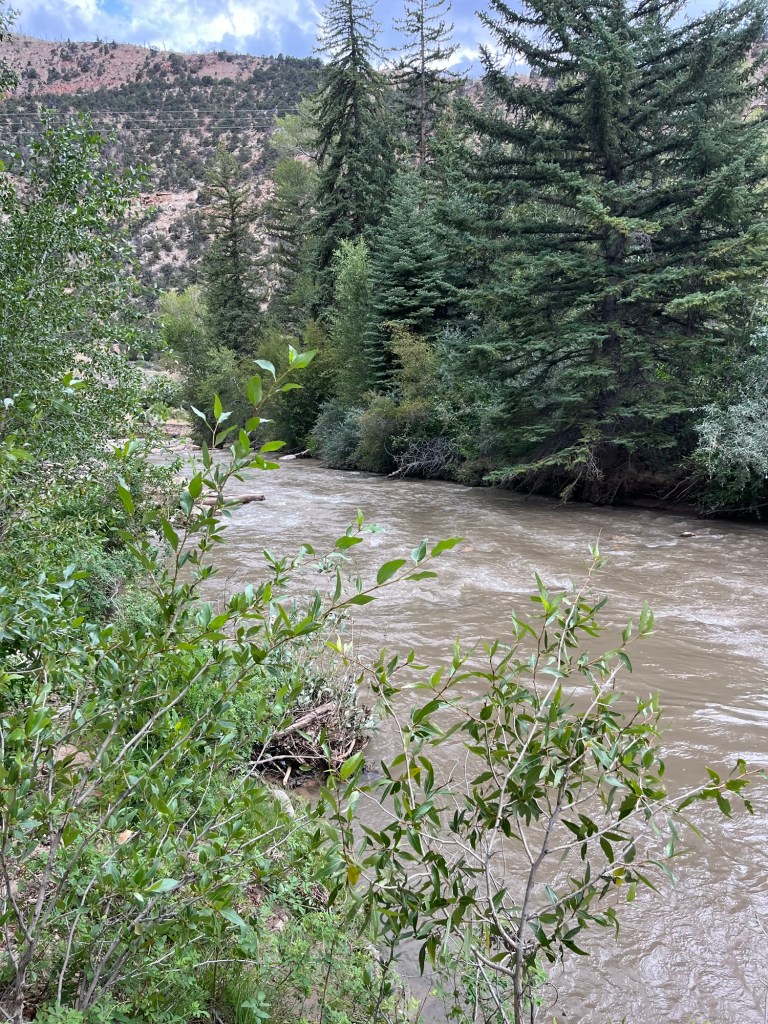
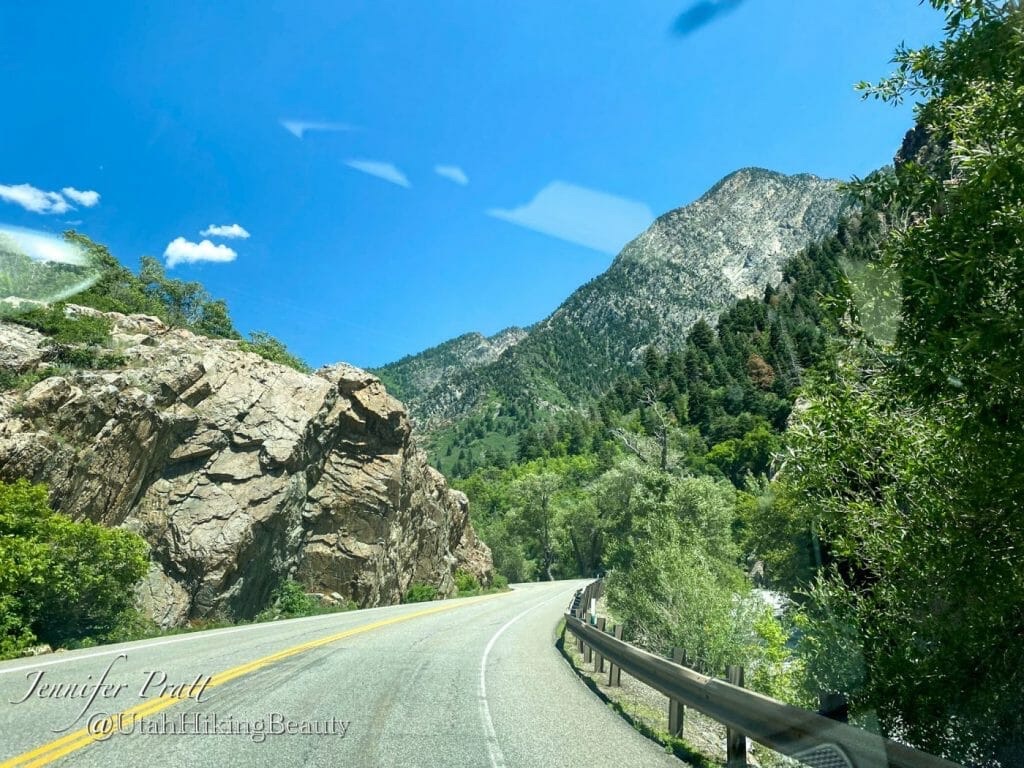
Cottonwood Canyon in Beaver Utah before it was destroyed by fire
Many of us as children thought of a God who was only pleased when we behaved well. That’s not true, but it is a common message we were told from our parents. Good behavior brought approval and bad things brought disapproval. Our concepts of God was influenced by relationships with our parents.
God’s love for us is not tied to performance. He loves us for who we are, not what we do and don’t do. But there is so much more that comes from a knowing that comes through revelation and Spirit given gut insight.
When we choose to follow God moves our hearts to a new understanding. Time expands beyond its borders into the eternal. God loves us no matter what we.
We don’t have to be sin free when we choose to follow God, that happens through a relationship with Him. I think some church judge by the way people look, or what they’ve heard about people when they walk into a church. And it’s so wrong on so many layers. Because the love of God was never meant to be divided up and handed out. God’s love is who we are and what we give.
We cannot separate loving God from loving others or loving ourselves.