


I would want to see me as a disciple. I want people to see Jesus shining through me. A gentle, kind, grace filled woman who is compassionate. That’s the memory I want to leave behind, when I leave the room.
Running The Race With Endurance

“Therefore let’s, seeing we are surrounded by so great a cloud of witnesses, lay aside every weight and sin which is so easily entangled us, and let’s run the perseverance the race that is set among us” Hebrews 12:1
The Bible uses running a race to describe the life a follower of God should live. We are to discard hinderances, fix our eyes on Jesus and run with perseverance to finish our spiritual race God had set before us.
We are encouraged to finish the race with perseverance as we go through trials and remember the faith of those who came before us and focus on Jesus’s example of enduring the cross with joy that was set before Him.
The race is not a sprint, it’s a marathon that requires endurance, discipline, and commitment.
We are called to throw off everything that hinders us and the sin that can easily entangle us. It involves getting rid of distractions and everything that slows down our spiritual progress.
Jesus is the pioneer and prefecter of faith. He should motivate us to endure. He is our ultimate example.
We are not running this race alone, the Bible teaches us that we are not running this race alone. The people of faith from history like Abel, Enoch, Noah, and Abraham should encourage us to preserve, according to Hebrews 11.
This means running with endurance we should continue our race in faith, in our daily walk with God even if we don’t feel like it. This involves staying faithful to God’s calling through trials, difficulties, and opposition. We should view our trials with an eternal perspective, which can help us endure this life, because there is a promise of eventual gain.
Choose Peace

In a world where confrontation is often glamorized and considered a rite of passage. The act of quietly removing yourself from the situation can feel like act of rebellion. It is counterintuitive to the loud, drama fueled resolutions we have been seeing. The greatest gift we can give ourselves is the ability to let go without over explaining, without demanding closure, and without burning ourselves out trying to understand what’s going on.
Sometimes peace doesn’t come from the other person, but from the decisions to stop participating in what drains us. We often stay entangled I’m toxic cycles, explaining and re-explaining ourselves, and trying to bridge, gaps and understanding or seeking validation that never comes. while it feels noble to work things out, the emotional toll it can cost us our peace of mind.
“If it costs you you’re peace it’s too expensive.“
Quietly walking away is not an act of weakness or avoidance. It’s an act of profound strength and self-respect. It’s understanding that our energy is sacred, and not everyone deserves access to it.
When we stop over, extending ourselves, we can make peace for what truly aligned with our soul. When we choose silent over chaos, we reclaiming the energy spent on overthinking, arguing, and explaining. Instead of investing, our time and situations that rob our clarity we redirect it towards self-healing and growth. We allow ourselves to move forward without dragging the weight of other people’s issues with us.
We have an illusion of closure. But closure is a myth. We think closure will heal us but closure doesn’t depend on the other person. It depends on our willingness to accept what is, even if it messy or incomplete. Trying to force closure can lead to a cycle of dissatisfaction because it keeps us tethered to the very thing we’re trying to release.
True freedom comes when we stop chasing expectations and start realizing that some questions will never be answered.
When we feel compelled to explain our feelings or justify our actions, it’s often because we seek permission to feel the way we do. Confrontation will never bring peace. Until the person sits down and can have a reasonable discussion and is willing to have an open mind.
Walking away without explanation is an act of trusting ourselves. It’s realizing that our inner peace is more important than convincing someone else of our perspective. Confrontation and violence will never solve anything.
If we want peace we need to set boundaries. Saying no I’d not selfish, it’s self-preservation. We can protect our energy by identifying what’s worth our time and what’s not.
We must let go of the need to be right. Some battlesaren’t worth fighting, and some arguments aren’t worth winning. Choose peace or the urge to prove a point.
When we accept people in situations as they are and not how we want them to be, it helps us detach emotionally from what’s beyond our control.
Instead of obsessing over what we think is wrong it’s better to channel our energy into activities that nurture our souls.
Silence isn’t a weakness, it’s wisdom. By using silence, we allow space or clarity and healing to the emerge.
Walking away is an act of grace. When we quietly remove ourselves from the situation, we are not giving up, we’re leveling up. We are choosing peace, over the chaos of trying to make everything perfect -it will never be.
We are trusting that our worth isn’t tied to someone else’s understanding of us. Life is too short to explain our soul to those committed to misunderstanding us.
Maybe it’s time we stop over extending it our embracing the power of detachment. Walking away is not the end, it’s the beginning of something better -our freedom, our peace, and our power.
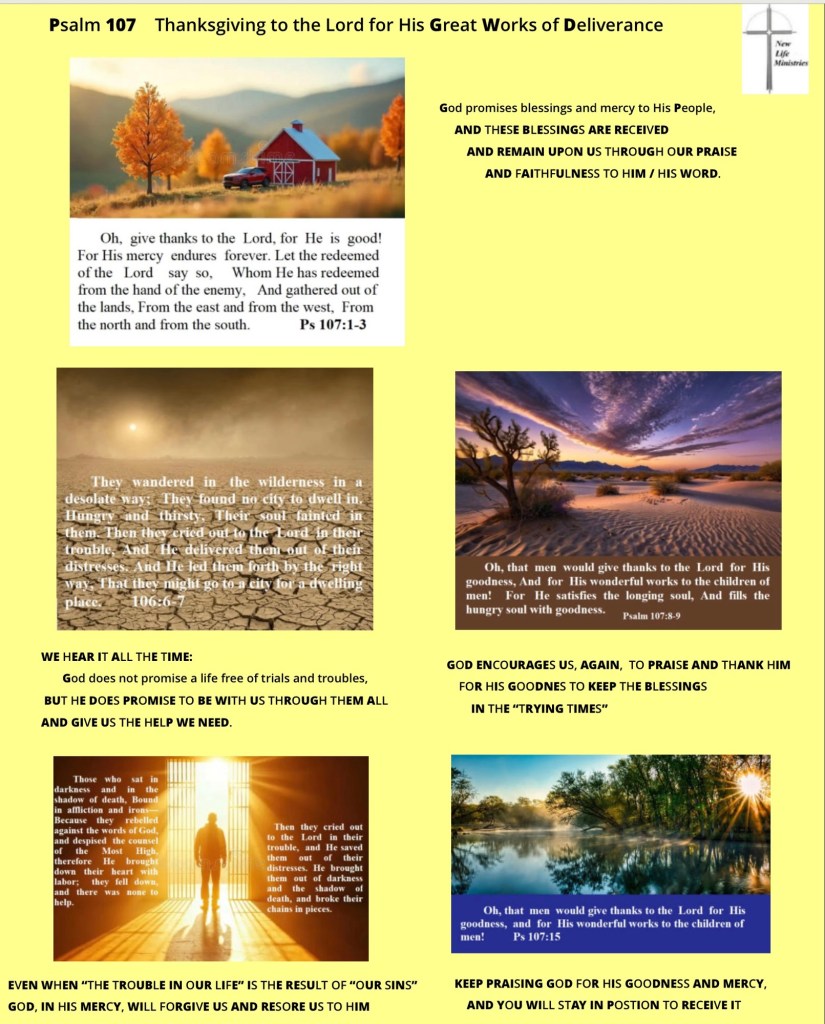
Thanking God For Deliverance

Just One More Chapter


I usually read more that two books at one time, but the one I’m reading now, I’m pretty in to. “Drawing Near, A life of intimacy with God,” by John Bevere.
I think my church is going to have a Bible study, that would give me background context from this book so, I wanted to make sure I soaked everything I could from it.
Faith As A Mustard Seed

Wild mustard seeds is highly evasive and spread rapidly along the ground. It can grow almost anywhere are difficult to kill and sometimes sprouting again after being cut down.
Jesus spoke in Matthew 17:20 saying, “If you have faith as a mustard seed, you will tell this mountain, to move from here to there, and it will move, and nothing will be impossible for you.”
I was thinking last night that some churches teach “if you have faith of a mustard seed, your faith will grow.” But that’s as far as they go. Some say that “if you just believe hard enough, you will get what you want.” But, Jesus encouraged His followers that their faith does not need to be large to be powerful because God can work miracles through even the smallest amount of trust.
But I believe that to move mountains we need to engage in conversations, When we have faith as a mustard seed it has to empower us to overcome life’s challenges and grow spiritually. It’s not about our ability to move mountains in our human strength, but about God’s power working through us who have faith. It’s about letting people see our faith, but that involves risk. Sometimes our most faithful moments is when we act despite uncertainty.
It requires action and belief. True faith is not just believing, but acting on that belief and trusting that God will help us through our challenges.
Faith requires consistent effort. Building faith and overcoming obstacles is a process that requires time, effort, and persistence, with God’s help along the way.
Anywhere In The World


If I could live anywhere in the world I would choose Budapest Hungary. I know I have relatives there. I have had an urging in my heart to go and reconnect with where my family is from for years. I have no living relatives I am close to here. I’ve tried to reconnect with them, but they don’t seem to be interested.
The only difficulty I think I have t learning to speak the language. I can understand it, but I don’t know the tongue positions to speak it. I’m sure I could get the trill down given time.
The Coolest Thing
What’s the coolest thing you’ve ever found (and kept)?
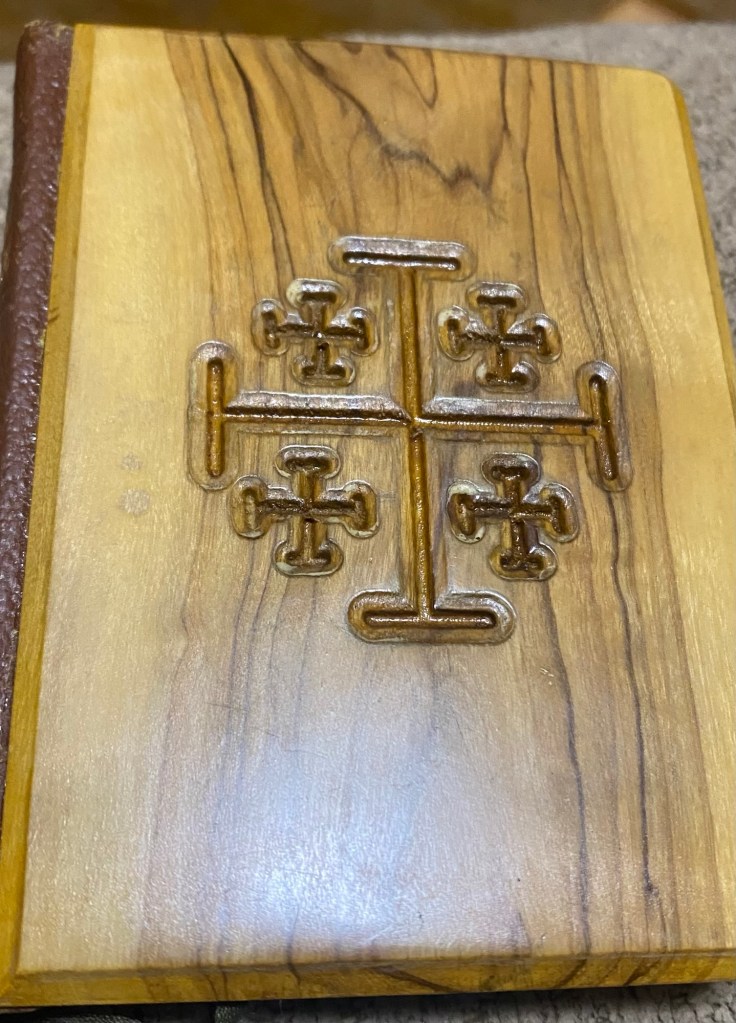
I think the coolest thing I’ve ever found was a Bible translated from the original Greek from 1928.

God’s Manna

As we go into the winter seasons, with crystallized dew on our lawns sparkle like diamonds and reminds me of God’s provision. The higher the sun rises, the more reflection shine from the tiny ice crystals on the top of the grass blades.
In Exodus 16 God promised Moses that He would “rain bread from heaven” for the Israelites who traveled through the wilderness after God had delivered them from enslavement in Egypt.
Moses witnessed, after the dew had evaporated each morning in the desert, that there was a flake-like frost on the ground. In Exodus 16:14 it describes manna as thin flakes or a fine, white flaky substance that covered the ground like a layer of frost after the dew disappeared.
When the Israelites saw the white flakes, they said, “manna” (Exodus 16:15) which means “What is it? They had never seen this “bread from heaven” which was a new creation designed by God to feed His people.
For forty years, He sent the exact amount they needed for each day until they reached Canaan, the promised land (Exodus 16:35). Like the Israelites, we may not understand all of our blessings, but God provides them.
“God is faithful, by whom you were called into the fellowship of His Son, Jesus Christ our Lord”-1 Corinthians 1:9
The manna not only fed the Hebrew people, but it also served as a reminder of God’s provision. He instructed Moses to keep a jar of it in the Ark of the Covenant along with the stone tablets of commandments (Exodus 16:32).
God knows we need reminders to praise Him for blessings and trust Him in hard times when we don’t see or understand His provision.
His lessons should remind us of God’s promises and how He fulfills them.
Like the pillars of clouds that guided the Israelites, the Bible guides us and reminds us of God’s faithfulness.
God no longer creates manna, the heavenly bread, but there are many blessings for us today.
We have the Bread of Life, the Lord Jesus Christ, living within us, when we give our lives to God. Jesus came to feed us truth and to create a path to a relationship with Him by grace. An exciting life of daily adventure.
“The steadfast love of the Lord never ceases, His mercies never come to an end, they are new every morning, great is your faithfulness” -Lamentations 3:22-23 ESV
Routines
What part of your routine do you always try to skip if you can?
If I could skip a something that’s routine. I would skip grocery shopping. It’s not even about being in the grocery store it’s about having to put everything in the vehicle and then lugging into the house and putting it away.
Trusting God’s Promises

One thing that happens when you study the Bible is that you start paying closer attention to the context of Jesus’s teachings. Most people assume that His messages were all the same, but they aren’t.
Jesus did everything with intention. Mark 11 captures a pivotal moment in His ministry as He entered Jerusalem, cursed the fig tree, cleansed the temple, and taught on faith. They were not random actions, the revealed deep truths about faith, authority, and God’s unfolding plan.
One key theme in Mark 11 is the release of faith -faith that believes before it sees. When Jesus cursed the fig tree, nothing happened immediately, when the disciple leader saw it it had withered. I think this is an important lesson.
God’s actions are not always immediate. As human beings we are wired to have joy only when we see the outcome we desire. But real faith enables us to be at peace in the process, trusting that God‘s promises will come to pass even when we don’t see evidence yet.
True faith reaches beyond what we can gasp. Is the ability to trust God, before the manifestation happens, knowing that what He says will come to pass.
All faith originates from God. He speaks, and we respond, throughout scripture, there are stories of faith that always begin with God initiation.
- Abraham heard God’s promise before he stepped out in faith.
- Moses responded to God’s call at the burning bush.
- Gideon needed a word from God before he had the courage to lead.
The men and women of faith in Hebrews 11 didn’t generate faith on their own, it was given to them through God’s promises. Faith is not about manufacturing belief, it’s about responding to what God has already spoken.
The strength of our faith isn’t proven in comfort -it’s forged in difficulty. Hebrews 12 teaches that discipline and hardship our tools in God’s hands that shape us. When we are convinced of God’s promises, we are willing to endure challenges for the sake of what He has spoken.
God takes us through harder seasons because in those seasons, conviction, dependence, and strength are formed. You become someone different by walking through difficulty with God.
This is where the knowledge of God outweighs our feelings. Early in my faith journey, I relied on emotions to feel close to God, but now maturity comes by knowing the knowledge of God.
Paul said in Philippians 4:12, “I know how to be humbled, and I know also how to abound.”
For some their ability to trust God was shaped by their earthly parents.
As a child who was abused, it took me a long time to bleed that God could be good. Someone with wonderful parents might have a more natural trust than I did. A good image of God as Father can be shaped by our earthly parents, but ultimately all faith comes from God.
This is why faith isn’t just for us, it impacts the next generation. We passed down more than just habits, we passed down our fears and our faith.
The battle begins in our minds.
When Davidfaced Goliath, his confidence came from years of reminding himself of what God had done. A spiritually strong person has a good filter. They learn to separate their thoughts from truth. Faith isn’t about denying reality, it’s about anchoring yourself in what God has said despite of how things look.
Before something can become a strong hole in your life, it has to start in your imagination. Our imagination is designed for good, but too often we use it to dwell on fears, temptations, and anxieties.
This is why discipline in our thought life is crucial.
Many live on an emotional roller coaster because they don’t control their thoughts. But the Word of God (the Bible) gives us a way to take control.
James 3: 2-4 says the tongue is like a bridle, what we say steers our thoughts.
Speaking scripture over our lives changes the way we think. The combination of the Word and the Spirit brings transformation. As we meditate on God‘s truth, we start to divorce ourselves from unhealthy thought patterns, and align our minds with faith.
Faith is not a formula. I think one of the greatest themes in the Bible is that God often moves when it seems too late.
- Abraham and Sarah had a child when it was impossible.
- Lazareth was raised after being dead for days.
- Jesus rose after three days in the tomb.
Faith is not about formulas -it’s about trust. While God is working behind the scenes, our role is to remain faithful and keep trusting even when it looks too late.
Faith isn’t just built in church, it’s cultivated daily.
If we depend on church services for spiritual nourishment, we will be spiritually malnourished. We must crave our daily time with God, even if it’s for a few minutes.
Even five minutes spent with God is worth it. The more we make room for God, the more we will see Him move in our lives.
Faith is not passive -it’s an active trust in the character and promises of God. It enables us to endure when things don’t make sense, to trust in the waiting, and to walk through difficulty, knowing that God is forging something deeper in us.
Jesus get everything intentionally. His journey for lacrosse was not accidental It was part of God‘s divine plan. Just like the fig tree withering over time, just like the Kingdom being proclaimed despite rejection, God promises will come to pass.
Our role is to trust, to meditate on His Word, and you hold on to His truth, knowing that what He has spoken will be fulfilled.
Even if all you have is a mustard sheet of faith -hold onto it, it will grow.
Dying To Live

For years I kept living with a victim mindset because I didn’t know I had the power to change. I didn’t understand that being a victim was a choice. A choice that I made every day. It’s impossible to change something that we are not aware of, so once I realized, I had no excuse. I had to choose to be a victor not a victim.
A victor realizes that they have control over both their outlook on life and their future. A victor takes responsibility for their own life, whether that means for their actions or their behaviors. A victim has an inward focus, not in a selfish way but reflectively and mindfully. This means that they are not looking around at what everyone else is or isn’t doing and passing judgment, it means they are focused on what they themselves should or shouldn’t be doing. A victor grows, develops, and improves themselves.
When a victim faces challenges, they feel like the world is against them. The opposite end of the spectrum a victor sees life’s challenges as opportunities to grow. A victor is in control of their life and directs themselves where they want to go instead of letting life call the shots. Someone with a victor mindset lives free and empowered instead of being trapped and controlled.
When I was a victim my life was like a roller coaster that I didn’t want to be on. I felt I didn’t have a choice or a chance to get off, and I had been living like that for a long time.
I was unable to cope with my emotions, and ultimately, I let my emotions dictate my choices and behavior. Even the smallest inconveniences took me down a wild spiral. If I couldn’t open a jar, I would get angry and yell at myself or sometimes even the jar. I never felt settled, and my anxiety was on high alert all the time. I reached a point where I couldn’t take it anymore.
Once I hit rock bottom, that’s when God showed up. I had been going to therapy for trauma, but it felt, like I was going in circles. I would talk about things with my therapist, and the therapist would say “I hear you,” or “here’s some medication to try.“ I was running for my pill bottle to try and get some relief. I was thinking it was just all in my head, and that kept me in a victim mindset.
I was ready to get off the hamster wheel I had found myself on. I was ready to try something new.
My children began going to a youth group at the church with some friends from school. After a while, they told me they were going to church on Sundays and that I should come. I said no at first, but then I thought I’ve tried everything else, why not? It is kinda crazy that God sent my children to save me.
What I wanted was results, while I still went to therapy and took my anxiety and depression pills. Things began to change -I began to see results. Something was changing inside of me, I could feel it.
The results came when I decided I wanted to change how I was living and commit to working as hard as I could to shift my mindset from victim to victor. I saw it as an opportunity to grow a victor mentality, instead of being angry that I had a lot of work ahead of me.
Following Jesus was like making a commitment to live my life with a victor’s mindset. Even when it was hard and uncomfortable, I stuck with ur. It was my chance to learn to be curious about myself. A huge thing that impacted my life. Being a follower of Jesus is making a point of letting the Holy Spirit lead my life. This let God walk me through the shift in mindset in a way I could grasp. I will forever be grateful for Him.
After changing my mindset everything else aligned, and I was able to control my emotions, my anxiety, and depression we were no longer in charge of my life. I could respond rather than react to situations.
There are times in life when we have no control over situations in life. Some things just happen, and we don’t get a say. But that doesn’t mean that we have to be a victim in the situation. We still have a choice. A choice to either be a victim of a victor. We can feel bad for ourselves and wallow in our suffering, or we can choose to learn, grow, and be positive about how God can use our story moving forward.
Interestingly, mindsets all relate to biblical truth. The Bible talks about a special relationship we can have with God as our Father, and how it is achieved through adoption and involves privileges, identity, and spiritual inheritance. The condition of being God’s children. At the root of the victim victor mindset is an orphan spirit. Our wounds make it difficult for us to receive the inheritance God has for us. Until I was able to identify the lies I felt about myself and replace them with my true identity in Jesus. I fell short.
We all start out ad orphans, separated from God which is due to the fall of man (talked about in Genesis). Only when we accept Jesus into our lives, declaring Him as the One true God, do we become adopted into His family.
Ultimately through faith in Jesus can we become children of God and become new creations.
Obedience to God doesn’t come from a sense of duty, but out of God’s love and faithfulness to us.
It’s about falling in love with Jesus, who leads us to the Father. God is longing for us to embrace Him. When we find Him we find ourselves. That’s being a child of God.

 From Pity to Praise