There’s a spiritual metaphor that explains followers of God as an army. We are ambassadors of God‘s kingdom on earth, tasked with spreading His message and protecting His values. The emphasis is that the true battle is spiritual, not physical, and focusing on living out faith and showcasing God’s character.
The distinction is crucial for understanding the role of believers.
Spiritual Warfare is focusing on combating spiritual challenges and moral dilemmas rather than engaging in physical conflict.
Living our faith means being encouraged to demonstrate our faith through actions that reflect God’s character, such as love, mercy, and justice.
There are responsibilities that come from being in God’s Army that align with thr mission.
Spreading the Gospel: Sharing the message of Jesus with others (Matthew 28:18-20, Mark 16:15, Acts 1:8).
Spiritual Protection: Praying and supporting others.
Community Engagement: Being out in community and making a difference in people’s lives.
Moral Guidance: Upholding ethical standards and providing support for people in need.
The metaphor of God’s Army serves as a reminder that people who follow God are called to engage in this spiritual mission. Embodying the values of God’s Kingdom. They contribute to a greater purpose that transcends physical battles, focusing instead on love, compassion, and spiritual growth.
List three books that have had an impact on you. Why?
There are some books that have had a huge impact on me. Number 1 is definitely the Holy Bible, but only after I chose to allow the Holy Spirit guide me through it.
The second one was “The Highly Sensitive Person, by Elaine Aron. It helped be become aware of why I processed everything around me, so different than others. It helped me understand why I felt that I never quite fit to this world.
The third would be, Drawing Near: A Life of Intimacy with God by John Bevere. It is basically a spiritual guide that focused on helping people move from a distance, rule driven religion to a deep, personal relationship with God. While I felt quite close to God in a relationship, this book brought that relationship to a whole new level.
Do you ever if like you’re in a struggle within yourselves? At times I find myself doing things I hate. This daily, frustrating struggle is proof of something spiritual is going on and it drives me to depend solely on God’s grace.
Paul puts it this way in Romans 7:19, “For I do not do the good I want to do, but the evil I do not want to do -this I keep on doing.”
It the frustrating reality of the flesh. It makes us feel like we’re stuck in a spiritual tug of war. Paul perfectly captures the agonizing dilemma of the human condition in all of us. Even after we experience the grace of salvation, we still have a “flesh” – the lingering pull of our old, fallen nature. It often feels like a daily war where our mind desires to please God, but our human weakness wages war against the desire.
I think it’s proof of Spiritual life.
When we fall back into the same old patterns of failing to live up to our own spiritual standards, it is very easy to feel defeated and wonder if we’re really saved at all. But a dead person feels no resistance. The very fact that we grieve sin, wrestle with temptation, and want to do the right thing isn’t a sign of spiritual failure. I think it’s hard evidence that the Holy Spirit is alive and at work inside us.
Through it all there’s the danger of self-reliance. The trap many believers fall into is trying to achieve holiness through sheer willpower. We can make enthusiastic promises to God that we will do better, only to fail again. Romans 7 teaches us that our own strength is insufficient to conquer our flesh. The struggle within ourselves exists to teach us a valuable lesson – that we cannot do it on our own.
The ultimate rescue.
We see Paul’s anguish peak when we cries out in Romans 7:24, “What a wretched man I am! Who will rescue me from this body of death?” He immediately answers his own question. “Thanks be to God, who delivers me through Jesus Christ our savior.”
Maybe our daily struggle is an invitation to rely on grace rather than our own strength. When we have daily struggles it keeps us returning to the Cross, reminding us that our victory is found in Jesus alone.
I honestly wish I have learned the minimalist mindset at a younger age. I have collected so much junk in the past I still find it in my daily cleaning.
It seems human beings are in a race to collect the most junk and then fill our houses with in to impress others or get a temporary “high” from the shopping experience.
The Bible teaches that earthly possessions are temporary gifts to be stewarded wisely. Scripture warns against hoarding, greed, and placing identity in material things. 1 Timothy 6:7-8 says “For we brought nothing into the world, and we can take nothing out of the world. But if we have food and clothing with these we will be content.”
Every one of us is created by God. At the same time, we may confess that our goal is to glorify God. And despite this divine design of our lives, we are all prone to wander from the true God and worship false gods of our own making.
Idolatry has taken many forms throughout history. Some were made of wood, and overlaid with precious metals. Some were well-known pagan deities to whom whole temples were built. Today, our idols seem a bit more sophisticated. Money, power, fame, reputation, sex, and appearance, are common idols. Even good things can be idolized like relationships, health, social media, and even church. Because idols are simply something that we elevate in our lives above God. Idolatry is what we put first, what has captured our hearts, and where we find our identity.
Idolatry tends to work itself in one of two ways: we deify creation while denying God, or we exalt ourselves while excluding God. In the first way we trust in what has been made to somehow define and deliver us. The second is when elevate our will, desires and ego above all else, and attempt to become our own authority.
Despite the glaring deficiencies in our man-made idols and ourselves when compared to the glory of God, we still bow down to things we created rather than the Creator. Maybe it’s because idolatry is easier than faith. We defy creation and worship what we can see, taste, touch, and measure. In most cases it is something we can have control over.
God cannot be measured or touched and He surely cannot be controlled. Our longing for immediate gratification and the investment we have in this present life make idolatry not just tempting but easy. We are prone to idolatry because we want to be self-reliant rather than accountable. To admit that we are the creation of God is to accept that we belong to Him, and that means He alone should be worshipped. We should answer to Him solely for what we do and who we have become. Idolatry is tempting because, at least in our minds, it frees us from the God who owns us.
Idolatry isn’t only delusional, it’s dangerous. False gods will not only fail to serve us and save us, but they will also lead us to condemnation. It’s only when we see idols for what it is, it is in contrast to who God is, that the glitter of idols is overcome by the glory of God.
I think there is one reason we worship idols and that’s because we are not gripped with the glory of God, glory that is seen in the person and work of Jesus, who Himself is a reliance, Who death brought about redemption.
The beginning of the end of idolatry is in our hearts and that is found in Jesus.
I grew up in an environment that felt like a movie -a horror movie. It was a deeply isolating and overwhelming reality. My earliest memories are tied to survival , unpredictable fear, and a constant state of hyper vigilance. Psychologically living through sustained trauma that mimicked the physical and emotional tension of a horror film.
It was truly God that helped me turn in to the person I have become. Without Him, I wouldn’t be here today.
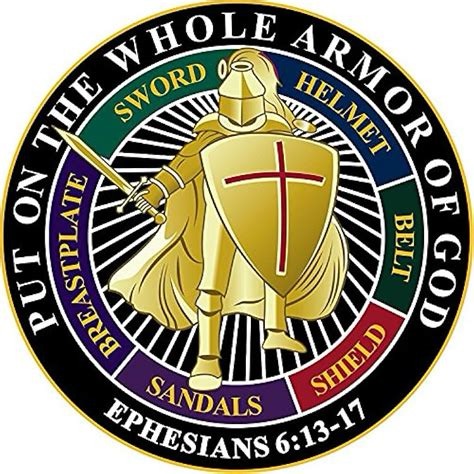
The Armor of God is a metaphor in Ephesians 6:12 that describes a spiritual wall of protection. Rather than physical bricks, this protection comes from virtues and spiritual truths that can guard our minds, heart, and faith against struggles and negative influences.
Each component serves as a specific defensive purpose to maintain a spiritual fortress:
Belt of truth: The belt of truth secures everything. Knowing and standing for the truth serves as the foundation of our defense against deception and lies.
Breastplateof righteousness: The breastplate guards our core. It shields our hearts and emotions from guilt, shame, and condemnation by anchoring our identity in God.
Shoes of the gospel of peace: The shoes provide a firm base. They ground us in stability and peace, allowing us to stand strong no matter what the circumstances are.
Shield of faith: The shield of faith is our ultimate barrier. It deflects the “flaming arrows” (doubt, fears, and temptation) before they can hit our minds or spirit.
Helmet of salvation: The helmet of salvation protects our thought life. It guards our minds against negative thoughts and secures our eternal hope.
Sword of the Spirit: The sword is our only offensive tool. Representing the Word of God, it allows us to push back against negativity.
Unlike a physical structure, this wall of protection is built by intentionally applying these traits to our daily lives. It represents active, ongoing habits of prayer, trust, and standing firm in our beliefs.
For years I struggled with what I had done to cause my mother to abuse me. I lived my childhood through my memories, night terrors, panic attacks. They got so bad that I went for prayer. When I was getting ready to leave a lady stopped me and said something that changed my perspective on what I was going through. She said, “You are not your mother’s sin.” I took it as I was not defined, condemned, or bound by the mistakes or sins of my mother. My life, my identity and my future were my own to build.
I embraced this truth, and recognized that I had the power to stop the toxicity that was brought on me. I didn’t have to repeat it.
If I had an unlimited budget for 24 hours, I would use that money to increase it, maybe buy some precious metals, and prepay for services like landscaping, house cleaning, and maybe pre book a vacation and pay off debt, and help out a few people along the way.
“That no advantage may be gained over us by Satan, for we are not ignorant of his schemes” -2 Corinthians 2:11
The Bible warns us that Satan (the devil) is like a roaring lion who walks around seeking who he may desire. Whether we like it or not, Satan is a real personality who is looking for ways to destroy our lives. Since the Bible frequently warns us that this sinister enemy, we should know a few things:
How he operates
How to identify his attacks at the very beginning
How to block and stop his assaults
How to prevent repeat attacks from happening in the future
In the above verse, Paul wrote something that offers profound insight. Paul clearly understood that Satan was constantly seeking ways to take advantage of people.
Rick Renner a Bible teacher who is very well recognized as his understanding of the original Greek language point out in an article I was reading that the word “advantage” is “pleonekteo” which means to outwit, trick or to take advantage of someone through some sinister or sneaky means. These words from the name “pleonekeo” denotes a desire to have more, more, and more.
Because Paul used this word about Satan, we are alerted to the fact that Satan desperately wants something in his control. He wants us, and he will use any method necessary to take advantage of us, dominate us, and ultimately take us hostages. That is why Paul said, “we are not ignorant of his devices.
When you have an enemy who hates you this much and wants to destroy you, you can’t afford to be ignorant. Paul knew that satan wanted to destroy the gospel, that he wanted to hinder and even stop what was essential.
We need to understand the way, Satan operates. We need to be able to discern whether we are facing a human problem or a planned attack from Satan.
We can’t just shut our eyes and hope the problem will work itself out. If it is an attack from Satan and we do nothing to stop it, it will not go away and will increase and become intense. That’s why being able to recognize Satan’s game is so important.
Renner says, the word ignorant in 2 Corinthians 2:11 is the Greek word “agnoeo” refers to ignorance or lacking certain facts. However it also includes making mistakes or errors due to lack of understanding. An example is an uneducated person who has a lack of understanding, due to lack of understanding.
Because people lack understanding, their conclusions are faulty, and misguiding. We get the word “agnoeo” from agnostic, it is the official name to describe people who claim they don’t know what they believe. So if someone claims to be agnostic, they are literally claiming to be ignorant.
An example is being diagnosed with a deadly disease and thinking it is sent from God, because they are ignorant. Satan not God is the author of sickness and disease. This ignorance mistakenly concludes that their sickness must be God’s will for their life. This ignorance is devastating and can lead to premature death. It is dangerous to remain ignorant about how Satan operates.
Paul was definitely not in the dark about the Satan, and Satan found it more difficult to take advantage of him.
We need to learn these things because we face problems with people, government leaders and even friends.
Paul was thrown into prison, cast into the sea, beaten during moments of persecution. Traps were constantly being set for his capture, and he had to be on the look out for people who tried to use him, or take advantage of him. Paul couldn’t afford to be in the dark spiritually about the way Satan operated.
And neither can we.
So we shouldn’t shut our eyes and ignore the fact that satan wants to cause our downfall. Instead, we should open our eyes and allow the Holy Spirit to teach us to recognize Satan’s operations so we won’t fall prey to him in the future.