With The World In Chaos, Control What You Can

There are times in our lives when we are confronted with the reality that we are not in control of the world around us.

As hard as we try, and as much as we’d like to think we’re in control, the reality is, that we are not. And some seasons and circumstances remind us of that fact,

A natural disaster, a terminal diagnosis, a wayward child, an unexpected layoff… are some examples.

At this current moment in time, almost everyone in the world, simultaneously, is being confronted with the reality of the lost control of Covid-19, a tiny virus, invisible to the naked eye, that sent our reality out of control. (it will take years to recover). It disrupted everything in it’s path, even life as normal.

The control we thought we had was updated.

We of course never had as much control over our lives and the world as we thought we did. (no matter our take on this little virus) it uprooted our way of living.

So, how do we respond when the world is in choas? How did you begin to move forward? No matter how we choose to move forward, we have to begin to take back control of what we can control – even in the smallest of ways.

We’ve all been reminded that we are not in ultimate control of the universe. But that does mean we’ve lost all the ability to maintain control of our lives We need to remember even if our usual day-to-day opportunities are taken away from us by another, there is still much we can control.

We can choose to get up in the morning and get moving for the day ahead.

We can choose what we watch on television and when to shut off the news media when it starts getting to us.

We can always control our attitude and our response to the people and events around us.

We can choose to help others instead of being angry about the way things are. Remember everyone handles situations differently and we need to respect others decisions.

So, while this world is in chaos. Control what you can, and be thankful for what you have. Everything can be taken away in an instant.

The Paralyzing Power Of Fear

The most common emotion in the lives of human beings is fear. Fear, by definition, is a response that seeks to avoid threatening danger. Fear is our reaction when danger threatens. Irrational fear (fear that goes beyond the scope of common sense) are sometimes called “phobias”

Two basic fears are already present at the time of birth. One is fear of loud noises; the other is fear of falling. Even a very small child has those fears built into the bodily constitution. And then as we grow older, we begin to have many additional fears. Phobias are common to all people. Psychologists name more than 200 of them – each of them having a technical name. There is “acrophobia” – fear of high places; another called “ claustrophobia“ – fear of closed places; there are fears of the dark, fear of dirt, and decease, even the fear of number 13 and black cats, many fears are really superstitions, but all phobias are very real to those who fear.

The Far Reaching Effects Of Fear

Wrong kinds of fear can produce effects. Scientists do experiments with animals. For ex, they feed cats some barium sulfate and then watch the muscle waves in the stomach as the food is mixed and the process of digestion takes place. The muscle waves are even and smooth. But if a dog is brought into the room, immediately something happens. All the smooth even muscle waves in the cat’s stomach become pulsating ripples, and the digestive processes are upset. Fear can produce paleness of skin, rapid heartbeat, an upset stomach, and nervousness. It can cause high blood pressure and arthritis, and intense fear can even lead to blindness. This does not mean that everyone suffering from these physical problems is a victim of fear (and lacks true faith), but fear can be the springboard (the starting point) for many physical ailments.

The physical effects of fear can be serious and devastating, but it is far more serious to realize what fear can do to our spiritual condition. Fear can lead to instability, unhappiness, and a lack of contentment. It is the enemy of faith. It’s saps spiritual vitality and it can paralyze the soul.

Imagine if their were two lions blocking the path to a heavenly city. The lions are ready to tear anyone to shreds should anyone come their way. A Christian who is traveling on that path toward the city grows increasingly fearful, but slowly presses on. As they get closer to the lions, they discover that the lions only growl. God has the lions changed, and the Christian passes between them unharmed. Faith has many enemies, but one of the greatest enemies of faith is fear.

The Principle Kinds Of Fear

A careful study of the Scriptures indicates that there are several kinds of fear. There are several Hebrew words (in the Old Testament) that are translated “fear.” And in the New Testament, there are several Greek words which are sometimes translated “fear.” In summary, there are three basic kinds of fear.

  • Reverential Fear. Which is a holy fear. It is really an awe and respect for the majesty and holiness of God. It is a godly reverence. Reverential fear is an awe for the Heavenly Father. It is a fear of displeasing God.

Reverential fear is a good kind of fear. It is always right. David speaks of this fear as being clean and pure (Psalm 19:9). The writer of Proverbs says that godly fear is the beginning of true wisdom (Proverbs 1:7). It is this kind of fear the enables human beings to respect God’s authority and to obey His commands. Psalm 2:11 says, “Serve the Lord with fear,and rejoice with trembling “ Proverbs 16:6 says that “by the fear of the Lord, men depart from evil.” Therefore if someone says “You should fear the Lord?” This is what their speaking of.

In Hebrews 5:7 we read that Jesus was feared. The scripture says, “Who in the days of His flesh, when He offered up prayers and supplications with strong crying and tears… was heard, in that He feared.” The Bible says that Jesus Prayed fervently because He feared. But in the word that word means “reverence.” Jesus was heard because He had reverence for God. We too (in Hebrews 12:28) are admonished to “serve God with reverence and godly fear.” This is not the fear of the cringing coward, but the fear of reverence.

  1. Constitutional Fear. This is the fear that is necessary for the perforation of the human race. Constitutional fear is a normal God-given emotion. God has built into each one of us and instinctive alarm system which is designed to protect us from harm – from drunken drivers, rattlesnakes, hardened criminals, and fierce storms. These are normal fears which are necessary for our protection, and for the preservation of life. There is nothing wrong with holding these fears.

A preacher was 10 minutes late for a preaching appointment. He apologized to the audience and explain that he got into traffic but we’re heavier than usual. He said, “I simply decided after a long period of frustration, that it would be better could be 10 minutes late in this world then he’ll be several years early in the next world – and so I drive carefully.” That was a constitutional fear. The preachers fear of an accident helped him exercise proper caution. This is a normal God-given emotion and very nothing wrong with it.

Fear is one of the greatest teachers in the world. Fear of sickness often causes people to practice good healthy habits. Fear sometimes causes students to prepare well for final exams. We are cautious drivers to drive cautiously on the snow-covered highway. We teach children who fear somethings. We warn them about hazardous traffic, hot stoves and high places. These are proper kinds of fear. There is a limit of course. Some parents go beyond the boundaries of a reasonable limit, And as a result, there are children who are horrified at the side of a spider, and may become almost hysterical, because one or both of their parents have reacted that way.

Constitutional fears or God-given emotions that are designed to protect us from harm. A young boy got a job in the zoo, and the keeper told him one day we go into the wind cage and clean it out. The young man said, ” No sir, boss, i’m ain’t goin into no lions cage and clean it out.” The Keeper told him it was he would have to go in and do the job, and then he added, “ after all, that lion is a teen lion and he won’t hurt you.” The boy thought for a moment, and sad, “That may be so – he might not hurt me – but he could make me hurt myself.” The keeper said, “Come on – call write on it, just Lion with race on milk.” The young man thought a moment again and said, “ I was raised on milk too, but I eat meat now!”

Young man described above was a good thinker. You see – Fear is a wonderful protection from harm.

  • Carnal Fear. Carnal fear is a senseless dread and nagging anxiety. This is a fear that is always evil. It is a craven and a base kind of fear. This. Greek word carries with it the idea of an unhealthy destructive kind of dread. Many examples of carnal fear are found in the Bible:

It is a fear expect by Adam when he had sinned. Adam ran and hid himself, and when he was asked why he was hiding, he said “ because I was afraid” (Genesis 5:10).

It is this kind of fear expressed I was children of Israel when Joshua and Caleb tried to convince the rebellious people to leave Kadesh-Barnes and go on up into Canaan. In Numbers 14:9 The Israelites were told not “fear the people of the land” because their protection was gone. The Lord promise to be with Israel.

It is the kind of fear expressed by Felix after he had heard the apostle Paul Preach about righteousness and temperance, and judgement to come (Acts 24:25). The Bible says Felix was afraid and said, “When I have a convenience season, I will call for thee.”

Arnold beer is the kind of slavish dread which causes one to be unduly afraid of death. One French movie personality said, “At time I wake up in the middle of the night, and my hair stand on end when I think I am going to die someday.” The writer of Hebrews speaks of those who “through the fear of death were all their lifetime subject to bondage” (Hebrews 2:15).

Down through the ages, Death has been a source of fear. One of the reasons people fear death it’s because of the fear of loneliness. God created us with a built-in need for love and companionship. Most normal people do not desire to be hermits. Solitary confinement can drive a person insane.We all cry out for the comfort of another person’s voice in that bracing grip of another person’s hand. We like fellowship with others. Even people who are shy and backwards in nature, are glad we’re friends. But what could be more lonely than death? A preacher is talking with his little son dying of a dreaded disease. The little guy looked up into his father’s face and said, “ daddy – am I going to die?” The broken heart with trembling lips, the father said, “ yes son – the Doctor says so; are you afraid?” The child said, “No,, i’m not afraid, but I wish someone could go along with me.”

Part of the fear of death lives right here. When we breathe our last breath, and when we close our eyes for the last time on the things of earth – we slip out into the future- seemingly alone. Loved ones at stand by our bedsides. They can stay there until the very end, but they cannot go beyond the veil of death. However, for the Christian, the loneliness of death is not what it seems! We are alone – yet not alone! Jesus is with us in the hour of death! He promised not to forsake us. In Psalms the scripture says, Though I walk through the valley of the shadow of death”No I walk through the valley of the shadow of death. I will fear no evil, for thou art with me” (Psalm 23:4). When we come to the valley of death, we will find our good shepherd is with us still.

These have been kind of fear: The reverential awe which inquiring just you OK God’s commands; The constitutional fear which causes us to be careful about giving particularly dangerous thing; and those carnal fears which rob our piece of mind and cripple are usefulness and spoil our normal healthy living. Carnal fears include fears that we might become ill with cancer, or that one day our children might become crippled for life, or that the enemies nation’s might destroy our country. These unwholesome kinds of fear can cause people to live in a constant state of anxiety in misery. These fears are really the result of unbelief in the fatherly care of our creator. And so there are right kind of fear and the wrong kind of fear. Fear can be good, but it also can be evil.

The word “fear” Can we use either way in the Bible. Whether it is good fear or a bad kind of fear it’s often determined by just setting in which they were used. In 1 Peter 2:17, we read, “ honor all men; Love the brotherhood (and sisterhood); fear God.” Fear in that sense is used in a good sense. It is the godly, reverential fear. The Bible also says perfect love casts out fear. And that burst into using the bad sense. Perfect love does not pass out all fear- constitutional fears nor reverential fear – But the unwholesome and carnal crimes of fear artist filled by the true love of the Lord.

The Remedy For Conquering Fear

We sometimes fall victim to fear either because we lack knowledge of God’s promises in the Bible, or because we lack faith to believe that those promises are true.

We can conquer fear by learning the power of love.

Our remedy of overcoming the wrong kind of fear, is true love for God. A fearful child loses fear when he nestled in his mother’s arms. We are not afraid to fall asleep if we are surrounded by those who love us. Just so, when a person loves God, and have faith in him as a controller of the universe, he does not need to be a slave of superstition and fear.

There are all kinds of abnormal fears that can grip us.There is a fear of nuclear war, fear of being attacked by a criminal, fear of losing a job, but want to be hauled to the fact that God is our concerned father. One who sincerely cares for us and loves us, our lives can be swept clean from harmful fears.

Managing Panic Attacks And Anxiety

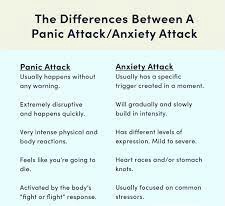
So many people are suffering from Anxiety and Panic Attacks these days. About 40 million American will live with Anxiety disorder, which is more than the occasional worry or fear.

While it normal to get nervous about an important events of life changes, it is not no normal to be in constant worry or fear. Anxiety disorders can range from a generalized anxiety which is intense worry you cannot control, to panic disorder which are sudden episodes of fear, along with heart palpitations, trembling, shaking,mor sweating.

I suffered from anxiety and panic attacks for many years, finally I found a therapist who could teach me to manage them, with medication. I was very thankful.

For people with anxiety disorder, it’s important to look into strategies that can help manage or reduce anxiety in the long term, my therapist worked with me until I could manage the anxiety and panic attacks on my own.

Everyone can benefit from other ways to reduce stress and anxiety with lifestyle changes (instead of depending on pills) such as eating a well balanced diet, limiting alcohol and caffeine, and taking time for yourself.

Plus there are steps you can take the moment when anxiety starts to take hold. Try these tips to relax your mind and help you regain control of your thoughts.

1. Stay In Your Time Zone

Anxiety is a future-oriented state of mind. So instead of worrying about what’s going to happen “reel yourself back to the present.” Ask yourself what’s happening right now? Am I safe? Is there something I need to do right now? If not, make an “appointment” to check in with yourself later in the day to revisit your worries so those distant scenarios don’t throw you off track.

2. Relabel What’s Happening

Panic attacks can often make you feel like you’re dying or having a heart attack. Remind yourself: “I’m having a panic attack, but it’s harmless, it’s temporary, and there’s nothing I need to do.” Keep in mind it really is the opposite of a sign of impending death – your body is activating its fight-or-flight response, the system that’s going to keep you alive.

3. FactCheck Your Thoughts

People with anxiety often fixate on worse-case scenarios. To combat these worries think about how realistic they are. Say you’re nervous about a big presentation at work. Rather than think, “I’m going to bomb this,” for example say, “I’m nervous, but I’m prepared. Some things will go well, and some may not,” Getting into a pattern of rethinking your fears helps train your brain to come up with rational ways to deal with your anxious thoughts.

4. Breathe In And Out

Deep breathing helps you calm down. While you may have heard about specific breathing exercises you don’t need to worry about counting ti a certain number of breaths. Instead stay focused on evenly inhaling and exhaling. This will help slow down and re-center your mind. (When I used to have anxiety and panic attacks I would find myself holding my breath, which makes it worse).

5. Follow The 3-3-3 Rule

Look around you and name three things you see. Then, name three sounds you hear. Finally, move three parts of your body – your ankles, fingers, or arm. Whenever you feel your brain going 100 miles per hour, this mental trick can help bring you back to the present moment.

6. Just Do Something

Stand up, take a walk, throw away a piece of trash – any action that interrupts your train of thought helps you regain a sense of control.

7. Stand Up Straight

When we are anxious, we protect our upper body – where our heart and lungs are located – by launching over. For an immediate natural reaction, pull your shoulders back, stand or sir with your feet apart, and open your check. This helps your body start to sense that its back in control.

8. Stay Away From Sugar

It may be tempting to reach for something sweet when you’re stressed, I admit I need to work on this) but that chocubar can be more harm than good, actually eating to mcg sugar can worsen anxious feelings. Instead of reaching into the candy, drink a glass of water or eat protein, which will proya slow energy your body can use to recover.

9. Ask For A Second Opinion

Call or text a friend or family members run your worries through them. “Saying them allowed to someone else can help you see them clearly for what they are. It can also help to write your worries or fears down on paper.

10. Watch A Funny Video

Laughing is a good prescription for an anxious mind. Laughter has lots of benefits for our mental health as well as lowering anxiety. Actually more than exercise can.

Your Shadow Side And Guide To Shadow Work

In psychology, the shadow is defined as either an unconscious aspect of the personality that the conscious ego does not identify in itself the entirety of the subconscious.

For many people, the term “shadow” brings up all kinds of negative and dark associations. Because of this, it is easy to assume that show work is a dark spiritual practice that involves the negative and sinister aspects of our personality.

Our shadow is dark because we are made of both light and dark aspects. But it is part of who we are and we can’t be afraid of ourselves.

Psychologist Carl Jung described the shadow as the unconscious and disowned parts of our personalities that our ego fails to see, acknowledge, and accept. It is any aspect of ourselves that is not exposed to the light of our consciousness.

As children, we are born whole and complete, but that wholeness is short-lived. The shadow is born in our childhood as a byproduct of certain interactions we had with the people closest to us. Our caretakers make us believe that certain aspects of ourselves are good and others are not. The aspects that are seen as bad are rejected and, consequently, form the shadow.

How The Shadow Affects You

When we depend on our caregivers (parents) for survival, we suppress the aspects that are disapproved, and we exaggerate the aspects that are approved.

For Example:

Imagine a child who is very much in touch with his feeling. They are sensitive and emotional. Something happens, and they get mad and cries. In response, a parent says Stop crying like that, we don’t cry in this family!”

The parent believes crying is bad, so they suppress the childs emotions. As a result, the latter pushes this sensitive side into the shadows and they begin “acting tough.”

As an adult, they have trouble feeling things and will not show their emotions even if it’s required. Because of that, they stuggle in their relationships, and never allow their emotions to be fully seen.

The shadow grows every time we suppress something.

This can happen to children who are angry about something and starts throwing a tantrum. Immediately, their parents tell them to “stop it!stop being so bad!” Every time the child gets angry the parent repeats the same thing: stop it and be good.

“It must be bad to be angry,” the child thinks. “I have to try very hard not to get angry.” With time, they disassociated from their anger – but that doesn’t make it disappear.

The child grows up believing they always have to “have it together.” Later on, they realize they have trouble at work because people push their buttons. Often, they feel like exploding and they don’t know what to do. Then they realize the anger was there all the time, coming up in passive-aggressive ways and causing issues in their lives.

The Role Of The Subconscious Mind

We can call the subconscious mind the shadow because we cannot see it clearly and we are not aware of it. The conscious mind we can compare to the light because we can see it clearly and are aware of it.

Everything we reject goes into our subconscious minds, the unacceptable and unwanted bits.

The minute we say something about us is “bad” we have a reason to suppress, ignore, and deny it. Even though the shadow is unseen, it affects everything we do.

When we deny an aspect of ourselves it doesn’t disappear. It just fades away from our conscious awareness. The shadow – with a life of its own – can affect our actions and life experiences heavily if we don’t pay attention to it,

The Shadow Is The Reason We Do Certain Things In Life Without Understanding Why We Do It.

We become adults and feel we should be able to handle life better, yet we keep falling into the same unhealthy patterns. That’s because the shadow operates outside of our conscious awareness, in the form of unconscious and limiting beliefs.

The Shadow Isn’t Just Negative And Dark

The Shadow contains so much potential, gifts, and talents that have been unearthed yet. Great things may end up in the shadow too.

Let’s say that a girl is born with a strong sense of self. She knows who she is; she knows what she likes and doesn’t like; she asks for what she wants and she for sure isn’t afraid to speak her mind! She is a strong little girl, but she is raised in a family that constantly tells her to “tone it down” because it’s “too much.”

The parts of her that are strong and confident are rejected, so she rejects those aspects of herself.

She grows up to be quiet, sweet, and obedient. But she doesn’t understand why her life is so painful. The truth is, she suppressed some important aspects of herself and therefore feels divided. She has a shadow side she doesn’t quite know how to bring to the light.

The reason positive aspects are contained in the shadow is that we are afraid of what people will think or react when we bring it to light.

Dissociation From Parts Of The Self Creates A Split

The shadow is an inner fragmentation that occurs within you. It almost like two different people are operating your life.

Have you even eat the most gentle, sweetest, and kind person, and in the blink of a eye something happens, and this person turns into someone else? They become mean and scary; they throw the biggest tantrum or freak out.

How did this sweet person turn into a crazy psycho?

It’s because they have two parts of themselves operating their life and the shadow part took over when they were triggered. We often underestimate the shadow, thinking it has no power over us. But that’s wrong. The shadow is very powerful.

I have a friend that is sweet and kind and would do anything for anyone. But, when something triggers her, no-one wants to be near her. she’s like a volcano going off. I’ve learned to notice her eyes, because her eyes tell me when something bad will happen. I can usually diffuse the situation if I have enough warning.

It can turn your,use upside down and destroy to most cherished relationships.

Every Time You Act Out Your Shadow, It Grows Bigger And Bigger As You Repress And Repress

How To Spot The Shadow Within You

Separation and division are not the natural states of anything. Integration and wholeness are natural for humans and because of this,the subconscious will continually try to get your attention to integrate what’s there.

It’s difficult to spot your shadow, especially if you’ve suppress a part of yourself into the unconscious.

There Are Three Ways To Spit Your Shadow Side In Action

1. Projection

Many people project their issues onto others. When they dislike something in themselves, they point it out in others. We often project our shadows – our repressed anger, guilt, shame, and other things we don’t like about our – onto others. We lash out at people for the behaviors we don’t like in our yard.

Pay close attention to how you project yourself into the outside world. Because the people, places and things become a mirror and reflect who we really are.

2. Triggers

A trigger is a reminder of past trauma. The surface events that cause conflicts in our lives are not just triggers – they are messenger that enable us to become conscious of something that it buried deep within us.

Pay close attention to your triggers because they can show you your wounds and your shadow self easily. Try to catch your emotional triggers before you act out, not after.

3. Patterns

Repeating patterns in our lives point us to aspects of our shadow. Patterns are expressions of our shadow because the shadow mirrors itself into our reality to be seen and integrated.

Our shadows want us to become aware of it. It wants to be seen and accepted. Within these patterns, you will find aspects of your shadow self that will keep showing up in different situations until you are ready to look at them and break the cycle.

Why We Resist Shadow Work

The shadow is a weird, controversial subject.

While many spiritual teachers, life coaches, and psychologists love shadow work and feel it can improve a person’s life, others believe it’s not that beneficial. They believe test if you go looking for dark things, all you will find is… more dark things.

But I believe it’s great to just focus on the light, it doesn’t make the dark go away. The dark is just on the other side, waiting for a time to show its face. And when it does, you may not be expecting it at all.

I had so many repressed experiences in my life. I couldn’t have even began to heal from my past, it was then and only then that I began to be at peace with myself.

It’s better to go looking so you can make peace with your shadow once and for all. If you are worried about easy you might find, there is probably something important you don’t want to revisit. Instead of continuing to avoid it, you can see it as one more reason to do shadow work.

This Work Is Necessary If You Want To Learn And Improve Your Life. And The Truth Is, No One Else Can Do It For You

Shadow work isn’t a huge thing that requires years of planning. Shadow work is simply becoming aware of what’s hidden and gradually healing those aspects of yourself.

Warning:

If you decide to start shadow worn, you may feel the way you felt as a child when you were forced to suppress those emotions. But once you overcome it. It may open your eyes to a whole new side of you that you never knew existed.

Here is a guide to help you transcend the darker aspects of yourself:

How To Integrate The Shadow

Shadow work is nothing but to make the unconscious conscious and the unacceptable – acceptable. That’s all you are trying to accomplish.

The goal of shadow work is integration. The integration of the unconscious leads to complete and total awareness. To do shadow work is to bring your shadow closer to you. It is part of who you are.

The goal here is to bring your shadow into the light or to shine light onto the shadow. The more you shine a light on your shadow, the smaller it gets

Here are some ways to begin your shadow work.

1. Review Your Childhood

Ask Yourself:

“Was I completely accepted as a child?How did I feel most of the time? What was expected of me and what behaviors and emotions were judged by my family?”

Those behaviors that were judged created some sort of shadow aspect within you. Once you find the answers to these questions, they will lead you to see the shadow aspects of yourself.

The shadow usually has its root in your childhood.

2. Become Aware Of Your Shadow

We are unaware of the shadow in the same way we can’t see in the darkness. To become aware of something, you have to choose to see it. Once you see those rejected aspects of yourself m reflect on them.

Are they positive or negative? If you find something negative, make peace with it and release it from the shadow. If it’s a positive aspect, reunite with in and call its power back.

Becoming aware is similar to seeing something that is suddenly illuminated by light. The most important step in doing shadow work is to become aware of it.

Shine a light on it or bring it out of the darkness

3. Don’t Shame The Shadow

Once you become aware of your shadow self don’t shame or blame it. Instead give it your love, compassion, and acceptance.

Your shadow was born from non-acceptance and rejection in the first place. It was created the moment you began to push it away. Antagonizing the shadow even more only adds fuel to the fire. The shadow is part of who you are, so look at it from a place of love.

Love your shadow for all it is.

4. Use Your Triggers

Triggers are messengers and an Invitation to delve deeper into unconscious things. The messengers are the events that cause an extreme emotional reaction within you. Naming triggers as such changes them and decreases the effect they have on you,

It allows you to step back from your emotional reaction and observe it instead of living it.

Triggers Are Reflections Of Deep Unresolved Wounds. They Come To Open Your Eyes To Things That Are Suppressed

5. Observe Without Judgement

One of the biggest mistakes you can make with shadow work is to judge the shadow once you spot it. If you let the harsh inner critic come up and judge the shadow, you are rejecting it all over again and therefore make it bigger and stronger,

Shadow Work Is The Highest Form Of Light Work You Can Do, On Your Own

Make Peace With Your Shadow So You Can Find Peace

Shadow work is a great way to experience inner healing and transformation, and all it takes is self-awareness.

Every person on earth has gone through a difficult time in their life that created shadows within them. The good news is the entire universe is on our side trying to he,o us become while again. Every action of the universe is headed in the direction of growth and expansion,

We are provided with abundant opportunities to confront our shadow selves so that we can finally be free of them. It doesn’t matter how long you avoid looking at your shadow self. It will keep manifesting into your reality until you pay attention to it.

The self that is fractured seems to become unified, and we will be presented with opportunities to see the aspects of ourselves we have suppressed, rejected, denied, and disowned.

The more we become aware of our shadow self and accept it, the more embodied we are as a conscious being and the more agency we have over ourselves and our lives.

Just a tip: if you pray or talk to God, It’s a good way to unload some of the burden that comes with shadow work.