
The Best Things In Life Are Backwards
Trying too hard to get what you want in life- love, respect, and happiness-often has the opposite effect; you end up lonely, dejected, and miserable.
There’s a part of the Navy military training that’s called drown-proofing where they bind your hands behind your back, tie your feet together, and then dump you into a 9-foot deep pool.
Your job is to survive for 5-minutes.
The vast majority who attempt drown-proofing will fail. Upon being tossed into the water, many of them panic and scream to be lifted out. Some struggle until they slip underwater where the proceed to lose consciousness and have to be fished out and resuscitated.
But some make it and they do so because they understand two counterintuitive lessons.
The first lesson of drown-proofing is paradoxical: the more you struggle to keep your head above water, the more likely you are to sink.
With your arms and legs bound, it’s impossible to maintain yourself at the surface for a full 5 minutes. Even worse, your limited attempts to keep your body afloat will only cause you to sink faster. The trick to drown-proofing some to actually let yourself sink into the bottom of the pool. From there, you lightly push yourself off the pool floor and let your momentum carry you back to the surface. Once there, grab a quick breath of air and start the whole process again.
Surviving drown-proofing requires no superhuman strength or endurance. It doesn’t even require that you know how to swim. On the contrary it requires the ability not to swim. Instead of resisting the physics that would normally kill you, you must surrender to then and use them to save your own life.
The second lesson of drown-proofing is a bit more obvious, but also paradoxical: the more you panic, the more oxygen you will burn and the more likely you are to fall unconscious and drown
In a sick and twisted way the exercise turns your survival instinct against you. The more intense your desire to breath, the less you will able to breathe. The more intense your will to live, the greater the chance you will die.
This drown-proof exercise tests emotional self-control in situations of extreme danger. Can you control your own impulses? Can you relax in the face of potential death? Can you willing risk your life in the service of some higher value or goal.
These skills are far more important that a training soldier’s ability to swim. They’re more important that his resilience, his physical toughness, or his ambition. They’re more important that how smart he is, what school he went too, or how good looking he is in a suit.
This skill-the ability to let go of control when one wants it most-is one of the most important skills anyone can develop. And not just for training in the Navy but for life.
Most people assume the relationship between effort and reward is one to one. We think that working twice as long will produce twice the results. That caring about a relationship twice as much will make everyone feel twice as loved. That yelling your point twice as loud will make you twice right.
I tried for many years to fight for my marriage. I was exhausting myself to make things better between us. All I did was burn myself out and was heading toward a nervous break down. I chose to stop fighting and things started to get better.
The assumption is that most of life there exists on a linear curve that there’s a one to one ratio between effort and reward with everything. For example: I knew a teenage that tried drinking twice the normal amount of red-bull so he could study for exams and still be able to win a scholarship for playing football. All that happened was he ended up at the hospital emergency room having a heart attack.
The linear curve only exists for mindless, repetitive tasks like driving a car, filling out reams of paperwork, cleaning the bathroom. In all these cases, doing something for two hours will double the output of doing it for an hour. But that’s because they require no though or ingenuity.
Most activities in life do not operate along the linear effort/reward curve because more activities in life are not basic or mindless. Most activities are complex, mentally and/or emotionally taxing, and require adaption.
We tend to lean into fear and uncertainty and just when you think you’re going to drown, just as your reach the bottom, it will launch you back to your salvation.
Foolproof Ways To Improve Your Life
Have You Ever Had An Identity Crisis?
Have you ever wondered who you truly are? Weather your activity personality is your own or one shaped and defined by your parents and other influences that impacted you in your formative years? Can you distinguish between who you are and what you do? Between your essential self and the one responding to other people’s standards, expectations, demands and critique? You were born an original; have you become a copy? Has your unique and individual voice been silenced or drown out by the noise and turbulence of others surrounding you?
Something to think about.
Fire Season Started Early This Year. Helper Utah

What Does The Tone Of Your Voice Say?
What Does The Tone Of Your Voice Convey?
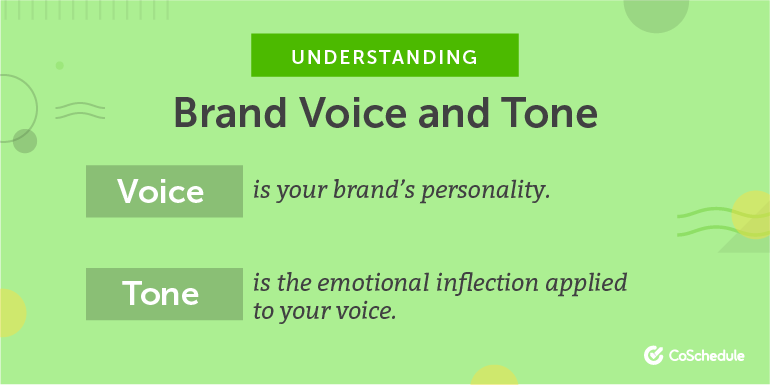
The tone of voice is the most influential element of communication.
When I was going to college for my criminal justice degree. One of my professors was an attorney. I learned so much from him, but because I had young children to raise I was forced to quit my schooling.
We had started to touch base on voices and tones. I let this area drop, I wish I never had but, maybe you can learn a little from what I studied.
There are two factors in the sound of your voice to give meaning (conscience and unconscious) to the message you are sending. Some of the factors are: timbre, volume, speed, clarity, and projection.
Multiple people can say the same sentence with their different tones of voice and convey different psychological information. It feels hard they’re both verbal and non-verbal meaning in all of our words. Non-verbal part is harder to control, so it’s also more genuine.
You can also figure out how someone is doing by examining their tone of voice. Even if you’re talking in the language you don’t know, you can figure something out about how they feel and think by just listening to how they talk.
I will try and give you a few ideas on how to interpret with someone’s Tone of voice is telling you:
- A deep tone of voice implies maturity and Generates trust in other people it’s also a common tone in advertisements.
- If someone’s tone of voice is extremely deep, actually conveys a dark feeling.
- A firm confident tone of voice make you think the person talking is distinguished and important.
- Talking in a quiet tone of voice makes you think the person has major weaknesses or is awkward.
- People who have a really high tone of voice don’t convey much credibility.
Voice is such a personal detail that now it’s being used as a way to check identity and let people access their technology. It’s also valid as evidence in a trial, it is just as it may be even more reliable than a fingerprint.
Breathing
The way someone breathe while they talk give us an idea of the pace you live there life at.
- Calm: someone very balanced is talking.
- Deep and constant: energy and activity.
- Deep, constant, and strong: bottled up anger.
- Superficial: a lack of practicality.
- Short and quick: anxiety, distress.
Volume
This generally defined how someone interacts with them selves and others:
- Normal: self-control and the ability to listen.
- High: weakness, selfishness, and impatience.
- Low: inexperience and inhibition.
Articulation or Vocalization
Vocalization have to do with someone ability to be understood and their desire to be understood:
- Well-defined: mental clarity, openness to communication.
- Imprecise: do you see or mental confusion.
- Very clear: narcissism, tension.
- Stumbling: aggressiveness, inhibition.
Speed
This will tell you about the emotional state this person is in.
- Slow: lack of interest, disconnection from the world.
- Fast: tension, desire to hide information.
- Regular: holding back, bottling up, unnatural.
- Irregular: confused, anxiety, comma breakdown.
Voice and Relations
Tone of voice is like a stamp. Even if the person they’re talking to isn’t an expert in this subject, they unconsciously receive messages from the other person’s tone of voice. And these messages with shape the image they have of the person.
Tone of voice also conveys the type of relationship a person wants to have with someone else. So if their cold and sharp, they want to establish some distance. And if they’re warm and sweet they’re trying to get closer. The tone of voice defines the tone of the bond. It’s also important to point out that a person’s tone of voice isn’t always the same. But there are still things that are always there. Those are the consistent patterns that will give you the key to someone’s personality or mood. A good way to practice self-knowledge is to record yourself in different scenarios and then listen for those hidden tones in your voice. Tone of voice is a great tool for communication and forming relationships. And that’s exactly why it’s a tool that’s so worth learning t use.
Don’t Blame Yourself When The Pieces Don’t Fit

You Can’t Always Blame Yourself When The Pieces Don’t Fit
Their are people who will feel like they fit anywhere. Sometimes, no matter what we do, choose, or say, or chase, the pieces don’t fit.
You can give all you have to a relationship and watch as it slips away right out of your grasp. You can spend hours upon hours agonizing over a project that doesn’t turn out to be as miraculous as you hoped. You can do everything thing in your power to save, fix, or mend what’s been broken and yet, you can still watch everything crumble before your eyes.
Sometimes, things just don’t make sense, won’t become what you wanted them to be, won’t play out as planned.
You can take a look at yourself first and try to change your role in the mess. You can be inward-focused, working on the parts of you that may have caused bits and pieces to fall through. You can look to change, look to improve, look to yourself to shoulder some of the responsibility.
But you have to understand that sometimes you can do everything in your power I make something happen, and it’s just not meant to be. You can give yourself to a person, to a circumstance, to a situation, and end up empty, simply because it wasn’t meant for you.
And it’s not your fault.
You can’t always blame yourself when things don’t work out. You can’t always point to your own soul when something comes to an end. When defeat comes knocking on your door. You can’t always carry the burden of what doesn’t happen, of what didn’t work out.
Failure and disappointment don’t have to be your self-definition.
You are not responsible for the way the world moves and shifts, for how situations change, for someones choice to walk away or stop believing in something you still have faith in.
Don’t blame yourself for every little thing that doesn’t go your way.
Because life doesn’t move according to you, according to any of us. Life moves as it pleases, molding your fate, to the cosmos, to the higher powers we believe in, to the choices and circumstances and weather patterns and the universes crazy ways.
We are not in control. We cannot make every little piece of our puzzling lives come together. We cannot force people to love like we love, or feel what we feel. We cannot make each other understand the beating of our hearts, even if we fully show ourselves to them.
We cannot alter what happens in this life other than to fight for what we feel and learn, even in our brokenness, to let go, to heal.
You must be responsible for your part, but find peace in knowing there is so much that you cannot control. You must find comfort in the acceptance of what is, rather than forever seeking what could have been. You must look back and learn and look forward to hoping. You must learn to love yourself, even when your life is messy. You must shake off the heavy ness from your shoulders and be willing and open to starting again. You must allow yourself to heal and know that you are not always at fault for what happens.
Sometimes pieces of this life just don’t go the way we want them to, and perhaps in time, we will understand why.
Who Are We?
If we don’t acknowledge all the forces that drive us, including the soul, we will never under ourselves.
If we were to list everything we do in a usual day, we would come up with an inventory of many seemingly disparate items. From our morning regimen through your work day through retiring at night, our activities would add up to around 100 to 159 items. Now when we try to create a thread that connects these tasks. Here and there we may identify some continuity, but mostly we’d find separate, and disconnected particles.
Why is this a problem? Who cares if our day consists of disjointed pieces? Imagine that all of these fragments accumulate day after day, week after week, month after month, year after year. Our lives ends up being filled with millions of fragments. Can you be at piece with a fragmented life?
What then is the solution? How do we build integrated lives, a seamless flow of diverse activities connected to one another? The way to do that us to see your life as a narrative-one running story compromised of many different chapters. The easiest way to do this is to look backward: Examine the events of your past, strong them together, and you begin to discover how they have led you to your present life. By connecting the dots of your past, you will come to recognize the reason and purpose of your experiences, how they are part of a larger choreography leading you forwarding life to the person you are today. You will find a web of interconnection, which is not visible to the naked eye looking at the here and now. You might even see a few miracles.
Every detail of your life is part of your personal narrative- your journey. But, you won’t be able to see the continuity of your story if you only look at life as survival. You must get out of the rat race- not quite your job, but just give yourself a short time every day to reflect. You need to allow yourself to transcend the minutiae that cutters your days. You have to go below the surface and think, Why was I put here? What was my purpose? Why was I blessed with gifts (something not everyone can do). This kind of thinking will allow you to look back at your life through the eyes of your soul. You will be able to connect the dots- how each things that happened to you or that you initiated has contributed to your mission in this world.
Don’t Let Satan Take Your Sword
Reasons Satan doesn’t want you to know your power.
Satan is a ruthless adversary of God and the challenger of your destiny. He is okay with you going to church and reading the Bible, as long as you don’t have real faith that the power of God dwells in you and equips you do all things.
Satan wants you to remain ignorant of who you really are in Christ.
Fear holds you back Satan uses it against you to keep you confined. A fearless believer takes challenges head-on and lives by “I can do all thing through Christ who gives me strength.” Fear is such a powerful deterrent that when God sent Jeremiah out to minister, He told the prophet, “Don’t be afraid of them, for I am with you and will rescue you.” (Jeremiah 1:8)
You would be a bigger threat to him
Why would Satan be threatened by a timid believer that is too afraid to boldly fulfill their divine purpose on earth? He wouldn’t. But, on the other hand, someone bold, unapologetic determined, focused, persistent, and tethered to the will of God, undermines the kingdom of darkness. Peter and Paul in the books of Acts we’re this way. They aggressively taught the word and the Holy Spirit’s saving and delivering power was on full display through them. This is how their ministry snatched many souls out of Satan’s grip. That same power is in you.
You wouldn’t be controlled by people
Many people are unable to fully embrace who God anointed them to be because they are bound by their need for approval. They let criticism, shady comments, and lack of support stop them. When you worry about man’s approval too much, they can manipulate your emotions, control your actions, keep you from hearing from God, and push you further away from your life’s purpose ( Galatians 1:10). Jesus had to rebuke satan because the enemy tried to use the disciple Peter to hold Jesus back from crucifixion, which was the Messiah’s ultimate mission (Matthew 16:23).
Your light would shine brighter
Satan loves us intimidation to get you to dim your light. He does this because he knows that when your light shines, others see your good works, and they glorify the Father (Matthew 5:16). If the enemy can tone down your shine, he can steal God’s glory. The more you shine while giving God all the credit for your glow-up, Satan hates it, because others are drawn to the Lord through you.
He couldn’t discourage you as easily
If Satan gets you to give up hope and quite pressing forward towards purpose, he wins. The Devil knows he can not stop the hand of God from blessing you. He can’t block the will of God. But if you let him, he can discourage you, lie to you, and make you feel like throwing in the towel is the only option. That’s why you must be like the woman with the issue of blood in Luke 8 43-48. Despite her struggle, she pressed her way to Jesus and got what she needed. There is a blessing in the press.
You would put him on the run
The Bible says in James 4:7, “Submit yourselves, then, to God. Resist the devil and he will flee from you.” If you ever recognized, owned, and used your power to rebuke satan, you would thwart his plans to wreak havoc on your life. By submitting to God daily, you are equipped and empowered to put your chief adversary on the run. The last thing he wants is for you to put him in his place.
You’ll give others more confidence
People learn by example. That is why the “Faith Hall of Fame” in Hebrews 11 is so effective it motivates us to trust God and believe in the impossible. God wants you to be a modern-day example of what his power looks like when it is working in someone’s life. If you begin to showcase the empowered lifestyle, you will help others believe they can, and you will give them the confidence they need to step into the power that are also given through Christ.
You are more powerful than you think. Don’t let satan’s roar scare you off. He may look and sound intimidating, but the power of the one who crushes satan’s head dwells in you.
Stop letting Satan take your sword of power.
Are You An Emotional Vampire?
Do you suck the life out of every room you walk into?
Here is a quick quiz. Answer the following questions and be honest.
1. Do you feel that people often don’t (or can’t) understand you or your problems?
2. Do you feel there are many barriers in your life which you have no control over?
3. Do you often ask for help from others and/or feel like few people are willing to help you?
4. Do you feel like you often don’t receive the attention or appreciation that you deserve?
5. Do people often complain that you don’t listen to them, when in fact, you feel like they don’t listen to you?
6. Do you feel like most other people have lives that are much easier than yours?
7. Do you fight with close friends and loved ones often?
8. If so, is it usually their fault?
9. Do people suddenly, drop contact with you with no explanation and refuse to communicate with you again?
10. Do you often feel helpless, like you have little opportunity to improve your life?
If you answered “yes” to more than half of the questions above then please read this post carefully. It could very likely be the first step to turning all the problems listed above around.
If you answered yes to at least half the questions the chances are you are an emotional vampire. Don’t take that the wrong way, it’s not your fault. It just means you’ve been hurt in the past. And as a result, you inadvertently hurt those around you, who in return push you away and hurt you further. It’s a vicious cycle. But you can’t help it, because you know nothing about it.
Over the years I’ve interacted with people who where emotional vampires. And I have been one also. So I’m a pretty good eye at spotting them.
Who Are Emotional Vampires?
Emotional vampires are called emotional vampires because they tend to drain the emotional energy out of everyone they’ve come in contact with. They are exhausting. They need constant attention. They always have some crisis or major life event. They are excellent at eliciting emotional reactions out of others and then feed off those emotions. Whether they are positive or negative.
All emotional vampires suffer from low self-esteem, but not all with low self-esteem are emotional vampires. Low self-esteem comes from several flavors and manifests, itself differently from person to person, and emotional vampires are people with a specific subject of self-esteem issues.
Emotional vampires exhibit 3 specific traits simultaneously; an excessive need for validation/attention from others, the belief that little to nothing that occurs is their fault, and the lack of self-awareness to recognize their self-defeating patterns.
Their are 2 dangerous combination for 2 reasons:
1. These 3 traits reinforce one another and make each other stronger.
2. They can often suck in and hurt good otherwise good people around them.
Don’t be mistaken, emotional vampires are not all losers. They can be the most charming, and successful people you meet. Whether they are men, women, beautiful, ugly, rich or poor. But they always create toxic relationships, both as romantic partners or friends.
They have an excessive need for Validation/attention from others.
They believe that their problems are not their fault.
They lack self-awareness.
Begin paying attention to what you have control over rather than what you don’t have control over.
Practice gratitude and appreciation for what you do have.
Show Appreciation for others.
A loving person lives in a loving world, a hostile person lives in a hostile world. Everyone you meet is your mirror. – Ken Keyes, Jr.
 From Pity to Praise