
My Persia

Beauty in your life- change your thoughts for a positive outlook
My Persia
What is a Trigger?
A trigger is a reminder of past trauma. This reminder can cause a person to feel overwhelming sadness, anxiety, or panic, or anger. It may also cause flashbacks. A flashback is a vivid visual often negative memory that may appear without warning. It can cause someone to lose track of their surroundings and relive the traumatic event.
I used to and still sometimes get triggers of my past. It’s also inevitable, with the life I have had. It can be as someone simply calling me an Idiot, or Stupid. It triggers me to the point of me running away and crying like a child. And then not even know what happened later. Sometimes I get horrible night terrors waking up the smelling the horrible cigarettes my mother use to smoke and seeing my mother screaming and threatening to hit me in bed. Since I live in the same town I grew up in there are still places I have a difficult time going.
Triggers can take many forms. They may be a physical location or the anniversary of the traumatic event. A person could also be triggered by internal processes such as stress.
Sometimes triggers are predictable. For instance, a War Veteran may have flashbacks while watching a violent movie or hearing fireworks, or someone standing to close behind them. In other cases, triggers are less intuitive. A person who smelled incense during a sexual assault may have a panic attack when they smell the same incense in a store.
Some people use ”trigger” in the context of other mental concerns, such as substance abuse or anxiety. In these cases, a trigger can be a cue that prompts an increase in symptoms. For example, a person recovering from anorexia may be triggered by photos of very thin celebrities. When the person sees these phot, they may feel the urge to starve them again.
How Are Triggers Formed?
The exact brain functioning behind triggers is not fully understood. However, there are several theories about how triggers work.
When a person is in a threatening situation, they may engage in a fight or flight response.
The body goes on high alert, prioritizing all it’s resources to react to the situation. Functions that aren’t necessary for survival, such as digestion, areput on hold.
One of the functions neglected during a fight or flight situation is short term memory formation. In some cases, a person’s brain may missile the traumatic event in its memory storage. Rather than being stored as a past event, the situation is labeled as a still-present threat. When a person is reminded of the trauma, their body acts as if the event is happening, returning to fight or flight mode.
In some cases, a sensory trigger can cause an emotional reaction before a person realizes why they are upset.
Another theory is that triggers are powerful because they often involve the senses. Sensory information (sights, sounds, and especially smells) play a large part in memory. The more sensory information is stored, the easier a memory is to recall.
During a traumatic event, the brain often in grains sensory stimuli into memory. Even when a person encounters the same stimuli in another context, they associate the trauma. In some cases, a sensory trigger can cause an emotional reaction before a person realizes why they are upset.
Habit formation also plays a strong role in triggering. People tend to do the same things in the same way. Fill the same patterns saves the brain from having to make decisions.
For example, say a person always smokes when driving. When a person gets in the car their brain expects them to follow the same routine and light a cigarette. Thus, driving could trigger the urge to smoke, even if the person wishes to quit smoking. Someone can be triggered even if they don’t make a conscious connection between their behavior and their surroundings.
What Are Trigger Warnings?
A trigger warning is a notice of potential triggers in future discussion or content. The aim is to let people with mental health concerns avoid or prepare themselves for triggers. It is impossible to predict or avoid all triggers, since many are unique to a persons situation. Warning are often reserved for common triggers such as images of violence.
Even though some triggers can not be predicted. One should not go around in constant worry or panic of having one. In some people they are inevitable but, it would be disgraceful if you let it ruin your life. Find joy and peace where you can.

How do you calm a racing mind so you can sleep?
You have to get some sleep. You may feel tired or even exhausted before going to bed. But as soon as your head hits the pillow your wide awake. You just can’t stop thinking. It’s the worse.
It is necessary to get rest and sleep to recharge your mind and body. You know more sleep, but what can you do.
You get into bed early enough to get right hours, but you just lie there with your mind going a hundred miles per hour.
Here are some questions to ask yourself.
Do you take your phone to bed with you?
If you do the light from you phone is stimulating you brain and can suppress your natural melatonin release. The best solution is not to look at your phone after nine pm or one to two hours before bed, but lots of individuals are not ready to give up this habit. If that’s you use a blue-light blocking mode light night shift on iPhones or turn down your screens brightness as far as it can go.
What are you reading or doing before bed?
My second point is about the phone also. Texting at bedtime is a bad idea. The thought process that you use is to stimulating for your brain.
Obviously. Checking e-mails of any tyep at bedtime is a bad idea too. Especially if you com across something stressful. You may not even want to read the news, in case there’s a headline that stimulates thoughts or concerns.
If you like to read to wind down, choose a book (the printed kind). Ideally, that book should not be too thought provoking or stimulating. It shouldn’t be disturbing. It also probably shouldn’t be so incredibly captivating that you cannot put it down.
What do you do with your evenings?
If you have trouble winding down to sleep, take care not to wind yourself up over the course of the evening.
Good rules of thumb are to avoid challenging conversations with your partner in the evenings if possible. Definitely avoid starting difficult conversations close to bed time.
If you must work in the evening, like answering e-mails, try to do it earlier rather than later, so you have more time to wind down your mind before bed.
Working out in the evening makes it harder to wind down and fall asleep. Do it earlier during the day.
If you go out on a week night plan to get home at a reasonable hour so that you have time to wind down and still get to bed on time.
What lighting do you use at night?
This is the key to winding down. Individuals used to sleep an average of nine hours a night before the invention of electricity. The lights we have on at night in our homes are stimulating and can also suppress melatonin secretion.
Is there something specific you’re worried about?
Perhaps there’s a stressful situation you can’t stop worrying about that’s keeping you awake. In this case there is a variety of approaches.
If it’s serious get professional counseling support to help you problem solve the situation and/or your response to it.
Journal bed before bed to get your workout of your head and onto the page.
Learn a relaxation practice, such as a simple relaxation breathing meditation to quiet your mind and body before bed. If you cannot fall asleep focus on a three line scripture about peace as your breath in and out. It almost always works.
I met a skater once and she skates in her mind until she falls asleep. Any relaxing activity or thoughts along with deep breathing can help you sleep.

Smart people often don’t make the same mistakes others have already. They learn from others mistakes and success. However, that’s not to say that smart people don’t also learn from their own mistakes. Smart people just take it a step further to include falls that others people have already fallen into.
They Are Not Just Book Smart.
It is a thousand times better to have common sense without education than to have education without common sense.
Robert G. ingersoil
Some people are aware that skills such as effective communication or selling can be acquired through actual time clients and colleagues in that specific field. They are eager to get out into the world to find out every skill that would be required of them should they try to make a name for themselves. This is the key to street smarts.
They A Rest And Recharge.
Hard work is the key to success. Successful people work hard and then unplug so they can refresh their minds and bodies. If you’ve been pushing it to the limit, think about unplugging for a long weekend or more. Once you get back to the grind, you’ll be more effective at getting the results you want.
Arguing isn’t communion, it’s noise.
Smart people have accepted that their own brains will make careless mistakes all the time. Most of which usually go unnoticed until way after their mistake has been made. They purposely initiate minor arguments with themselves just to be 100% sure that they have done the right thing. Anyone who is at peace with the flaws of their own brain is ready for it to mess up by ignoring a simple fact or forgetting the rules of a system they are already familiar with.
They Constantly Learn- wise people never stop learning.
Smart people believe that learning never ends. This doesn’t mean they’re going to school to get a new degree, although they may. Even without formal education, they’re constantly reading and learning from others around them, perhaps from books, trade magazines, or conferences. Or from others who are ahead of where they want to be.
Smart People Evaluate Their Options.
The choices you make and the decisions you make are what define your personality. Never put yourself in a position to choose the wrong path of action by rushing a choice. Smart people evaluate each option at hand before deciding on any one. The basic idea is to dodge making bad choices by always trying out various options before deciding I. A path of action.
Smart People Challenge Norms.
Life Has A Odd Way Of Making Things Work Out In The End.
Smart people don’t simply accept something because it’s common knowledge or because that’s the way we’ve always done it. Instead, smart people challenge norms and fight for the right. These people are called crazy people.
They Take Responsibility.
I Am Responsible For What I Say. I Am Not Responsible For What I Understand.
Smart people know that they are the masters of their own destiny. You don’t hear them complain about the things that stopped them from success. You won’t hear them make excuses. Instead, they push forward knowing that they are the only thing that will make or break their success.

Go ahead talk to your self. It’s normal-and good for you. Talking to yourself isn’t just normal it’s good for your mental health. If you have the right conversation. One can argue that just thinking things through quietly, without speaking out load, it talking to ourselves.
We talk to yourself for many reasons. This often occurs when we’re experiencing a deepened emotion, such as anger, nervousness, extreme focus or excitement.
We could be doing something as mundane as turning left at the intersection during rush hour traffic or looking for your keys on a hectic morning. Or you could be preparing for a potentially pivotal event, such as a meeting with your boss, a presentation or a promising first date. At any given time, the urge to talk to yourself can happen. Here’s the thing: Giving In doesn’t make you weird or indicate that something is wrong.
If we Speak Out loud, it forces us to slow down our thoughts and process them differently because we engage the language centers in our brain.
Self- talk only becomes concerning if it’s the manifestation of a hallucination.
Self-talk is normal if we do it the right way. Self-talk is part of the development of language. It improves our higher-order cognitive and meta-cognitive skills and is a fundamental part of self-mastery. Because of it’s fundamentally, not only do we self-talk it would right for us to do it well.
Be kind to yourself, it makes sense that talking self critically to yourself serves us poorly and ought to be avoided.
If we talk negatively to our self it will guide us to a negative outcome.
What we say to ourselves, had a tremendous impact on our self-esteem, beliefs about self-efficacy, and overall sense of self worth.
All of this seems obvious, and yet negative self-talk (spoken or thought) still happens regularly. For that are, it’s important to be aware when it happens and to actively nip it in the bud.
Use self-talk to your advantage, cheering your self on before an important event, or talking to yourself while completing a task and two great opportunities for self-talk. In fact, a small study had shown that when talking to yourself and naming them out loud helps people find the objects more quickly.
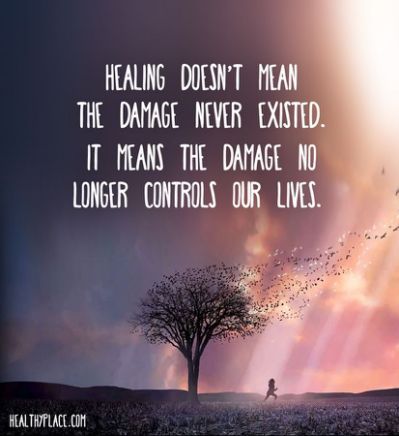
Much has been written about the importance of finding a d developing personal strengths as a vital part of the process of recovery when deal with your mental health.
By understanding and increasing your personal strengths, you can build a reservoir of positive attitudes, behaviors and activities which can increase your self-confidence and self-esteem. This can also help you reclaim a more full and complete life rather than being defined only by your mental health.
Often I have talked to people who are struggling with mental and physical conditions, they are not familiar with a strength-based approach. Moreover, when asked to identify their strengths they are silence, puzzlement or not understanding what their strengths are.
There are many strengths that we have that people have no idea is a strength.
Family
an individual who remains in contact, along with other individuals in a with relationship with these family members. Reflect how much love, support and respect is provided to the person by their family.
Social Connectedness.
This strength refers to the interpersonal skills of the individual as they relate to others. This indicates how many friends the person has, their facility with social skills and their ability to maintain healthy relationships.
Optimism
This strength is rated based on the person’s sense of his/her own future and whether they have a positive orientation about the future. Someone with a strong, stable positive outlook on the future will receive a higher rating.
Talents/Interests
This strength is based broadly on any creative or artistic skill or talent the person may have, such as art, theater, music, athletics.
Educational
This area refers to the strength of the person’s current school or vocational training environment and may not necessarily reflect any specific educational or work skills the person had. This area may rated as not applicable if the person is not currently in a educational or work training environment.
Volunteering
This strength describes the degree to which someone acknowledges the importance of and is regularly involved in volunteer activities that give back to the community.
Job History
This strength describes the person’s past experience and stability with paid employment.
Spiritual/Religious
This strength assesses the person’s involvement in spiritual or religious beliefs and activities.
Community Connection
This strength is based on a person’s level of involvement in and support from community groups, networks, and activities.
Natural Supports
This area refers to unpaid individuals other than family members who provide support to the person toward improving their health and well-being.
Resiliency
This strength is based on the person’s ability to identify and use their strengths to better themselves and to manage difficult challenges in their lives.
Resourcefulness
This strength reflects the degree the person is skilled at finding the necessary resources required to aid in managing challenges.
Going through these strength areas can yield a helpful profile of the strengths a person has which are either already well-established or potential areas for future growth and development.
By building your personal strengths you will find you can enjoy life more and find greater satisfaction and sense of purpose. So get out there and find your strengths.
If you depend so much on someone they will make you their slave, you have no freedom because you have nothing. Refuse to live on leftovers and be brave enough to do it by yourself. Don’t always follow the crowd.


 From Pity to Praise