Who is the most famous or infamous person you have ever met?
The most famous person I’ve ever met is Oran Stainbrook..
He has acted in the movies “Love in Tahiti,” and “Altered Perceptions.”
He met him at my church


Beauty in your life- change your thoughts for a positive outlook
Who is the most famous or infamous person you have ever met?
The most famous person I’ve ever met is Oran Stainbrook..
He has acted in the movies “Love in Tahiti,” and “Altered Perceptions.”
He met him at my church

God is not bothered by our constant coming and asking. The way to trouble God is to not come to Him at all.
Prayer should be like breathing for the believer. No one day can be boring when God is in it, and God is in all our seemingly insignificant moments in life. 
“A man’s going’s are established by the Lord. He delights in his way” -Psalm 37:23
Prayer enables us to not be victims of this world, but to instead be victors. We can move heaven and earth with our prayers, because prayer moves in the hand of God on our behalf.
“The gospel of Christ does not move by popular waves, it has no self propagating power. It moves as the people who carry it move” -E.M. Bounds
The people who carry the gospel move through constant prayer and dependent on God.
I have learned a few things about prayer over the years. Prayers can supercharge our faith can have a huge impact on the world around us.
Every day I pray for my family’s protection. Just the other day my son called me. The first thing he said to me was “Mom are you praying for me?” In an instant I my heart was going to beat out of my chest. He has a dangerous job and lives in a big city. He told me the strangest thing happened to him. He was working near an electrical control box. He turned off the power and began working, he turned to get a tool, he turned around back towards the control box to work on it it exploded. He was instantly hit by the backdraft. That’s what praying does.
Our prayer should not be limited to minuscule unimportant matters. If God answered all your prayers this week, would it just change you, or would it change the world around you. God answered my prayers for protecting my son, but it also spoke to the other people who were working that day when my son said “My mom must be praying for me.”
Because our God is so big, we should concern ourselves with the bigger picture. We serve God who has said in Isaiah 59:1, “Behold, the Lord’s hand is not shortened, that it can’t save, nor His ear dull, that it can’t hear.”
Jesus taught “I tell you thr truth, if you had faith even as small as a mustard seed, you could say to this, mountain, move from here to there, and it would move. Nothing would be impossible.” -Matthew 17:20.
We serve a mountain moving God. A God who does impossible things on a regular basis. When was the last time you prayed for something impossible?
I believe in praying, prayers that are so audacious that only God could accomplish them. Small prayers don’t require much faith. Yet audacious prayers could never be accomplished unless God did something only He could do.
But here’s the thing about audacious prayers:
We need to stop praying as soon as possible prayers, and instead start praying as long as it takes prayers.
There is nothing wrong with asking God to move quickly David prayed this all the time in Psalms, and there is a clear president from scripture that God not only works through our prayers, but He also works on us as we pray and this means it takes time, patience, and persistenceto see the answer come through.
The book of Daniel contains a powerful illustration of Daniel, praying and fasting for three weeks, until an answer was given. The angel of the Lord tells him as soon as Daniel started to pray, the answer had been given from heaven, but there was a war in the heavenlies that caused it to take longer to arrive. We often have no clue how much God is at work through our prayers.
 Jesus actually taught us to pray like this. In Luke 18, Jesus tells His disciples a story, to show them that they should always pray and not give up. He goes on to explain the power of persistent prayer. God wants us to always pray, and not give up. There’s nothing stronger than a mother‘s prayer that reaches beyond this world, offering protection and love that endures forever.
We often want instant results from God, but God wants patience and endurance from us. It is difficult to over estimate the biblical importance of patience and endurance, and maturing our faith.
I’d think one of the most powerful stories in the Bible is in the book Daniel when Shadrach, Meshac, and Abednego in the fiery furnace for not bowing down to King Nebuchadnezzar’s idol. They miraculously survived, but nearly as surprising is what these men of faith taught us before they were thrown in, “King Nebuchadnezzar, we do not need to defend ourselves before you in this matter, if we are thrown into the blazing furnace, the God we serve is able to deliver us from it. But even if He does not, we want you to know, that we will not serve other gods or worship the image of gold you have set up (Daniel 3:16-18).
Through the years I have learned and know that God is able to do the impossible, but even if he doesn’t, I will still serve Him and follow Him only. Just kind of praying offer supreme submission and faith in God, and He is greatly honored by this kind of praying.
This kind of praying can supercharge your prayer life, but you have to forgive those who send against you, and pray God‘s blessings and mercy on those who have persecuted you. Not only will God‘s presence cover you I could do this, but these kind of prayers on God.
Even your greatest enemy, or someone who has hurt you deeply, we are called to forgive as often as needed, and pray God‘s blessing and mercy for them. I’m sure that Paul the apostle didn’t try to spend time with those who wanted to harm him, but he still with God‘s strength forgave and prayed blessings on them.
Our inability to let things go and bless others will keep unforgiveness and hinders our prayer life. How we treat others affects our prayers. (1 Peter 3:7).
1 John 5:14-15 tells us to pray according to God’s will.
“Now this is the confidence that we have in Him, that if we ask anything according to His will, He hears us, whatever we ask, we know that we have the petitions that we have asked if Him.”
We can pray, according to God‘s will by praying God‘s word. If we want our prayers to be powerful, we need to learn to pray the promises of God’s Word back to Him. There are more than 3000 promises from God in the Bible we can draw from.
D.L. Moody who founded the Moody Bible Institute said, “When I pray, I talk to God, but when I read the Bible, God talks to me.” It is really important that God speaks to us that we speak the truth to Him. I believe that we would pray better if we knew our Bibles better.
A powerful prayer is more than just words. It’s a heartfelt connection with God that touches His very heart. They are intimate conversations with Almighty God, infused with faith and expectation. Powerful prayers are those that resonate with the will of God, aligning our desires with his purposes. They aren’t self focused or self gratifying.
They have the capacity to bring about miraculous outcomes, to shift circumstances, and to touch lives in profound ways. A prayer that is aligned with God‘s will, and stirs up His compassion, His power, and His grace are powerful prayers.
In essence, a powerful prayer is one that ushers in God‘s presence, and brings heavens touch to earth by transforming the ordinary into the extraordinary.
The significance of prayer in the Bible cannot be overstated. It serves as a direct line of communication between humility and God fostering a deep connection with Him.
Throughout scripture, prayer is depicted as a powerful tool for seeking guidance, expressing gratitude, and finding peace and times of need.
What is good about having a pet?
There are some great benefits that come with having a pets.
Having a pet lowers stress hormones and helps us feel calmer. Companionship, they offer affection and comfort helping to reduce loneliness. They also give us a mood boost and make us smile.
I have always been an animal lover. My current animal is a cat. Now that I am getting older it’s has become harder to take care of a dog. Right now I have a cat. They are more independent but affectionate, and they are entertaining.
There are also health benefits on your cap studies suggest that cat owners have a lower risk of heart disease and stroke.


There are moments in life that shape us, and often they come when we least expect them. Looking back there are a lot of things I wish I had known during the hardest seasons of my life.
I haven’t always been close to God, in fact, during some of my darkest days, He felt very far away. I was angry at Him. I buried my wounds deep inside, and for a long time, I tried to keep God beneath all those layers of pain. Then one day I broke, I felt as if I couldn’t go on any longer. I felt like I was going to explode. The weight of it all hit me like a wave, adding to the pile of hurt, anxiety, anger, and hopelessness I already carried. But despite all those feelings, there was a tiny nudge inside me. A voice whispering. A whisper that told my heart that maybe I needed God to get through this. After all, I had tried everything else. That day something broke inside me and it all came pouring out -all the pain I had kept hiding inside, all the cooped-up bitterness. That day something broke. He didn’t care that my soul was in shreds, torn from all the pain I had endured, He accepted it, no matter the condition.
As I reflect on those hard seasons, there were a few things I wish I had known -things that could have lightened my load, things that could have carried me through the storms.
The heaviest chain I wore was the one I created myself -thinking I could do everything myself. I thought I could handle everything alone. I believed that it was all up to me, providing, protecting, and even fixing. It was exhausting. I wish I had realized that God was our provider. He gives us peace, strength, joy, and comfort in ways no one else can. I wish I had trusted Him to take the burdens I was carrying. This doesn’t mean we won’t have any problems, pains, or even valleys to walk through. But had I trusted Him, my journey would have been lighter, and less overwhelming.
Paul wrote in Romans 15:13,
“May the God of hope fill you with all joy and peace as you trust in Him, so that you may overflow with hope by the power of the Holy Spirit.”
I spent years thinking I had to be my own warrior. I thought I had to fight every battle in my own. But the truth is, I didn’t because God is our warrior. He fights for us. He stands in front of us, guarding us against battles we don’t even see.
The world lines to tell us we are too broken, that we can’t be fixed. But the truth is, there is nothing we’ve ever done, no mistake we’ve ever made, that God can’t redeem. He can heal our wounds we think are beyond repair.
“All are justified freely by His grace through the redemption that came by Christ Jesus” -Romans 3:24
For so long I tried to hold it all in. I built walls around my pain and tried to convince myself I was fine. I built a dam to hold back the tears. But the walls and dam didn’t make me stronger, they just made me numb. All I did was harden my heart and silence my healing. And it’s a beautiful release when we break and let the tears fall at our feet. When we let God handle our pain, and our grief.
“He heals the broken-hearted and binds up their wounds” -Psalm 147:3
When I was going through my darkest days, I felt like I was completely alone. But God was always there with me, even when I couldn’t see Him or feel Him. He upheld me with His righteous right hand.
“So do not fear, for I am with you, do not be dismayed for I am your God. I will strengthen you and help you. I will uphold you with my righteous right hand” -Isaiah 41:10
It’s easy to forget that God is good when life is hard. I see how God worked in all my pain, shaping me, teaching me, and growing me. Even when I couldn’t understand His plan.
No matter what I went through, no matter how many mistakes I made I was and am deeply loved by God. We all are. He may not live the things we sometimes do, but His love for us is unshakable, and nothing can take that away.
“But God demonstrates His own love towards us, in that while we were yet sinners, Christ died for us.” -Romans 5:8
When life feels impossible it’s easy to forget how big God is. He’s the same God who moves mountains, to silence lions, who overcomes the world. Nothing is too big for Him.
“For with God nothing will be impossible” -Luke 1:37
God hears our every cry, every prayer, and every tear. Nothing escapes His notice.
“And this is the confidence that we have toward Him, that if we ask anything according to His will, He hears us” -1 John 5:14
God’s love for us is unchanging. He is with us, He hears us, and He will never leave our side. So I encourage you to trust Him. Let Him carry your burdens, and redeem your story. Cry out to Him, because He is waiting to heal you. Take a step towards Him and embrace His love. Amazing things happen when we surrender our control to Him.
Name the most expensive personal item you’ve ever purchased (not your home or car).
The most expensive things I’ve ever brought is not necessarily in money, but time, emotion, and experience. I could buy almost anything tangible, but creating meaningful memories often cost something deeper, effort, and love.
The thing I’m buying isn’t the buying itself, it’s the feeling and the story that can be carried forever.

The moment we accepted Jesus as Lord and Savior of our lives everything changed. We were instantly born again from above. God did something amazing in us. He makes us a new creation. Our spirits came aliveand we were reconciled with God.
Not only were we rescued from the domain of darkness and transferred to the kingdom of God’s beloved Son. We became under the rule and reign of God, but wait it gets even better. Jesus gives us the authority to become children of God. We become adopted by God and are His son or daughter.
We have a new family and all the blessings connected to it. We become citizens of heaven. We become part of God’s own family with all the rights and privileges that go along with it.
We become children who eagerly wait for our Savior. Knowing the earth isn’t our home. We are just visiting. We are not citizens of a nation unless we make the choice to give up our citizenship to become citizens of that nation.
“This is not my home. I’m only passing through. My treasures are laid up, somewhere beyond the blue. The angels beckon me. From heaven’s open door. And I can’t feel at home in this world anymore” -Jim Reeves
Each nation has its own culture, values, practices, and atmosphere. The same is true about heaven. As citizens of heaven, we come to live in a way that is pleasing to God. As a follower of Jesus, our lives are to show the love and glory of God.
“Let the words of my mouth and the meditation of my heart be acceptable in your sight, Lord, my rock, and my redeemer” -Psalm 19:14
As citizens of heaven, we should live in a way that is pleasing to God.
Heaven is the standard that Jesus sets. It’s His heart for people to experience a life that is only made available through Him. Jesus had given us the right to pray for things on earth to change. Our prayers are more powerful than we think.
We are the only Jesus that some people will ever see. The way we live the example we set can make a difference. We are part of something way bigger than ourselves. We are part of the kingdom of God. We must live a life of Jesus dwelling in us. We have only one antidote that can heal the hearts of people.
Jesus’s spirit -the Holy Spirit is in us when we invite Him and will help us through His power.
In Philippians 3:17-21 Paul encourages our citizenship of heaven.
“Brethren, join in following my example, and note those who so walk, as you have us for a pattern. For many walk, of whom I have told you often, and now tell you even weeping, that they are enemies of the cross of Christ, whose end is destruction, whose God is their belly, and whose glory is their shame -who set their mind on earthly things. For our citizenship is in heaven, from which we also eagerly wait for the Savior, the Lord Jesus Christ, who will transform our lowly body that it may be conformed to His glorious body, according to the working by which He is able even to subdue all things to Himself.”

I feel like the some teachings in the Bible need more attention. Like Proverbs, it is skipped over. But there are some important lessons to learn from Proverbs.
Proverbs offers lessons on living a wise and successful life by emphasizing the importance of fearing God, heeding guidance, and living with diligence, integrity, and kindness.
These lessons include avoiding foolishness and sin, building strong relationships, being generous, and understanding that true wisdom leads to a better life.
As a child, I was not taught about God or any faith. I often wonder if that’s why my family was so broken.
Proverbs teaches that “the fear of the Lord is the beginning of knowledge” and that respect for God is the foundation for all wisdom.
Wisdom is presented as a precious treasure to be sought after, and a wise person embraces instruction and correction, while a fool rejects it.
Proverbs also encourages listening to our parents’ instructions because they have more experience than us and want to guide us towards a good life.
It teaches diligence over laziness. Proverbs contrasts a diligent, hard-working person with a lazy one, noting that slacking causes poverty, but diligence makes us prosperous. It even suggests learning from the ants industriousness.
Choosing our friends wisely. The company we keep matters. It is wise to walk with the wise, because being around fools causes us to suffer harm.
I seen this first hand when I volunteered at a drug and alcohol recovery center. Many people who were trying to straighten up their life’s would fall back into the same crowd they did drugs or drank and would start again. I was a vicious cycle for some. Temptation is a common struggle we all face in our lives, that’s why we are encouraged to keep our hearts focused on God.
We should do good to others and avoid unnecessary conflicts. To live with integrity and kindness. Proverbs 11:17 says, “Your kindness will reward you but your cruelty will destroy you.”
Avoid immortality. Proverbs warns us against adultery and seduction of the wicked, these actions can lead to destruction.
Proverbs also tells us to control our temper. This noon has a lot to say about the dangers of anger and advises us to keep our temper in check.
It tells us we should embrace trials and discipline. Discipline should not be seen as a punishment but as a way of refining us and bringing us closer to God.
Proverbs is a mini guide on how to live in faith. It is a book that teaches the inevitability of God’s justice and the importance of prudence and moderation.
What podcasts are you listening to?
I typically listen to podcasts done by Jack Hibbs. He teaches from the Bible addressing current events, culture, theology, and Christian living.
I also enjoy watching the Joe Rogan experience. While the language is sometimes is a little saucy. He has some interesting people on there. Along with a wide variety of subjects.
What was your favorite subject in school?
My favorite class in high school was English. English class then was very different that what they’re teaching now.
In the 80s there was a lot of reading. Books from Shakespeare, Dickens, and Steinbeck were read. Then sometimes a five page report on it would be necessary to pass the class.
Along with that, there was a lot of grammar and composition, and there were lots of vocabulary and spelling tests.
I remember carrying hefty literature books in my backpack home and back daily.
Towards the last years of high school we learned how to use a typewriter, and write in shorthand.
Oh, course writing book reports was my favorite part of the class. I enjoyed reading and writing I would often hand them in early.
School in the 80s was culturally different. There was strict discipline. We were expected to be on our best behavior and have formal classroom etiquette. We stood when we spoke and always use titles of Mr. and Ms. We never called teacher a by there first name.
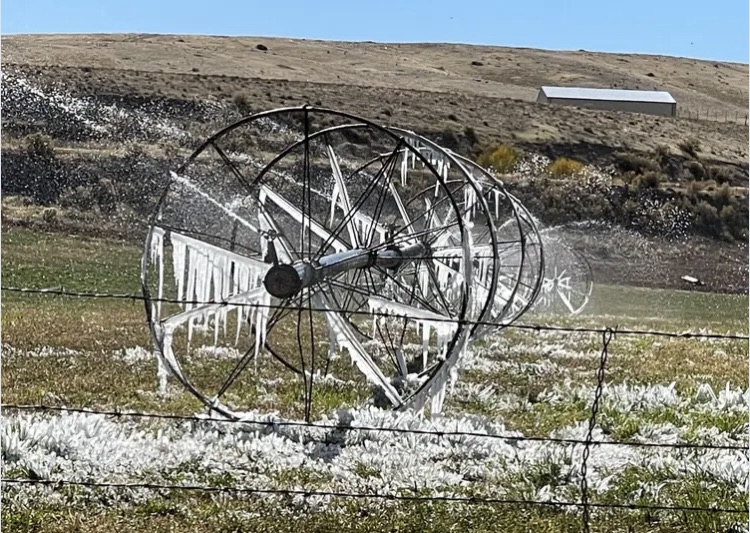
The pain we endure in life is real, and our tears valid. It’s easy to have pity parties for ourselves. It almost feels natural, and praise unnatural and doesn’t feel logical. But praise is always logical for God’s children. Even in hard times, we must keep eternity in view.
It’s easy to praise God when things are going well. The true test -the harder one is whether we can learn to praise God during very difficult times. Praise is a response to God’s gracious invitation to lift our eyes to Jesus our Savior despite our feelings or circumstances.
When we praise God we feel closer to Him and more connected. We can learn to trust Him and begin to know He is working things for the best. Praising God helps us keep our eyes on Him and not on ourselves or our problems.
Romans 8:28 says, “And we know that all things work together for good to those who love God, to those who are called according to His purpose.”
We might not be able to thank God for our circumstances, but we can still praise Him for who He is -holy, living, faithful, righteous, and forgiving. Praise is not about what we feel, because sometimes we don’t feel like praising. Praise is about God’s character and the fact that He is worthy of praise.
God’s character doesn’t change by the circumstances of our lives. We may not know what to do when we are in the storms of life, but we can keep our eyes on the one who does.
Praising God in the storm means maintaining faith and giving Him thanks even in difficult to, Es, trusting that He is present and working for our good. This means shifting the focus from our circumstances to God’s character. This shows trust in God’s goodness and control, even when we cannot see the way forward.
Praising God can calm our mind and soul, and provide a sense of peace and strength to face external challenges.
It’s a spiritual discipline that helps us grow and acknowledge His worthiness of praise in all circumstances, not just good ones.

“The kingdom of heaven is like a treasure hidden in a field, which a man found and covered up. Then in his joy he goes and sells all that he has and buys that field” -Matthew 13:44
The kingdom of heaven is so valuable that if we lose everything, to have it, it is a joyful sacrifice. Instead of accumulating earthly treasures that can be destroyed or stolen we should “store up our treasures in heaven,” where they are secure, eternal, and achieved through faith, and good deeds like selfless acts of generosity and serving others. The location of our treasure is said to reflect where our heart is, which highlights the importance of prioritizing spiritual values (Matthew 6:19-21).
Have a WordPress.com account? Log in now.

