November-07-2022

Beauty in your life- change your thoughts for a positive outlook
November-07-2022
November-06-2022
God told the prophet Zephaniah that some are “complacent in their sins.” They are comfortable with their lifestyle and behavior. Even if they have heard His warnings, they don’t want to change. They are indifferent to the Lord. I suppose most people are this way in society today.
These pod whatever they want with no concern of the consequences. Many think God will do nothing to them to punish them.
The image is of people who are set in their ways and preoccupied with their personal desires and interests. They are intoxicated with their pleasures. They are secure and easy. In that they don’t fear God.
These aren’t just the characteristics of non-believers. Some Believers have similar attitudes. Some Even go to church and say they believe, but deep down they have their own ideas about God’s Word and have developed their own interpretations.
The Bible makes it clear that God wants to take His Word seriously and realize there are consequences to our actions. Obeying Him is key to blessing, fulfillment, and wisdom.
I have to admit I have become complacent lately. There are days I just want to hide away in my house and do nothing for God. It maybe because of how the world is today and I’m getting tired of trying or maybe I’m just getting lazy. But God has a way of reminding me, that it’s not over and there’s still work to be done.
This has nothing to do with “good works,” It has everything to do with obeying God and taking the Bible at face value. The way it’s written is truth. There is no other interpretation to be made by me or any other person on earth.
God’s word to Zephaniah:
I will search with lanterns in Jerusalem’s darkest corners to punish those who sit complacent in their sins. They think the Lord will do nothing to them, either good or bad. – Zephaniah 1:12.
I believe God is searching America’s darkest corners also. We have a small window of time in which we must turn to God or judgement will come.
November-05-2022

November-04-2022
If we need conviction, it lifts us out of sin and leads us back to the heart of God.
I often wonder how many human beings can get through a single day without God. If I feel that I am missing God’s presence, I can hardly stand it. I wonder how I lived without Him for many years. And all I can remember is pain and suffering.
I never want to be out of fellowship with the Lord. I must have Him to get through every single day of my life.
That’s why I’m so graft for the conviction of the Holt Spirit. He lets e know if I’m doing something that grieves God or interferes with our fellowship. He is faithful to show me if I’ve done something wrong and helps me get back on track. He convicts and convinces me, but He never condemns me.
The Bible says: “For God so greatly loved and dearly prized the world He gave His only son, so that whoever believes and Trusts in Him shall not parish, but have eternal life. For God did not send the Son into the world to judge or pass sentence on the world, but that the world might find salvation and be made safe and sound through Him” (John 3:16+17 Amplified).
God loves us even more than we love our children, and His love He disciplines us. I remember I hated taking privileges away from my children. But I knew they were bound for trouble if they continued to do wrong.
God has the same concern for us, but He is patient. He tells us again and again what we ought to do. He may feel us in 15 different ways, trying to get our attention.
His message of convicting love is everywhere. He wants us to listen to Him because he loves us. If we persist in our ways, He withholds privileges and blessings from us. But he does so only because he wants us to mature.
If God freely gave His Son, Jesus, surely He won’t hold back anything else we need. He wants to be with us radically and outrageously.
Every single day of our lives we need forgiveness. The Holy Spirit sets off an alarm in our spirit who recognized sin, and He gives us power of the wall of Jesus to continually cleanse us from sin and keep us in right standing with Him.
But if we are to overcome the condemnation, we can be certain it is not from God. He sent Jesus to die for us to pay the price for our sins. Jesus bore our sins and condensation on the cross. When God breaks the yoke of sin from us, He removes the guilt too. He is faithful and just to forgive all our sins and to continually cleanse us from all unrighteousness (1 John 1:9).
Satan knows that condemnation insane keep us from approaching God in prayer so our needs cannot be met and we cannot enjoy Internet fellowship with Him. Feeling bad about ourselves I believe in God is angry with us only separates us from His presence. He doesn’t leave us, but often in fear and shame we withdraw from Him.
That’s why it’s so important to know the difference between conviction and condemnation. Remember if you hear conviction, it lifts you up and out of sin and leads you back to the heart of God. Condemnation only make you feel bad about yourself.
Ask God to convict you of your skin, realizing that conviction is a special blessing, not a problem. If only perfect people could pray receive answers, nobody would be praying. We don’t need to be perfect, but we do need to be cleansed of sin.
Conviction is widely necessary if we are to walk with God properly. This precious gift is one of the important way we hear from God. Don’t make the mistake of allowing condemnation to take hold of your life. Instead, the conviction lift you up to a new level with God. Don’t resist it, receive it.
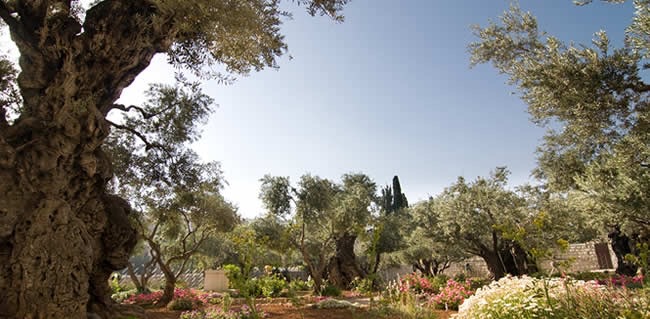
there is an unique connection between the Jewish people and Christians. While sometimes a fierce debate. But the Bible indicates our relationship is found in the symbol of an olive tree.
The prophet Jeremiah describe your role as a green olive tree (Jeremiah 11:16). But the apostle Paul wrote to the church saying: “Forif you were cut from what is by nature a wild olive tree, and grafted, contrary to nature, into a cultivated olive tree, how much more will these, the natural branches, be grafted back into their own olive tree” (Romans 11:24).
Not surprisingly there are two basic righty of a olive tree, the oleaeuropaea which is cultivated and the oleauropeaeasylvestra, the wild variety.
But often gnarled, irregular trunk of an olive tree indicates its strength and durability. The trunk is often bent and hollow because of internal decay, although it continues to bear fruit. How often do we feel in our hearts that we are not worthy of such divine blessings but God by His grace uses this to bring glory of His name.
Because of the attractive grain, the wood is used in Israel for the manufacture of small souvenirs. In biblical times, Solomon was instructed to build the doors of the temple out of all the wood (Hosea 14:6).
Olive Oil
Olive oil was greatly valued in biblical times and was an important export (1Kings 5:11). The olive tree produces the most oil between 40-50 years old. The oil will use a cooking and still is, It was used for healthcare, to beautify the body for anointing. There are churches in America that use this as an anointing oil to pray over people.
The spiritual significance of olive oil is bound when the Psalmist describes how the good oil was poured upon the bread of Aaron, down on the edge of his garments (Psalm 133:2). The children of Israel considered the grace of God to be at divine oil, being poured out on them. They wore tassels upon their garments to remind them of the divine oil of God poured out upon them continuously.
Oil was also used as a source of lighting. God instructed the lighting of the menorah ( a seven branch candelabra) and other Temple lights with olive oil ( Leviticus 24:2). The menorah was lit with oil of pressed olives (Exodus 27:20). The oil was to be made out of beaten olives, to produce what is called katit oil, the olives must be squeezed repeatedly, so all the liquid from the fruit is removed. Light from the katit would be stronger because the oil is thicker since was of the olives were pressed. This reminds me of the pressing the pounding Jesus took for us, The name Garden of Gethsemane means olive press.
King David, the outstanding biblical hero described himself as being “like a green olive tree in the house of God” ( Psalm 52:8).
A wonderful site at the base of the olive tree is the young roots. Usually 10 or 12 new shoots are around the base of the tree. Those new olive shoots speak of new life. We can visualize a family seated around the table, enjoy life together. The Psalmist summed it up like this “Your wife shall be like a fruitful vine in the very heart of your house, your children are like olive plants all around your table” (Psalm 128:3).
The climax of Paul’s letter to the church in Rome is found in Romans 9:11. As I mentioned how described the wild olive trees have been grafted into the cultivated tree, ‘the elder brother.’ Christians are grafted in. Paul is not suggesting we embrace Judaism but we are instructed to embrace the Jewish people and our biblical heritage. We are instructed to look to the rock from which we were cut out of the quarry home which we were hewn; look to Abraham, your father, and to Sarah, who gave birth. (Isaiah 51:1-2).
Heros
The famous faith chapter, Hebrews 11, lists Abel, Enoch, Noah, and Abraham in a powerful line up of Jewish hero’s. They were blessed and anointed by God and they served with distinction.
Jesus is Jewish. Hollywood and so many artists got His complexion wrong. We may think about a Hollywood Jesus , but Jesus was a Nazarene. How easily our minds manipulate the facts?
The Bible says, “Do not be conceited, but fear; for if God did not spare the natural branches, He will not spare you either” (Romans 11:20-21). Paul reminds us ‘they are beloved.’ (Romans 11: 28-29). He also said God chose the Jewish people ‘irrevocably.’ (in a way that cannot be changed). In Ancient times they were the only ones expecting “The Messiah, back then, our forebears were pagan. “Remember that you were at time separate from Christ (Messiah), excluded from the commonwealth of Israel, and strangers to the covenants of promise, having no hope and without God in the World. (Ephesians 2:12). We older Jewish people our gratitude for showing us the need for Messiah and for bringing monotheism to our attention.
So many people in America hate the Jewish people. But, they don’t realize that is where they come from.
God is faithful. There has been a cavalcade of christians who have historically shown the love of God to the Jewish people. Israel honors those heroes and remind them at YadVashem (The holocaust memorial center in Jerusalem).

November-03-2022
November-02-2022
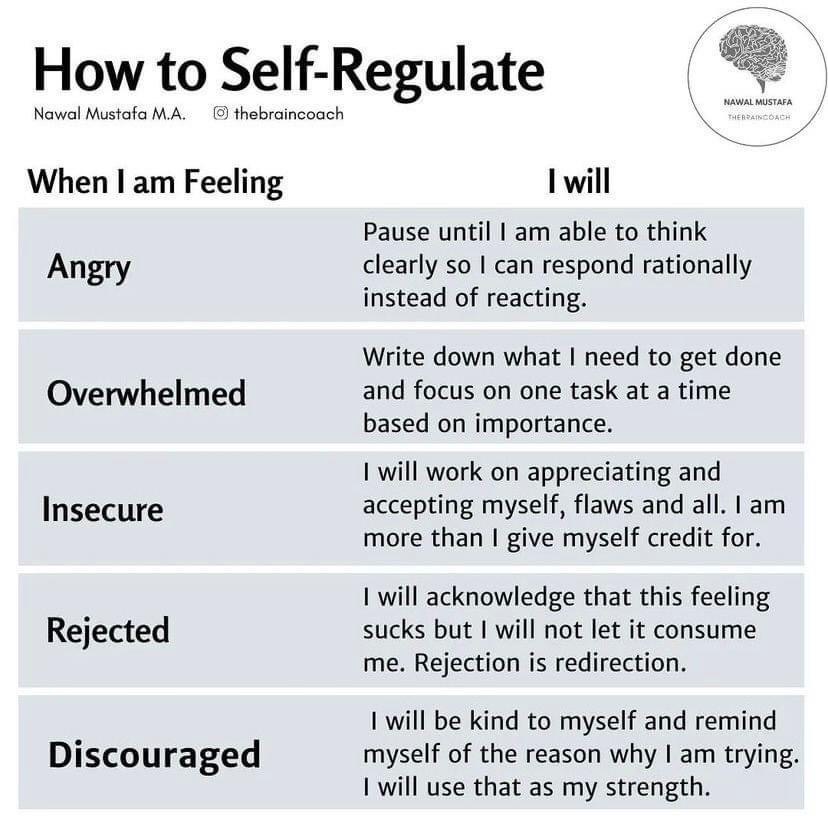
3 Declarations That Will Change Your Attitude And Behavior.
As the old expression goes, “practice makes perfect.” Changing our longtime attitudes and behaviors can be quite a challenge, but with repetition and consistency it is possible to make a true change. And by changing our attitude and behavior, we change ourselves.
By saying these 3 declarations every morning and being confident that slowly, but surely things will change.
1. “I have the strength to take on any challenge!“
As humans, we naturally do not like being uncomfortable. Many of us will avoid discomfort at any cost. But by avoiding uncomfortable situation, we are doing a great disservice for ourselves. When we forfeit our comfort and break free from our comfort zones, we are getting ready to tackle any challenge in front of us. It is by taking on challenges that we grow as people in unparalleled ways.
It is often the most inspirational and successful role-models who have gone through the most trying and challenging of situations. Why is this? It’s because those individuals who are ready to take on any challenge, and have confidence that they will find strength needed are the ones who become what seem like super-human. But there is a secret: we all have super human strength that is part of us. Hidden inside of every individual is a super-man or super-woman waiting to be released. It takes only our will and unwavering adamancy to come out from beneath the surface.
Say to yourself every morning: “I have the strength to take on any challenge!” Say it throughout the day when uncomfortable situations that you really want to avoid arise. You are guaranteed to become truly different and a stronger person.
2. “I have the power to tackle any negative temptation!”
Sometimes the very word temptation itself sounds scary, so let’s put it into perspective. Temptation can be our old habits, flaming desires, quick thrills and speedy passions that distract us from moving in a productive direction. Whether it is pressing the snooze button on the alarm clock, or fighting an urge to be dishonest, even the most seemingly minute temptations seem to take over our minds and hearts.
The mystics teach that a moment of temptation is a moment of insanity. It’s a moment in with logic and reason have abandoned us, and the only thing controlling our actions seems to be the temptation itself. That best thing I have found to release the power of temptation is to distract myself with a positive action.
The mystics also teach us that every negative temptation that lies before us comes with the power to overcome it. Just as a temptation is real our power to overcome it is real, and this is where we have all the power in our hands to choose.
Say to yourself every morning and anytime at temptation tries to cripple you: “ I have the power to tackle any negative temptation!” Do not give up if you fail – keep trying and you will surely defeat your negative conditions.
3. “I am going to take a deep breath and Reign in my emotions.”
Maybe your child comes home sick and you have to rearrange your morning meetings and your stress level is going up. One of your children reach across the table and spilled a full container of milk. Everywhere. Your stress level has skyrocketed; and your anger rises and tears comes to you eyes. Pause – are you actually crying over spilt milk?
Little annoyances that build up during our day are often out of our control. What is in our control how we react to them. When we are already frustrated it is easy to see how a person would actually cry over spilled milk. But do you want to be that person?
Emotions are part of us and like to creep up at the most inconvenient times. But we have the power to rein them in. We can listen to them – but they should always be taken with a grain of salt, as the expression goes. Next time you find yourself about to explode or even cry over spilt milk, say this to yourself: “I’m going to take a deep breath and rein in my emotions.” Tap into your self-awareness where are you at right now? No pull yourself into a higher state of awareness, a place where you can look at your current situation and emotions from the outside. If this were someone else, what advice would you give to them? How do you think someone else would react? How would you like to see yourself react? Now do it. Take a deep breath and always remember what is important in your life.
It is difficult especially in today’s world. Use these 3 declarations every day, and as many times as you need. To change your attitude and your behavior.
Have a WordPress.com account? Log in now.

