

How Do We Fight The Good Fight?
What is the “good fight” and how did we fight for it?
Fight the good fight of faith. Take hold Of the eternal life to which you were called. And you confess the good compassion and the site of many witnesses.
1 Timothy 6:12
The apostle suggests to Timothy, that to mind the things of this world. His life was a state of warfare as he was a soldier, and was not to entangle himself with the things of this life. How many times do we let this ,ice entangle us into the things of this world.
Timothy had many enemies to engage with, including Satan, and his principalities and powers; sin and lusts of the flesh; the world, and the men of it, and a great fight of afflictions to endure with them. As also false teachers, with, whom Literally he wants to fight the good fight of faith, so that the truth of the Gospel, which they resisted, might continue with the saints.
This fight is called “the fight of faith,” Hartley in opposition to the law, and in which the false teachers, In the apostle sign, we’re so much engaged, and against whom the apostles set themselves. And partly because the doctrine of faith, faith of the gospel, the first ones delivered to the Saints, is what they honestly contended , strove, and thought for; And because of the grace of faith, as conversant with the Scriptures of truth, was the weapon they fought with.
It may be called a “good fight,” because it is in a good cause, the cause of God and truth; Under a good captain, Jesus Christ the captain of our salvation, or which good weapons are provided, even the whole armor of God, in which are not carnal, but spiritual in mighty; To which may be added, that those who are engaged in this fight maybe share a victory, and the crown of glory, life and righteousness.
What Is The Good Fight?
Those who will get to heaven must fight their way toward it. There must be a conflict with corruption and temptations, and the opposition of the powers of darkness. Observe, it is a good fight, it is a good cause, and it will have a good issue. It is a fight of faith; We do not war after the flesh, for the weapon of our warfare are not carnal (2 Corinthians 10:3; 2 Corinthians 10:4). He exhorts him to lay hold of eternal life. Observe:
1. Eternal life with the crown proposed to us, for our encouragement to war, and to fight a good fight of faith, the good warfare.
2. This we must way hold on, How do you those that are afraid of coming short a bitch and losing it. Lay hold, and take heed I’m losing your home. Holdfast that which you have, that no man take your crown (Revelation 3:11).
3. We are called to the fight, and he will hold on eternal life.
4. Profession Timothy and all faithful ministers make before many witnesses is a good profession, for they profess and engage to fight the good fight of faith, and to lay hold on eternal life; their calling and their old profession oblige them to this. While we are not ministers we have to be strong in our profession to fight the good fight.
We must fight the good fight with all our might. Christ is our strength and Christ is out light. Play hold on life and it shall be out joy and crown eternally.
Run the street race suit God’s good grace, if your eyes and seek Christ’s face. Live with it way before us, Christ is the path and Christ is the prize.
Cast cares aside, lean out our guide. Gods boundless mercy will provide. Trust, and our trusting soul shall prove Christ is it’s life, and Christ is love.
Faint not in fear; Gods arms are near.God does not change and you are dear. Only green that you should see Christ in all in all.
Fight The Good Fight Of Faith. Take Hold Of The Eternal Life To Which You Were Called, And You Confessed The Good Confession In The Sight Of Many Witnesses.
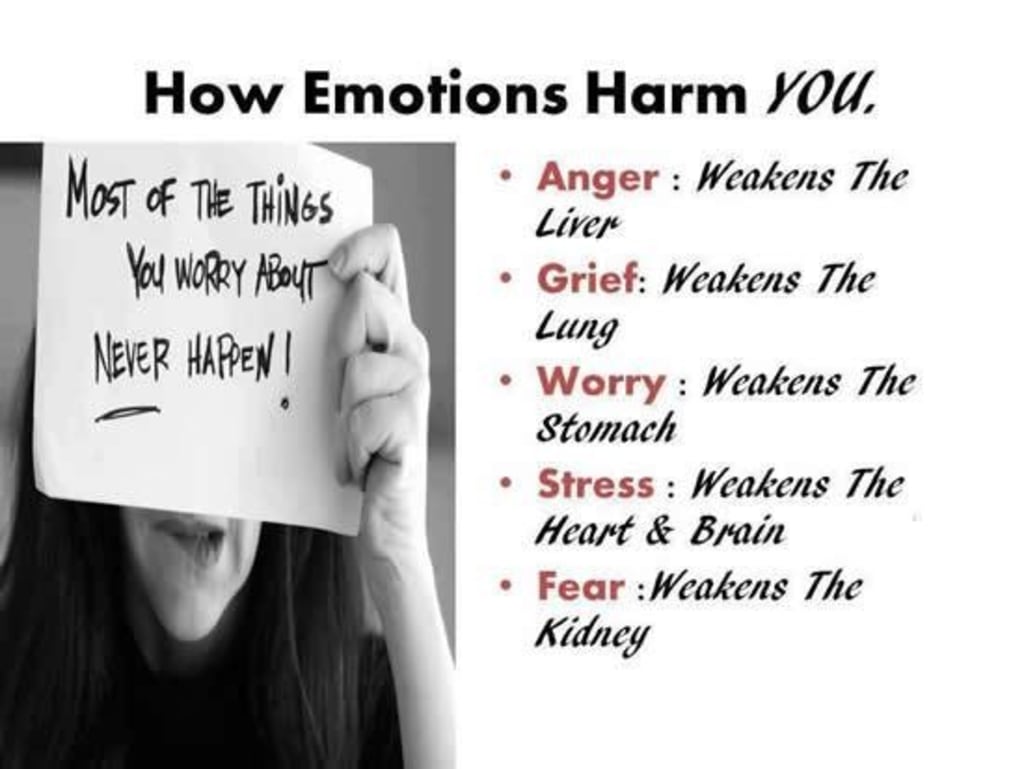
How Your Emotions Can Harm You
Signs You Should Be Concerned About Your Mental Health
Mental health refers to the general state how do you regulate your behaviors, feelings, and thoughts. There is no standard for measuring what’s normal for you versus what could be the reason for concern on someone else, but poor mental health can negatively in affect:
- How well do you get along with family and friends
- Your productivity at work or school
- Your interest in activities, social settings, and other situation
- Energy levels… and more
Anxiety is an appropriate response to stressful situational triggers
Navigating a public health crisis to feeding hi political tensions, it’s no wonder that many people are feeling uneasy today. And truthfully, stress is a perfectlyNormal an appropriate way to respond to situational triggers such as COVID-19, a job loss, and uncertainty around every election.
In fact, many people have never been depressed before 2019 only to have been diagnosed in 2020. It’s estimated that about 1/3 of the population have already had depression diagnosis experience worsening symptoms during this time.
For some, hope you habits and reestablish your mental health, helping them to maintain your equilibrium. Or others, a situational figure and cause a downward spiral that leads to anxiety or depression. When that happens, it may be time to reevaluate how you take care of yourself.
If you just don’t feel like yourself, it could be a sign you need to take care of your mental health.
If something just feels off, don’t ignore the feeling. When you don’t feel like yourself for an extended period of time say about 3 weeks or more that’s a good sign that you should recognize your mental health. While it may be hard to pinpoint what exactly that feels like, it could manifest itself in the following signs at a mental health concern:
1. Disrupted Sleep
Poor sleep could be a red flag that you were experiencing depression or anxiety. What do you have trouble falling asleep or difficulty staying asleep it could be a signal elemental health concern. Frequent oversleeping reassign as well, demonstrating that your body is the key to the point of burn out.
2. Irritability Or Being Emotional Than Usual
Experiencing irritation, anger, doing snappy and easily frustrated, or mood swing that fly from one extreme to the other could be a sign that your mental health is out of whack. Depression and anxiety can make it harder to self regulate your thoughts and feelings, which is why you may be more reactive or sensitive than usual.
3. Loss Of Joy
Normal to have a bad day every now and then, and life is bound to bring you some sadness at some point. But, if you routinely far left happiness and enjoyment in activities that you used to love, it could be a sign that somethings not quite right. For example, if you used to enjoy golfing or playing the guitar but I feel I’m interested in participating in either of those activities right now, that could be an indicator that your mental health is out of balance.
4. Change In Appetite
There are riding waves depression anxiety can affect how much you eat. For some, Stressing anxiety may result in loss of appetite, as they may not feel hungry or have the energy to eat. Or others, binge eating comfort food can provide temporary relief from depression thoughts and feelings. If you notice that you were over eating or under eating to the point where are you I was a drastic changes in your weight over a short period of time, it could be time to seek help for your mental health.
5. Worsening Physical Symptoms
Depression and anxiety can bring on physical side effects, including sweating, rapid heart rate, dizziness, gastrointestinal symptoms, and headache. If physical symptoms Come on suddenly with no other medical cause it should be a sign that your mental health is declining.
6. Low Energy
Feelings of fatigue and lethargy are also common and people who are struggling with her mental health. Feeling mentally or physically sluggish And make it harder to concentrate, roll conversation, or think quickly. If you have low energy to the point where it is hard to find motivation to get out of bed consider talking to your doctor.
Not every sign of a mental health concern me and you that you have a mental disorder, like anxiety or depression. But it could mean that you need to change something in your routine before your mental health worsens, or leads to something more serious.
The best way you can care for your mental health is my establishing healthy habits. These may include:
- Aiming for 7 to 8 hours of sleep per night with no screen time for 30 minutes before bed.
- Eating healthy, balanced meals that consist of Whole Foods.
- Exercising for 30 minutes a day at least five times per week.
- Hydrating well with water, eliminating excessive caffeine.
- Practicing mindfulness and meditation.
- Talking to someone you trust and consider safely expanding your social bubble.
- I wouldn’t excess alcohol consumption (Women should drink fewer than eight alcoholic beverages per week. Men should be fewer than 14).
When To See A Doctor
It’s healthy habits you don’t improve your mental help, don’t be a shame to seek help from a professional. Talk to your primary care provider about what you’re going through and be prepared to answer questions related to your:
- Medical History
- Physical Symptoms
- Current Problems, thoughts, and feelings
- Use of alcohol and drugs
- Relationships
- Routines
Primary care doctor can recommend the next steps, which critical treatment options such as counseling or medication. They can also provided by for helping you navigate back to your normal lifestyle.
Something doesn’t feel quite right, don’t do a seeking help, with the right support, you can start feeling like your old self again, even if the world appears to be turned upside down.
Reading God’s Mind
Reading God’s Mind
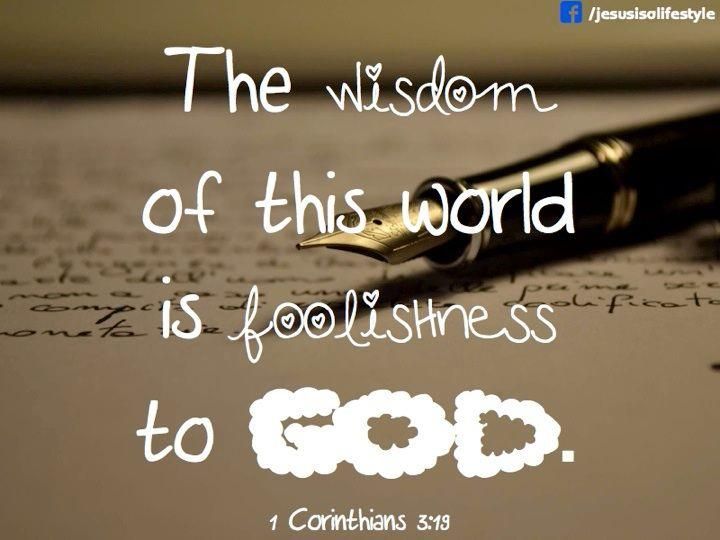
For the wisdom of this world is foolishness in God’s sight. As it is written: “He catches the wise in their craftiness, and again The Lord know that the thoughts of the wise are futile” ( 1 Corinthians 3:19-20).
Have you ever thought to yourself, “If only I knew God’s thoughts?” Some people seem presumptuous to think that they do know God’s thoughts. They are full of advice and act as if they understand exactly what God’s thinks and what He would do in every situation. Too often such people fail to recognize that God’s thoughts and ways are far beyond our ability to understand His ways are not our ways.
However God’s Word does give us a glimpse into His thoughts and desires. He calls us to forsake our worldly pattern and learn His principles for life because conventional, worldly wisdom is often the exact opposite of God’s ways. By saturating our minds with God’s Word we begin to see both God’s message and His method. We will see how He worked in history. If we pause and reflect on our own life we will begin to see how He has worked in our lives. And we will see that it wasn’t how we would have designed it in either case.
In God’s words to the prophet Isaiah he gave great hope. “The rain and snow come down from heaven and stay on the ground to water the earth. They cause the grain to grow, producing seed for the farmer and bread for the hungry. It is the same with my word. I send it out and it always produces fruit. It will accomplish all I want it to, and it will prosper every where I send it (Isaiah 55:10-11).
Get to know God, but don’t try to be His mind reader.
A glimpse of God will save you. To gaze at Him Will sanctify you.
Manley Beasley
Lunar Eclipse May- 2022

Lunar Eclipse May 15 – 2022

Lunar Eclipse – May 15-2022

What Are My Spiritual Gifts
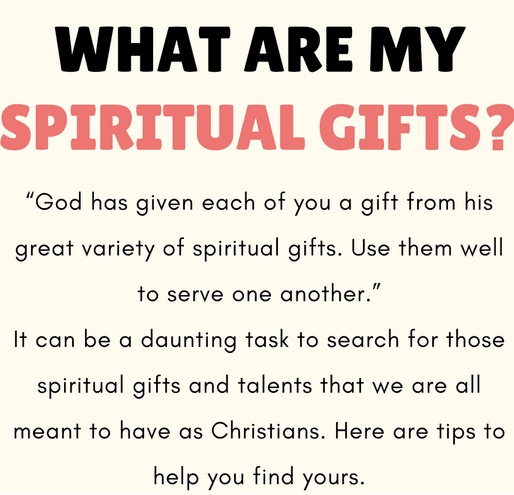
Which Biblical Gifts Are Available And What They Mean.
What are the Spiritual Gifts that God has given ti His people? Here’s a list and the definition of each gift.
1. Administration
2.Being An Apostle
3. Discernment
4. Evangelism
5. Exhortation
6. Faith
7. Giving
8. Healing
9. Helps
10. Hospitality
11.Knowledge
12. Leadership
13. Mercy
14. Prophecy
15. Serving
16. Speaking In Tongues
17. Teaching (sometimes known as shepherding)
18. Wisdom
Administration: The ability to help steer the church, or a minority, toward the successful completion of God-given goals, with skills in planning, organization, and supervision.
Apostle: A person sent to new places with the gospel. You may have heart of missionaries going to different countries to help spread the Word; they could be described as apostles. An apostle can also provide leadership to other churches or ministries and offer advice on spiritual matters.
Discernment: The wisdom to recognize truth from untruth by correctly evaluating whether a behavior or teaching is from God or another, ungodly source.
Evangelism: The ability to successfully communicate the message of the gospel, especially to nonbelievers. (Billy Graham was a evangelist).
Exhortation: Competence in offering encouragement, comfort, and support to help someone be all the God wants them to be.
Faith: People with this gift have such great confidence in the power and promises of God that they can stand strong in their belief, no matter what may try and shake them. They can also stand up for the church and for their faith in such a way as to defend and move it forward. (Job in the Bible had great faith).
Giving: Those who have this gift are particularly willing and able to share what resources they have with pleasure, and without the need to see them returned.
Healing: A capability used by God to restore others, be that physically, emotionally, mentally, or spiritually.
Helps: Some one with this gift is able to support or assist members of the body of Christ so that they may be free to minister to others.
Hospitality: A natural ability to make people- even strangers – feel welcome in one’s own home or church as a means to disciple or serve them.
Knowledge: This is the gift of someone who actively pursues knowledge of the Bible. This person may also enjoy analyzing biblical data.
Leadership: This aptitude marks a person who is able to stand before a church, to direct the body with care and attention, and motivate them toward achieving the church’s goals. These people also make good bosses or CEO’s in the world.
Mercy: This is the defining trait of a person with great sensitivity for those who are suffering. It manifests itself in offering compassion and encouragement, and in a love of giving practical help to someone in need.
Prophecy: The ability to speak the message of God to others. This sometimes involves foresight or visions of what is to come. This skill should be used only to offer encouragement or warning.
Serving: A talent for identifying tasks needed for the body of Christ and using available resources to get the job done.
Speaking In Tongues: The supernatural ability to speak in another language (one that had not been learned).
Teaching: The skill to teach from the Bible and communicate it effectively for the understanding and spiritual growth of others.
Wisdom: The gift of being able to sort through facts and data to discover what needs to be done for the church.
It should be noted that not every Christian believes all these spiritual gifts are given by God. Some think that there were certain gifts, such as Speaking in tongues, that were handed down only for a time when they were needed in biblical history and are no longer needed now.
Up towards Joes Valley in Huntington Utah

 From Pity to Praise