Find Yourself When You’re Feeling Lost

The thing about life is it pushes you until you break just to see if you can put yourself together again.

Life is a roller coaster of events that unveil simultaneously sometimes badges of activities within our control but other times it give us unpredictable activities.

There are hard, good, bad, easy, and blunt times all coated with intriguing adventures which must be adequately dwell with in order to take the stride.

Sometimes the anchor of survival is heavy and in the process of keeping your armor of living we can be hurt.

Sometimes in the low times we question our worth to our value, when the weight of pressure, responsibility can take a hold and turn the tables around causing us to lose ourselves.

Sadly, we start by making a comprise of our value because of fear or reluctance. For example not pursuing the career you wanted, not embarking on a certain journey, or taking certain opportunities.

I was caught in this years ago. I started going to college and was taking Criminal Justice Classes. I received my first degree but, because I wasn’t sure of myself and didn’t want to leave my children for a year, I gave up on the dream of my life. I still regret not finishing 20 years.

I couldn’t passionately finish school because I felt unworthy and not valuable.

I had to focus raising my children and I didn’t find myself until after my children were raised and out of the house.

I had so much baggage tucked inside me, that needed to be dropped. I have to accept the course and walk in that path and that single act caused a hate-love compromise on my journey.

Our encounter with obstacles or the act of losing ourselves is a element of survival.

All the that situations made me lose myself brought forth the rebirth of my life and re-positioned my life. I’m not saying we should lose ourselves but there are ways to connect the dots of challenges into an identity base.

There are ways we can compromise our own identity and lose ourselves with intentions that is why we have to carefully guide the choices we make because each and every choice we make builds and yield into reality.

Realization hits us hard with the firm question of who we are and what we’ve become.

We have to be conscious of the decisions make, moments that can rob us of ourselves.

Letting Go Of What You Cannot Change

One of the reasons we become stuck in suffering after many areas in our life is this: We try to change things that are beyond our control.

Perhaps we’re struggling with the dreaded feeling of having months or years of our lives stolen. We’re propelling our energy into areas outside the scope of our control, we feel powerless and our suffering is exaggerated and prolonged.

I am struggling with this right now, I’ve said before I felt like I was in a coma for years and when I woke up. I realized what a mess I’d made of my life. Sadly there is nothing I can do now. Just try to live in the present and not get stuck in the past and why things aren’t better for me. I can do this most of the time, but I still get upset why things just aren’t better.

This is a familiar message. It’s found within the lines of the Serenity Prayer:

“God grant me serenity to accept the things I cannot change, courage to change the things I can, and wisdom to know the difference.”

Some days are more difficult than others. This is what I have researched about this:

Getting past this requires a cognitive shift, or changing the way we perceive and react to the situation. Accomplishing this shift involves determination what we can and not control, then accepting and letting go of those things we can’t control in order to refocus our energy on what we can.

“If you don’t like something, change it. If you can’t change it, change your attitude.”

Maya Angelou

Ive suffered from depression for many years of my life because of my childhood. The doctors put me on medication but over-medicated me, so much I was sleeping all the time and it caused me to be very overweight. I was not a very happy person to say the least, when I was able to find a different doctor I was able to get off all the medication. And I began to actually start living while I’ve changed what I can, I still live with everything I can’t. I am still unable to get past all the regrets I have in life.

While it normal in our situations to make us feel unsettled and want to seek reconciliation or closure. We need to determine what we cannot change in any situation. We can’t control the past, we can’t control the other person’s feelings or behavior. Oftentimes we become stuck in believing that if just behave in a certain way things will better. Getting stuck requires us to ask the question, “ Am I going to continue to blame the other people in our lives for my sadness and regret and the inability to move forward, or am I going to acknowledge that it’s our responsibility to accept the reality of the situation and focus on what I can control? What you can control is working towards understanding that no matter what you say or do our past situations. We need to find closure on our own.

What Is A Scapegoat?

Is the time right for a new wave of scapegoating?

The ego defense of displacement plays an important role in scapegoating. In which uncomfortable feeling such as anger, frustration, envy, guilt, shame and insecurity are displaced or redirected onto another, often more vulnerable person or group. The Scapegoater’s-outsiders, immigrants,minorities, deviants, are often persecuted, enabling the scapegoater’s to discharge and distract from their negative feeling, which are replaced or overtaken by a crude but consoling sense of affirmation and self-righteous indignation.

The creation of a Gillian necessarily implies that of a hero, even of both are purely fictional.

Sometimes it is the villain, or villains, who are in need of an even greater villain. Especially in a time of crisis, unscrupulous leaders and politicians can cynically exploit the ancient and deep-rooted impulse to scapegoat to deflect and distract from their own inadequacies and evade, or seek to evade, their legitimate burden of blame and responsibility.

A good example of a historical scapegoat is our Government today, They blame everything on everyone else except themselves. And sadly they do it right under our eyes and no one thinks anything of it.

A scapegoat usually implies a person or group, but the mechanism of scapegoating can also apply to non-human entities, whether objects, animals, or demons. Conversely, human scapegoat are to varying degrees dehumanize and objectivied. The dehumanization of the scapegoat makes the scapegoating both more potent and more palatable, and can even lend it a sense of pre-ordained, cosmic inevitability.

Owing to human nature, envy gradually builds up in a society until it reaches a tipping point, at which order and reason credo to mob rule, chaos, and violence. To quell this madness of the crowds’ which poses an existential threat to the society, an exposed or vulnerable person or group is singled out as a sink for all the bad feelings.

One who opposes or resists a belief that is being imposed upon them.

The term ‘scapegoat’ actually has its origin in the Old Testament in Leviticus 16. To which God instructed Moses and Aaron to sacrifice two goats every year. The first goat was to be killed and its blood sprinkled upon the Ark of the Covenant. The High Priest was then to lay his hands upon the head of the second goat and confess the sins of the people. Unlike the first goat, this lucky second goat was not killed but released into the wilderness together with its burden of sin, which is why it came to be known as a, or the scapegoat.

How To Start Showing Up For Your Life

Get comfortable with discomfort.

A few year’s ago I would have rolled my eyes at this saying that OBVIOUSLY does not apply to me. Now, this saying is like a daily reminder about how I want the live life

A few years ago it hit me that I was living my life on auto.

I was complacent in my health, my relationships, my parenting, my home, in everything.

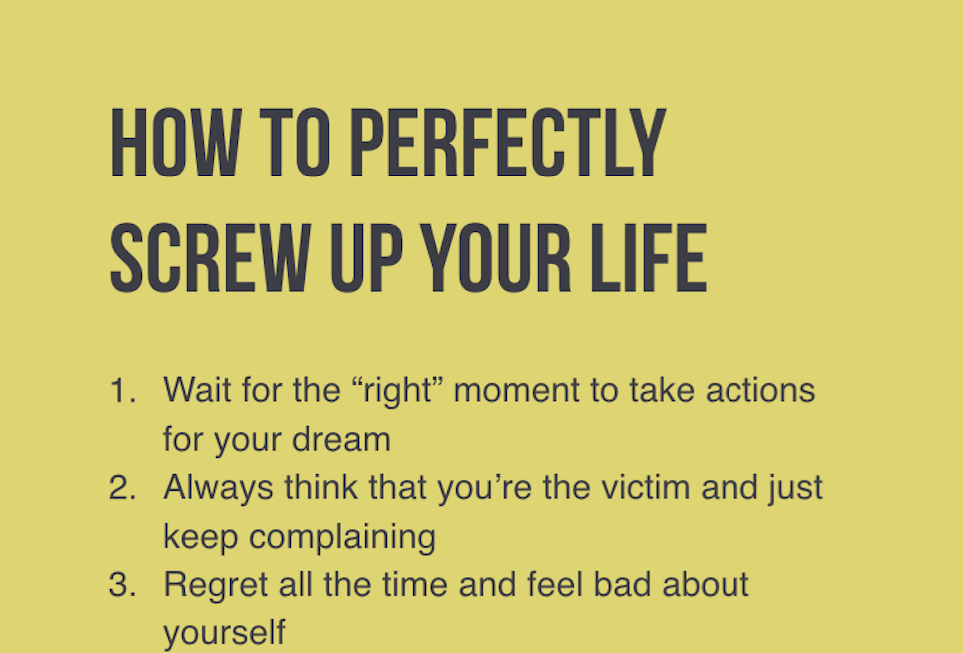
I just let life happen to me. Then I complained about how crappy it was.

Why was I stuck on autopilot?

One part was that I never opened my eyes to my right/responsibility to be the guide of my life. The other major part was because it was familiar, it was comfortable.

The Cost Of Autopiloting Living.

When we are on autopilot we are asleep to where we have control in our lives and how we can use this control to build up the last few we want to live.

When we live by default we will spend our daily life in a cycle of avoiding pain and seeking pleasure. It is the easiest way to get through the day.

We are making decisions to stay comfortable, but in this comfort, we are also not really pursuing the life that we crave, the thing that would be fruitful in our lives. We aren’t taking action that we feel deeply proud of. We are just getting through the day

And so, we aren’t doing to much to feel deep satisfaction with.

We Aren’t Feeling Happy.

And here is where we have let ourselves down, we think that it is normal to always be happy. Therefore something is wrong with us if we are unhappy (or even worse when those around us are unhappy)

Then we feel unhappy about being unhappy (we double down on unhappiness.) At this point, most of us turn to little ways to make ourselves feel better and avoid feeling the ick. Usually, we turn to the nearest available indulgence, an easy hit. We turn to social media, food, drink, complaining judging, and shopping.

I don’t say this to point fingers. I say this because I live this way too.

What do we turn to, to make us feel better and more comfortable! It’s serving us? Is it life-giving or. Ultimately, making our life harder?

We might be choosing ways to seek comfort that are actually making us more uncomfortable in the long run. Habits, addiction, steam eating the pantry at nap time, pulling away from others.

These things do not make our lives better, they usually make them harder.

Living a life that fulfills us, feels authentic, feels life-giving is an uncomfortable thing to get. In my experience, it is uncomfortable to muster up bravery, to make hard decisions, to operate commitment rather than comfort, and to do the hard work rather than look for the easy way out.

But as we go through the motions. What we learn is that avoiding discomfort keeps us stuck which can sometimes be a lot more painful than experiencing the discomfort itself.

What happens When We Keep Avoiding The Discomfort Of Showing Up For Our Life?

We tune out our emotional self and loss touch with how we are feeling and why ( then we wonder why others tune us out.)

We develop a very low tolerance for negative emotions in ourselves and those around us. And raise emotionally intelligent children.)

We start to rely on these false pleasures to help us numb out our negative feelings (which might lead us to addictive or habits we feel shame over.

We spend a lot of energy avoiding negative feelings and it burns us out (which makes us feel even crappier.)

We just stop showing up for our life because it isn’t happy and then we are bummed out that our life isn’t what we wanted it to be (What is the life you want?)

Over the last few years, I’ve been practicing being uncomfortable. I wanted to live an actual life as it was, negative and uncomfortable feelings and all-rather than coast on comfortable

It sucks. It sucks realizing the things that make me uncomfortable. Try this, make a list of the things that you’ve tried to avoid or flat out avoided because they made you feel uncomfortable. Things you avoid in parenting, in relationships, in your health, in your heart, in your home.

I made this list and it was awful to be honest but also, so eye-opening to the life I was avoiding.

It also plain sucks sitting with this discomfort. Just letting it be there without reacting to it (stress and negative self-talk) or distracting from it ( give me all the sugar and quick fixes.) When this discomfort shows up in my brain instantly spazzes into a fury of wines and doubts about it because it just wants to do what it has always done; stay comfortable and avoid pain.

Before I started looking for ways to let myself sit with the discomfort I would have thought this clinched saying “get comfortable with discomfort was only for hustling mega-prenuers or professional volleyball players. No, it is for everyone because everyday life is uncomfortable.

When someone disagrees with you (like my husband is allowed to think whatever he wants and doesn’t have to agree with me

When you’re alone at home and you feel restless or lonely.

When you’re frustrated but can’t quite put your finger on it so you start looking for reasons to be mad at life.

When you’re talking to someone and you aren’t sure if they like you or dislike your if you’re in your own head and reading into everything (can I ever just assume the best? What is that about?)

When your children have been crying/ whining/fighting and it’s 5:00 pm and you are mentally exhausted (every day) and you want to punch the clock on parenting and just make the tension go away.

As I said, this is gross and humbling. This is the work of living life on purpose, of being intentional, of making a change – this is the work people don’t often share because it isn’t glamorous and self-promoting

But what is this telling us? See where the light shines through the cracks? On relationships, on living a passionate life, on being responsible for your own feelings, on showing up in your life, your work, your marriage, your motherhood. The hard and life-giving work of experiencing life.


Just One Thing

Many people including myself included, have multiple areas of life they would like to improve. For example. I would like to reach more people with my writing, be able to swim more laps at the gym and practice mindfulness more consistently. Those are just a few of the goals I find desirable and you probably have a long list yourself.

The problem is, even if we are committed to working hard on our goals, our natural tendency is to revert back to our old habits at some point. Making a permanent lifestyle change is really difficult.

My pastor is starting a one thing group. That will make these difficult lifestyle changes a little easier. As you’ll see, the approach to mastering many areas of life is possible

Too Many Good Intentions

If you want to master multiple habits and stick to them for good, then you need to figure out how to be consistent.

How can you do that?

Here is one of the more robust findings on how to actually follow through with you goals.

Research has shown us that we are 2X more likely to stick with our habits if we make a specific plan for when, where, and how we will perform the behavior. For example, in one study it asked people to fill out this sentence: During the week, I will partake in at least 20 minutes of vigorous exercise on a certain day at this time at this place.

The study found that people who filled out this sentence were 2X more likely to actually exercise compared to a group who did not make plans for their future behavior. These are called implementation intentions because they state when, where, and how you intend to implement a particular behavior.

These Implementation intentions only work if you focus on one thing at a time. People who tried to accomplish multiple goals were less committed and less likely to succeed than those who focused on a single goal.

It is important to develop a specific plan for when, where, and how to stick to a new habit will dramatically increase the odds that you will actually follow through, but only if you focus on one thing.

What happens when you focus on one thing

When you begin practicing a new habit it requires a lot of conscious effort to remember to do it. After a while, however, the pattern of behavior becomes easier. Eventually, your new habit becomes a normal routine and the process is more or less mindless and automatic.

This is called automaticity it’s the ability to perform a behavior without thinking about each step, which allows the pattern and habitual.

Automaticity only occurs as a result of lots of repetition and practice. The more reps you put in the more automatic a behavior becomes.

The most important thing to note is that there is some “tipping point” at which new habit becomes more or less automatic. It takes time to build a habit and it depends on many factors including how difficult the habit is, what your environment is like, your genetics, and more.

It is said the average habit takes about 66 days to become automatic. But, don’t put too much stock in that number. The range is very wide and the only reasonable conclusion you should make is that it will take a few months for new habits to stick.

At this just one thing group, I am doing we will have accountability partners that will help us along the way.

If you decide to make this one thing a part of your goal system. Hang in there and don’t give up. The change will come. Choose an accountability partner. And look forward to just one goal success you will find.

Complaining And The Holy Spirit

I’ve been complaining about the heat and how I feel lately, I was meditating in the Lord last night and I was convicted by the spirit. Unfortunately I am not the only one complaining.

If we have a complaining Spirit we will never hear from the Holy Spirit.

Negativity is nothing new. Since Adam and Eve were banished from the garden, life has been hard and we have been complaining about it. (Genesis 3:23) it is the nature of sinful humans to live for ourselves and to complain when our desires are not being met. (Galatians 5:19-20) We tend to argue for our rights, demand our way, and oppose anyone who disagrees with us. That combination results in a Spirit of negativity toward the world and life in general. It is understandable if those who do not know Christ are negative. They have no hope of anything beyond this world and it’s confusion. But negativity in a Christian’s attitude means they are refusing to see life from God’s perspective. When we join in with hostility, pride, and complaining, we are reacting the same way unbelievers do.

Unfortunately, God’s people are often just as guilty of negativity and grumbling as those who don’t know God. We often forget Jesus’s words, “In this world we will have trouble. But take heart! I have overcome the World” (John 16:33) Negativity was one of the Israelites gravest sins after God brought them out of Egypt, parted the Read Sea, and destroyed their enemies with a single, crashing wave. (Exodus 14:16-18) Yet as soon as the Israelites weren’t getting what they wanted they began to grumble against God. (Numbers 14:27) Rather than rejoice over all God had done for them and trust that He would continue to provide, they mormured and complained. The Lord hears when we do that, and it greatly displeases Him. (1 Corinthians 10:10-11; John 6:43)

There is a difference between being grieved over sin and being negative. Someone who agrees with God over the gravity of sin also agrees with God that we shouldn’t something about it. When God saw the evil desperation of humanity, He did something about it. ( John 3:16) Jesus came to show us what God is like and to get involved in our messy world (John 14:9) He was not afraid to “roll up His sleeves and get His hands dirty.” (2 Corinthians 5:21) As His body (1 Corinthians 12:27) we remain to carry on the work He modeled for us.

Christians can counter the doom-and-gloom mentally with a gentle, loving, faith-filled approach to life. ( Ephesians 4:32; John 5:14) We can refuse to be caught up in the hopelessness and the me-first mentality that is too normal in this world (Philippians 2 14-15) We can offer light in the darkness, (Matthew 5:14) truth amid satan’s deception. ( John 17:17) and hope in the face of despair ( Psalm 43:5; 1 Peter 4: 12-16) gives us some clear guidelines about facing trouble. Peter says, “Do not be surprised at the fiery ordeal that has come on you to test you, as though something strange was happening to you. But rejoice in so much as you participate in the sufferings of Christ, so that you may be overjoyed when His glory is revealed. If you are insulted because of the name of Christ, you are blessed, for the Spirit of glory and God rests on you. If you suffer, it should not be as a murderer or thief or any other kind of criminal, or even as a meddle. However, if you suffer as a Christian, do not be ashamed, but praise God that you bear that name.”

Christians are to model a better approach to life. In the beatitudes in Luke 6:20-23, Jesus gave us a glimpse into that better life. Timothy 4-12 tells us to “set an example for the believers in speech, in comfort, in love, in faith, and purity.” It is important to always keep in mind that, for the unbeliever, this world is as close to hell as we will ever be. When we live with that as our focus, we have the tools to combat the negativity of the world, and model the abundant life Jesus came to give us. (John 10:10)