Actions Speak Louder Than Words

What does actions speak louder than words mean?

Definition

What you do has a stronger impact on people that what you say.

Oftentimes, people will say one thing and then another; the phrase actions speak louder than words means that people are more likely to believe what you do rather than what you say.

It’s must easier to lie with your words that with your actions because what you do more strongly correlates with you want and what you believe. You can say anything without believing strongly in it.

Parents must remember that they need to lead by example. Children are more prone to feel allowed to do what their parents do,even if their parents tells them not to do it.

People tend to believe what you do not what you say.

This proverb is more than several hundred years old. Some of the first expressions of it are found in the Bible, including the verse in the book of John, which stresses that saying you love someone is not the same as doing things for them. “My little children, let us not love with word or with tongue, but in deed and truth.” (1 John 3:18)

In today’s world remember that what we do has more significance than what we say. We need to line up our actions with our words.

Example:

Child: Dad, I promise I’ll be on time for dinner, and I’ll do my homework as soon as I get it.

Father: Well, that sounds great, but actions speak louder than words . I’ll believe it when I see it.

It Is a common piece of warning in modern relationships when someone’s partner consistently says that’s he love her but doesn’t back it up with his actions. The recipient of these words is often warned to pay to the actions of his/her partner to find the truth of how they feel.

Example:

Krystle: He tells me he loves me every day. But he didn’t do anything for my birthday, and he still doesn’t want to meet parents.

Kristine:Be careful, actions speak louder than words.

Things Aren’t Always As They Seem

So often we take situations at face value and don’t recognize that they are not what they appear. It is so important anytime you’re dealing with other people’s assumptions lead you to weird places sometimes.

The point is that sometimes God can take what you think is a run of the mill situation and show you thatHe had so much more in store.

During my lifetime I have experienced situations like this. When I thought I was worthless and meant nothing to anyone. God used me to help many people along the way, using my broken life as a bridge for someone else.

The most critical step is listening not just to the words but to the story behind the words. The background is where we learn about other people so we can truly understand where they are coming from.

There is truth in the quote “Don’t Judge My Choices Without Understanding My Reasons.”

Usually when I share the testimony of my life, people are shocked by the pain I’ve been through, and how I am who I am today. I’ve been called weird and a loner a lot of times.

I am definitely not who I seem to be.

Have you ever been absolutely certain of something only to find out that it was something else altogether? I suspect it happens more regularly than we like to admit. And the worse times to experience these certain uncertainties are when they relate to the words and actions together.

For example:

Out of simple curiosity, our partner asks us why we are late getting home and we are sure that they don’t trust us.

The cashier at the grocery store says we owe more that we expect and we’re sure she is wrong even though we really just misread the label on the shelf.

You see someone in the market and they are acting different and you’re sure something is wrong with them, by the way there acting. But you don’t know what kind of life experiences they have had to live.

The are Varying thing that happen in life and we to often misdiagnose them. Sometimes our misdiagnosis is due to our own experiences or prejudice. Other times it’s simply because we aren’t skilled in analyzing the situation correctly. In other words, we never had adequate training in life’s mechanics.

Interactions can be difficult and can often we misread the process unless we are willing to get our hands dirty and break down the communication machine.

We need to take the time to listen-not just listening to the words but the story behind the words. The backstory is where we learn about other people so we truly understand where they are coming from.

We need to not just go by one piece of the story, we need to pay close attention to the clues around us. Then we can understand the whole story.

Things in life are not always what they seem to be. People are not always what they seem to be. And it’s usually a great relief to find out that our situation doesn’t require a complete overhaul after all. Instead we just need to listen a bit more carefully.

Are You Ready For Christ’s Return?

How bad is the world going to have to get before God finally steps in and Jesus comes back? I get very concerned when I see all the evil things that are happening in the world today. Are we living in the last times?

The Bible warns us against making precise predictions about the exact time of Jesus’s return-but His return is certain, and we may well be living in the last days, “The night is nearly over; the day is a most here.” (Romans 13:12)

Shortly before returning to Heaven Jesus told His disciples that someday He would come back to establish His Kingdom. But before that could take place, He said, certain things would have to happen. For example, He said that before His return the Gospel must be told throughout the world. ( Mark 13:10) Never before has then been possible-but now it is through radio and internet and other modern means of communication.

You also have placed your finger on another sign Jesus gave: Satan’s final attempt to halt God’s work through a massive onslaught of evil. Our word is no stranger to evil; Satan has always been working to stop God’s plans. But God’s enemies now have access to modern weapons of mass destruction, and no one can predict what the outcome will be. Jesus said, “You will hear of wars and rumors of war… Nation will rise against nation.” (Matthew 24: 6-7)

The real question, however, is this: Are you ready for Christ’s return? You can be, by turning to Him and putting your faith and trust in Him. Do not take His Warning lightly, commit your life without delay.

The Bible says: “Whoever calls on the name of the Lord shall be saved.”(Romans 10:13) Throughout Scripture God tells us how to find His salvation. We must be convinced that we need Him. Those who feel self-sufficient will never find salvation in Jesus Christ.

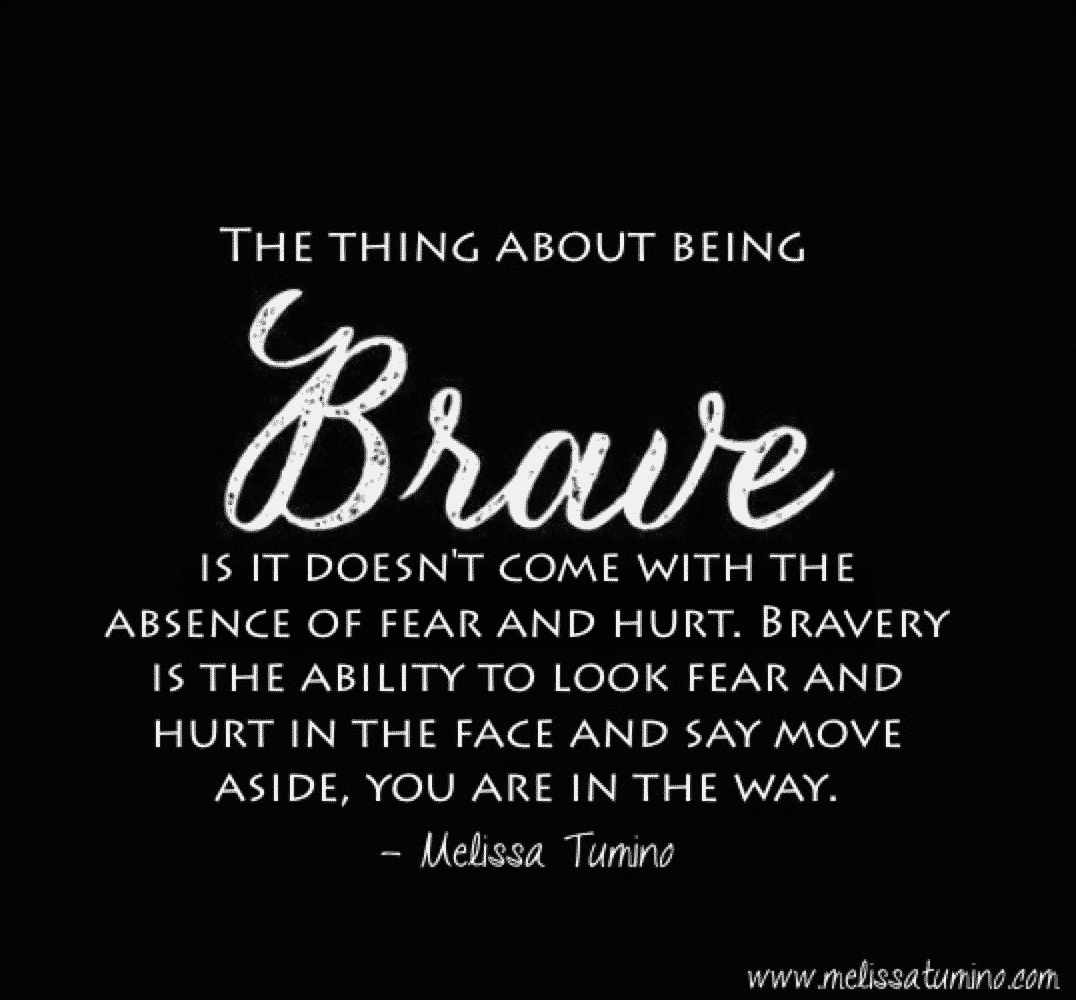
Courage/Being Brave

Courage is not the absence of fear. Courageous people do feel fear, but they are able to manage and overcome their fear so that it doesn’t stop them from taking action.

They often use the fear to ensure that they are not overly confident and that they take the appropriate actions.

How do they manage this? They have trained themselves to manage their emotional response to fear, so that they manage it rather than it managing them.

How is this done:

What is courage?

Courage is a highly prized virtue, and have spoken or written about it over the years. We probably all have an idea of what we mean by courage, or bravery as it is sometimes known.

“ I learned that courage was not the absence of fear, but the triumph over over it. The brave man is not he who does not feel afraid, but he who conquers that fear- Nelson Mandela

Courageous people stand against things that threaten them or the things or people that they care about. They take action in a way that is consistent with their values. Sometimes, however, the action requires is not necessarily loud, but quiet and thoughtful.

“Courage is what it takes to stand up and speak; courage is also what it takes to sit down and listen” – Winston Churchill

The other view that is often taken of courage is that it requires the taking of genuine risks, but with thought.

Courage and being brave is not about blindly rushing in, but thinking about it and then doing it anyway if it is necessary.

“Only those who will risk going too far can possibly find out how far one can go” -T.S. Eliot

The Benefits of Courage

Acting courageously generally makes us feel good, because it involves mastering emotions.

The very fact that we celebrate courage so much tells us that it is Avery human activity. Courage, in a sense of acting in a way that responds to risk appropriately, not over-confidently or in a cowardly way, will also help us to accomplish good things.

Courage also helps us to act against those who threaten, or who act in a bad way. The Western world has traditionally revered bravery for itself; success is not necessary if courage is shown.

An Example Of Courage:

Courage means to face something with bravery. It’s to dash into a building on fire to save a youngster. The definition of brave is having courage a brave soldier is a soldier who goes into combat.

The Best Day Of Your Life.

The best day of your life is the one on which you decide your life is your own. No apologies or excuses. No one to lean on, rely on, or blame.

The gift is yours it is an amazing Journey and you alone are responsible for the quality of it. This is the day your life really begins.

How often do you say things like:

“ There are not enough hours in the day” or “ I’m so busy time is flying by.”

These scarcity thoughts leave us feeling disempowered and not in control of our time.

I’ve been there- blaming “time” for what I couldn’t do what I wanted.

But I got tired of feeling stressed, rushed and overwhelmed. I wanted to feel at the top of my game, in control of my time and in charge of my life.

To do that, I needed to take full responsibility for how I was spending my time and become more intentional. When I finally learned how to master my time, I was amazed at how much I could get done in a day.

Do you feel like you’re in full control of your life?

Don’t Let You Anger “Mature” Into Bitterness.

Bitterness: What’s it’s Cause, Cost, And Cure?

“Bitterness is unforgiveness fermented.” -Gregory Popcak

All bitterness starts out as hurt. And your emotional pain may well relate to viewing whoever or whatever provoked this hurt as having malicious intent: As committing a grave injustice toward you; as gratuitously wronging you and causing grief. Anger-and resentment-what we’re all likely to experience whenever we conclude that another has seriously abused us. Left to fester, that righteous anger eventually becomes the corrosive ulcer that is bitterness.

Stephen Diamond PhD defines bitterness as “a chronic and pervasive state of smoldering resentment,’ and regards it as “one of the most destructive and toxic of human emotions.”

If we repeatedly ruminate over how we’ve been victimized, “nursing wrongs may eventually come to define some essential part of who we are. Take hold of our very personality. We will end up being victims not so much of anyone else but of ourselves.

This is what happened to be after leaving my parents house as a young adult. My mother had hurt me so much I turned into a victim of my past. I was bitter and everyone I came into contact with was going to hurt as much as did. But, the problem was I became a victim of myself.

It was the inevitable result of becoming obsessed with blaming someone else for my misery rather that refusing to permit external hindrances or setbacks from blocking me from pursuing my goals. It is all to easy to hamper ourselves by falling into the trap of righteously obsessing about our injuries or outrage. Doing so affords us the gratification of feeling that we’re better than, or morally superior to, the sources of our wrongs.

The Cost Of Bitterness

The benefits of retreating into acrimonious victim hood defaulting to bitterness invariably carries a high price tag.

It can:

  • Prolong your mental and emotional pain and may even exacerbate it.
  • Lead to long lasting anxiety and or depression.
  • Precipitate vengeful acts that put you at further risk of being hurt or victimized and possibly engulf you in a never-ending, self-defeating cycle of getting even.
  • Prevent you from experiencing the potential joys of living fully in the present-vs- dwelling self-righteously on the past wrongs inflicted on you.
  • Create or deepen an attitude of distrust and cynicism qualities that contribute to hostility and paranoid thinking, as well as overall sense of pessimism. Such a bleak perspective prompts other to turn away from you.
  • Interfere with your cultivating healthy satisfying relationships, and lead you to doubt , or disparage your connections to others.
  • Comprise or weaken your higher ideals, and adversely impact your personal search for purpose and meaning in life.
  • Rob you from recognizing your own role or responsibility, in possibly having been vindictively harmed by another.
  • By keeping you in a paradoxical state of “vengeful bondage,” erode your self of wellbeing.

I lived this way for over 30 years. It is not a pretty sight for you or anyone around you. Every day I look back on this time in my life and what a waste I was. 30 years of my life ruined by bitterness.

The question is: Do you really want to see yourself as a victim, with all the implications of helplessness embedded in the defeated label? Consider that if you obsessively ruminate on the righteousness of your anger, your wrath will only become further inflamed. It exists to mask your underlying emotional distress by prompting you to focus not on the personal injury you’ve suffered but on the one who so wronged you. Besides you do t really have any control over the other person.

Finally, your personal power is pretty much limited to yourself. Even in the face of the gravest injustice, redirecting your focus inward is precisely how you go about empowering yourself.

The Cure For Bitterness

Virtually every writer who has weighed in on the subject of bitterness has discussed its ultimate remedy: Forgiveness. Forgiveness alone enables us to let go of grievances, grudges, rancor, and resentment. It’s the single mode potent antidote for the venomous desire for retributive justice poisoning your system. If this impulse hasn’t afflicted you mentally and emotionally. Learning to forgive your “violated’ facilities your recovering from a wound that, while it may have originated from outside ourselves, has been kept alive from the venom you’ve synthesized within us.

If anger intimates an almost irresistible impulse toward revenge, then forgiveness is mostly about renouncing such vindictiveness. It can hardly be overemphasized that when you decide you’re doing not so much for them but for yourself. It’s our welfare that’s primarily at state here. As already suggested, the longer you hold onto your anger, the more you’ll sink into the destructive quagmire of ever-cycling feelings of hatred and resentment. The more, over time, your anger will mature into bitterness.

This is what it took me over 30 years to learn. I lived it and suffered it. If I could help one person not go through this horrible cycle of life. It would be worth me going through what it did, to save them from what I endured.


Twelve Things To Remember:

1. The past cannot be changed.

2. Opinions don’t define your reality.

3. Everyone’s Journey is different.

4. Judgements are not about you.

5. Overthinking will lead to sadness.

6. Happiness is found within.

7. Your thoughts affect your mood.

8. Smiles are contagious.

9. Kindness is free.

10. It’s okay to let go and move on.

11. What goes around comes around.

12. Things always get better with time.