

Breaking Through A Heart Of Stone
Many people think of a person with. Stone heart as the villain in a movie, evil, uncaring, unfeeling, and bitter. A stone heart is a rigid heart that shows up in negative ways. The stone heart is cold, set, firm and does not want to change. Like stones which do not get up and move, Stone hearts are stuck in one place. They rarely undergo any changes unless something make them do so.
It’s pretty easy to identify with the hard-harder villain in a story, but we meet people with stone hearts in every day life.
How Do Hearts Become Stony?
Some people become Stone-hearted from the trials, disappointments, and hard times they’ve had in the past. They get a mindset that drives their actions and responses to life situations. Rather that being flexible in seeing things from different points of view, they shut out other ways of thinking and doing things.
Getting Rid Of A Stony Heart
Whereas the heart of stone causes people to miss opportunities, allowing God to change that heart opens up the door for much better things. Ezekiel 36:26 says, “I will give you a new heart and put a new spirit in you; I will remove from you your heart of stone and give you a heart of flesh.” With a soft heart, we can begin to enjoy the closeness of others by being tenderhearted and forgiving as God has forgiven us (Ephesians 4:32).
Hebrews 3:15 says,” Today If you hear His voice, do not harden your hearts.” A soft heart that earnestly listens to God opens up the door to a true relationship with Him.
Psalm 37:23 tells us that the steps of a righteous man are ordered by the Lord. Following God’s truth and guidance for our lives gives us more opportunities to receive both His spiritual and material blessings. If you believe you have a heart of stone, consider what God has to say on this subject. Your breakthrough is just waiting on you.
From experience, I had a stone heart from many, many years. I had put concrete walls up around me, so high that no one could break through, not even God.
The Positive Word For Today
June – 9-2022
Building On The Rock
Emotional Neglect And The Highly Sensitive Person
Highly sensitive people are more invalidated when their emotions are disturbed.
- Highly sensitive people are born to experience deeper, more powerful emotional lives.
- Emotionally neglectful parents are prone to ignoring or discounting feelings in general, including their children’s.
- The highly sensitive child experiences emotional neglect as deeply personal and painful invalidation of their inner lives.
In the late 1990s, research conducted by psychologists and neuroscientists confirmed that some people were simply wired differently (Aron and Aron, 1997).
Based on that research, Elaine Aron, PHD wrote the classic book The Highly Sensitive Person. in this breakthrough book, she describes a highly sensitive person is more sensitive to sound, textures, and other outside stimulation than the average person. This is an adaptable survival mechanism found in hundreds of species including fruit flies and fish.
It is also important to note that highly sensitive people are born this way. In the classic to beat of nature vs nurture, Scientific evidence shows that highly sensitive people fall into the nature place. Confirms that parents do not cause their children to be highly sensitive by the way they raised them.
If you are highly sensitive person you think more about decisions and actions, and you processing deeply as a natural outcome. You also fill your feelings after deeply and intensely. In some ways, having the genetic disposition and almost like having a super power. How did you see the people are capable of being more thoughtful and can feel empathy deeply.
Specialists and In childhood emotional neglect ask the question: Are high sensitive people shaped differently by emotionally neglectful parenting Non-highly sensitive people? What happens when emotional sensitive child grows into a family that discounts, ignores, or judge is a child’s emotions? And how do you those effects play out throughout the child life time
Based on hundreds of emotionally neglected adults, Children and adults who are highly sensitive are indeed affected differently. Childhood emotional neglect has affected the child who is I highly sensitive person differently than those who are not highly sensitive.
The Emotionally Neglectful Family
I am emotional need to collect a child grows up experiencing a deep feeling of being alone, even if surrounded by family. They experience their emotions being ignored or unwanted, perhaps at times even thwarted or dismissed by their parents or caretakers.Yes probably unspoken message may be delivered silently, I simply not being asked often enough.
Is anything wrong?
What would you like?
Do you need something?
What’s your preference?
Do you want to talk about what/how you’re feeling?
How can I help you?
If the emotionally neglectful home, It isn’t what your parents used to you, but what they don’t do for you when you need them to help you understand something you don’t yet know how to process your own feelings.
They need the validation and responses to those feelings. They need someone there for them, and they need someone to listen to them. They especially need someone to accept their feelings without criticism, discard, or judgment.
When as a child, Your parents don’t respond you’re feeling I need enough, it is quite confusing. Two others, your family and they look normal in every way. But you feel an unnamed indifference on a feeling level outsiders will never see.
Three damaging lessons the highly sensitive person learn from childhood emotional neglect:
1. Your feelings are a useless burden. They just don’t matter.
2.Your wishes and needs are not important.
3. Help is rarely an option.
The Highly Sensitive Child And The Emotionally Neglectful Family
The child who is a highly sensitive person has special sensitivity right from birth. As deep thinkers and feelers, You’re nature is thoughtfully and emotionally responsive, They are more overwhelmed by external stimulation than most. How do you sensitive people also have greater emotional reactions and more empathy for others.
Imagine what it’s like to be a deeply thoughtful child with intense feelings growing up in a family that doesn’t understand this powerful force within you. Your feelings are ignored and discouraged.
Instead of seeing you as thoughtful, you might be considered a week and perhaps slow, Simply because it takes you longer to process feelings and interactions with others. It may seem as if the family around you operate I am much different level, almost as if they live on a different plane than you. They don’t get you and you don’t get them.
So, what can you do with your feelings of frustration and pain? How do you process and function with your deeply felt anger, sadness, hurt, or confusion held tightly inside?
Many adults who are highly sensitive have heard over and over again from their parents and siblings:
- You’re too emotional
- Stop being such a drama queen.
- Grow up already.
- Stop acting like it’s the end of the world.
- You’re Such a baby
- Why are you so slow?
Some highly sensitive people are chided or derided by their families, even laughed out or bullied because of their sensitive natures at home and at school by schoolmates and teachers. They might be called weak, slow, or dreamers all due to their deep in our lives.
Your families most likely are not aware of the importance of their emotions and expressing their feelings. Most are so uncomfortable with emotions that emanate with you and their family structure that they passively or actively discouraged expressing any feelings.
But what if one member of the family exhibit deep your mouth and then those of their siblings and parents? How old are they learn that the expression of deep feelings is a valuable asset And that learning to understand and express Wrong feelings will help them to grow into a more balanced and mature human being? Where can they turn for help with their unexpressed feelings?
And the emotionally neglectful family, How do you sensitive person learns that they’re overly emotional. They don’t know that their emotions are personal expression of who they are. Instead, they learn that they are different, damaged, weak, and wrong. They will probably grow up feeling, deep inside, a sense of shame about who they really are. They’re super power not only has been diminished but also, perhaps, it’s a source of their secret shame.
There Is Help And Hope
Highly sensitive people can get help if they want, Learn more about emotional neglect you grew up with, and understand how it impacted your group with the silent messages you received.
It is imperative to begin to understand, except, and heal your childhood emotional neglect so that your how do you sensitive person qualities can begin to shine. Your intense emotional energy change in power you when you value it. And you’re deep processing abilities willBe a great advantage in your healing process.
Being treated different in your childhood doesn’t need to keep you set apart for life. When you begin healing from the emotional neglect that you have received then you will be able to finally celebrate your sensitivity and depth, and all else that makes you powerful and unique.
Building Your House On Solid Ground
Unless the Lord builds your house, those who build it will labor in vain.
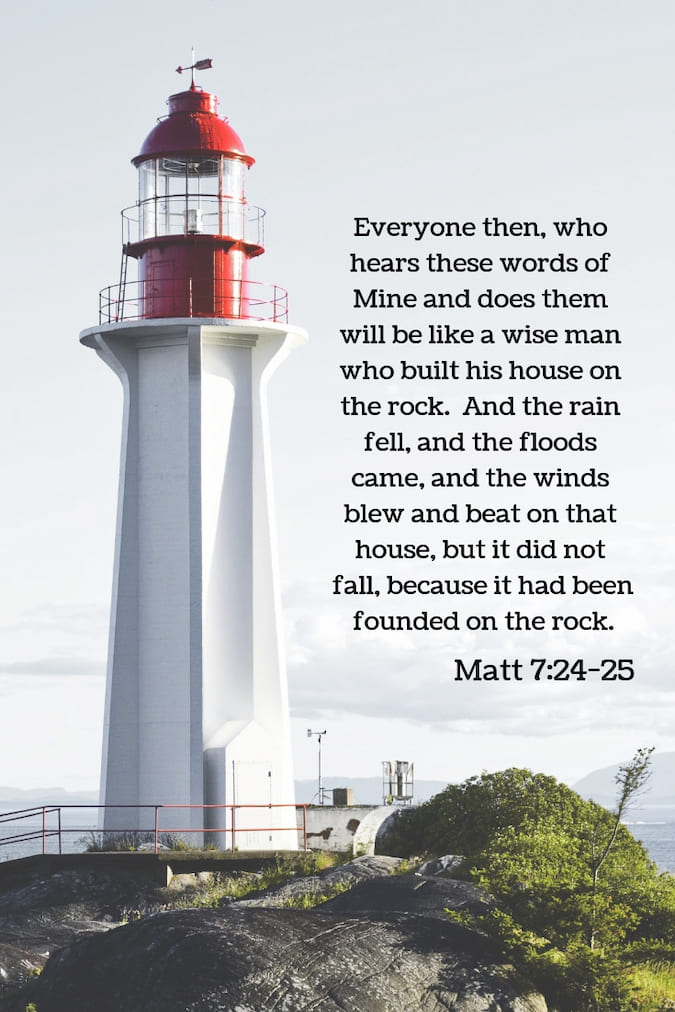
In the parable of the two builders (Matthew 7:24-27), Jesus teaches the importance of building your house on solid ground. We’re all building our lives (our houses) on something. When everything is going well and life is great, a weak or shaky foundation won’t reveal itself. But how often is everything going great? In the real world, stress, anxiety, problems, and struggles come at us almost daily if not hourly. Those are the times when the winds are howling and the rain is beating down on our houses. Those are the times when we will become keenly aware of how firm and sure our foundation is – or isn’t. So, how can we learn how to build our lives on solid ground, let’s look at Matthew 7.
In this passage Jesus states that those who hear His words and do them are wise builders. They have built their homes on rock solid foundations. The winds howl, the rains come – even a flood comes – but the house stands firm. Those who hear His words, but fail to live by them are foolish builders. They may build the grandest of houses, but they sit on a shaky foundation. Places that get more than their share fair of severe weather, with hurricanes, tropical storms. After these storms. Some times people houses in the neighborhoods look fine while others are nearly destroyed. Let’s flash Jesus’s home-building analogy out a bit.
What Is This House We’re Building?
The “house” we are building is a metaphor for our whole lives. It represents our faith, our job, our relationships, our health, etc… Notice the entire house must rest on a solid foundation, not just a few parts. It’s very easy for us to compartmentalize our lives without even being aware of it. Instead of a whole, our lives look more like colorful pie charts with hard lines dividing the sections.
We may go to church on Sunday’s or even participate in a weekly Bible study or prayer meeting. A daily quiet time of study and prayer is part of our routine. We feel like that “slice of our pie” is strong. We’ve checked the boxes, we are doing fine there. And then we consciously or unconsciously leave Jesus in His pie slice. We move on to our job slice, our parenting slice, or our recreational slice, and leave our faith completely out. It’s as though we don’t think Jesus has anything to do with those areas. But He has everything to do with them.
What’s Threatening Our House?
Let’s look back Matthew 7:24-27 – Jesus mentions three threats to our houses: rains, floods, and winds. What might these things look like in our every day lives?
Rain can vary greatly- they can be a foggy drizzle that sucks the joy out of our day. They can be light – we may need an umbrella, but we can still go about our business. Or they can be downpours that we can’t even see through, complete with terrifying thunder and lightning. Taken together these are the everyday troubles of life. Some troubles are small, persistent and annoying. Some are more troublesome. And some storms are swift, unexpected and overwhelming.
Floods are obviously times when an all-out life threatening disaster is coming at us, a catastrophic illness, the death of a loved one, a divorce, a job loss, financial ruin. We are in real danger of being swept off our feet and drowned.
Winds I see as “words.” Words have great power to either build up or tear down. The words that beat against our houses are things like thoughtless remarks from a friend, a harsh rebuke from a boss, a heartless, cowardly attack by a internet troll. Or maybe worst of all, the negative, defeating self-talk we subject ourselves to all day long.
Jesus tells us that hearing and doing His words will empower us to withstand these forces. He promises that our houses will not fall. I like what it says in Luke 6:48, not only will our houses not be destroyed, they won’t even be shaken . Now that’s a firm foundation.
He is like a man building a house who dug and went deep, and laid a foundation on the rock. When a flood arose, the stream broke against that house, and could not shake it, because it was founded on the rock.
Luke 6:48
If Faith Just Part Of Our Life Or Something Else?
Back to the “piece of our pie“ analogy. Faith is not a “slice of our pie” or just a part of our lives. Faith is the key, foundational element in our lives. If we think about it like a real pie. It’s like the top and bottom crust. No matter what you fill a pie with or how you bake it, as lousy crust makes a lousy pie.
Nowadays it’s easy to skimp on piecrust and many people take this route. Most people believe the lie that homemade piecrust is “too hard” and “not worth the effort.“ They use whisper-thin frozen crusts that deliver all the floor and mouthfeel of a cardboard box. Or they use refrigerated crust so full of weird stuff that it tastes like a plastic bag it came in. They put in a lot of effort into making a pie that will never be as delicious as it could be
Similarly, many people believe that lie that growing up and maturing in faith is “too hard” or “ not worth the effort.” It’s just for people who are in professional ministry. Or maybe the lie you are belies that the Bible is only relevant to certain areas of your life. Or It does not apply to the “real world,” nitty-gritty everyday stuff. And this you are building a life that isn’t really all it could be.
Few people know that the book of Psalms was written for every problem or trial we will to go through in our lives today. Not only that it teaches us how to ask God to help us through it. Which is the pie crust of life.
The truth is, however, that with the right recipe and a little practice, pie crust is absolutely a skill anyone can do and oh so worth the effort. It takes practice, effort, and good teachers to help you along the way. And as Matthew 7:24-27 reminds us it’s the difference between a life that stands and one that collapses in on itself. There is no comparison between a life founded on the Word of God and a life foundering without it.
So Where Does Faith Fit Into Our Lives?
A solid home needs a firm, found foundation. Likewise, a good pie, and beautiful pie, a truly delicious pie is a sturdy, well-made crust. You have to make sure the edges are tightly rolled together and crimp shut, sealing everything else securely inside. If you don’t, you’re feeling will boil over and feel your home with the delightful smell of burning sugar. If there’s one sound you don’t want to hear what you were baking it’s the smoke alarm. And while the edges need to be crimped tight, you also need to cut a few openings in the top to “let off steam.” If you don’t, the pressure will build up inside your pie and explode.
Our faith is not a slice or section of our lives. It’s what undergirds and supports our entire existence. Bitch what tightly surrounds and safely contains our whole selves. And in times of pressure, it’s a thing which we can escape, let off steam, and “keep it all together.” Our faith is the framework through which we show the world what is delightful, delicious, and fruitful inside of us. Without it, We’re an okey-gooey mess just waiting to boil over and set off the smoke alarm.
Are you building your life on a solid foundation? A life worth living? Are you baking a pie worth eating? The foundations of your “real” homes need constant checking and occasional repairs to ensure our homes are secure. Likewise, our spiritual foundation needs vigilant attention. We need to daily fortifying and strengthening it with time in the Word and prayer – not just reading and learning, but applying as well (Be doers of the word). And occasionally we have to step back and see if anything has shifted – If our house has started to slide off permits from foundation. A little cracks of insecurity, anxiety, bitterness, or anger showing? Are we leaning towards things we shouldn’t?
Matthew 7:24-27 Encourages us to build our lives on the word of God, it’s a foundation that will never change, never a give way and never let us down If we take good care of it.
Being Bold
The Positive Word For Today
June-8-2022
Tips For Overcoming The Fear Of Being Bold
If you’re never bold, you’ll find it hard to fight for what you believe in. Living a life true to yourself means that you have to stand up for what you believe in.
But the question is: how to be bold?
Being bold doesn’t mean smashing pens in front of your colleagues whenever the disagree with you and throwing a tantrum. Instead, you want to be respectful and assertive when you’re bold. Depending on your personality this can be challenging. But the benefits of being bold far out way the potential negative outcomes.
I’m not talking about being offended at everything you disagree with, or throwing tantrums when things go your way. If you learn the right way, you will be able to be respectful.
If standing up for yourself and being bold sounds like a nightmare to you, you’re in the right place. This post will show you why it’s important to be bold in your life, with actionable tips to get you started.
1. Find Your Values In Life
It’s much easier to be bold if you know what you stand for. Being bold and speaking up often starts from figuring out and defining your values.
There are many ways to go about this. For example, you can try to brainstorm and write down behaviors and characteristics that you vale in yourself and others. But on a more specific level, you can also write down your goals for a project your working on. If you know what you’re goals and values are, it’s easier to stand up for yourself whenever it’s needed.
The most important thing to know is to take as much time as you need and be completely honest with yourself. Keep in mind that values in different domains of life can sometimes contradict each other: you may value independence in your personal life and cooperation at work or visa-verse.
You may also find that your values don’t entirely align with those of your co-workers or role models. Don’t be discouraged if these things happen: you’re working out your own values, not someone else’s.
2. Keep Yourself Informed
While being bold and assertive is something positive, you don’t want to be known as a bold, uninformed and naive person. If that happens, being bold suddenly loses its appeal, right?
If you stand up for yourself and be bold, it’s important to be informed about whatever you’re doing. If you’re in a meeting and make a case about something that goes against others there, you better make sure you can handle a bit of resistance.
The more informed you are, the more confident you can be in taking a side or making a stand. You are also less susceptible to disrespect, hostility, and rejection if you have all the facts straightened out.
It’s important to not just look for information that supports your opinion. It’s arguably even more important to explore the counter-arguments. Why would someone disagree with what you believe in? When your properly informed about all the angles, you’ll be better able to stand up for yourself without being silenced by the opposition.
This also helps you mitigate most of the risks that come with being bold. If you’re trying to be bold without being informed, you may come across as reckless.
3. Say No
So far, we’ve talked about knowing your values and keeping yourself informed. These things are important pieces of the puzzle, but they don’t actually make you bold.
Here’s something that does help you be bolder in life, say no more often. You must realize “No” is a complete sentence.
If someone asks you something that you’re not obliged to do and don’t want to do, you can simply say ”No” and leave it at that. You do the always have to justify why you can’t make it to a party, or why you can’t work overtime on the weekends.
By becoming more comfortable with saying “No,” you’ll find it easier to be more true to yourself. Saying “No” more often is really saying “Yes” to yourself to your own life. A life that’s more meaningful for you. Whereas too much ‘Yes” can leave us drained emotionally and physically from overcommitment to others.
4. Learn To Resolve Conflicts Instead Of Avoiding Them
People may be angry or disappointed in you when you say no,Especially if they’re used to you saying yes. Emotions, even negative ones, are a natural part of human relationships. A good relationship isn’t necessary without conflict, but rather one where conflicts are resolved.
It isn’t your job or responsibility to keep others happy.
If someone is angry at you or hurt you and insulted you, address the issue. State the issue and you’re feelings about it and let the other person have their say. Use “I” statements and avoid making assumptions about how the other person might feel.
For example: “I don’t like how you made the decision without discussing it with me first.” Or “ I can see that you were angry with me. You were counting on me to come along with your plan and I didn’t.”
This is a great way to not only be bold, but also assertive and respectful towards others.
5. Tell The Truth
An important step to living a bold life is, unsurprisingly, tell the truth.
- If you don’t find something funny, then don’t laugh.
- If you don’t agree with what someone says, then don’t.
This John Lennon “sums it up very nicely:
Being honest may not get you a lot of friends but it always get you the right ones.
John Lennon
By not being genuine, You may get a chain reaction of dishonest approval and what you dislike, encouraging more of it in the future. In this way, you can help create an atmosphere in your life that you don’t actually like. It’s not going along with the shade of blue or the living room that you’re not actually that keen on.
6. Embrace The Discomfort
If you’ve never stood up for yourself or said no, expressing your true opinions can be scary. However, in order to grow and learn, you’ve got to get out of your comfort zone.
For example, When somebody asks you to do something and you and you answer “No”, it can feel incredibly uncomfortable to just leave it at that.
While it may be in your nature to want to explain yourself, you want to resist this urge. Don’t go on a tirade about how tired and busy you are, even if it’s true. Instead, politely say no, and leave it at that. When pressed for an exclamation, just say that you cannot do that right now.
Here are some helpful phrases to remember for the next time you want to say no:
- I cannot do that right now.
- Thank you for thinking of me but I will have to pass on that for now.
- I cannot help you right now, but I would be happy to help you next week/month/ etc.
Use the last one sparingly and only for those projects That you generally like to be a part of, but can’t right now because you’ve got too much on your plate already.
I hope by now you have a better idea of how to be bold when your life, even when it’s not in your personality. Bball may not make you the most friendly person in life, but I can help you get the respect you deserve.
Are you a bowl person by nature, or are you finding it hard to express your opinion over someone else’s?
Eternity Amnesia
Eternity Amnesia
I started reading a devotional today’s was by Paul David Tripp about “ eternity amnesia,” I was amazed by how well his comment helps understand the madness we see around us in the world today and also, sadly, sadly to some degree in the church.
In today’s devotional in his book, New morning mercies I found that his words are so pertinent to the time in Which we live in and who our needs as followers of Christ. Let me read some of what he wrote:
It is sad how many people constantly live the schizophrenic craziness of eternity amnesia. We are created to live in a forever Relationship with her forever God forever. We are designed to live based on a long view of life. We are made who live with one eye on now and one eye on eternity. You and I super cannot live as we were put together to live without forever. But so many people try. They put all their hopes and dreams in the right here, right now situations, locations, possessions, positions, and people of their daily lives… They demand a seriously broken world deliver us what it could never deliver even if we’re not broken.
Paul David Tripp
“ your eternity amnesia makes you unrealistically expectant, vulnerable to temptation, all too driven, dependent on people and things that will only disappoint you, and sadly susceptible to doubting the goodness of God. Recognizing that eternity that is to come allow you to be realistic without being hopeless, and hopeful when things around you don’t encourage much hope.”
“And Scripture is clear – this is not paradise, and it won’t be. Rather, this is a time of preparation for the paradise that is to come.”
The evidence is clear – there jusr has to be more to life than this. This broken, sin- scarred mess can’t be all there is. There is a place where everything that is sin is broken will be fully restored who are God originally intended it to be.
Paul David Tripp asked this penetrating question, “Are you experiencing the schizophrenia of having eternity hardwired into your heart but living everything moment is all there is?”
His comments some of my motivation for writing. I write remind myself and Afters that this life is not all there is. Are you seek to draw attention away from the drudgery of day-to-day living in the Quarry if you turn it he waiting at an eternity. Were those who do not rest upon Jesus for the forgiven her for sins and internal life In our Lord and him alone.
While, there are still convictions regarding the timing of Jesus’s return for His church. overriding concern is that we do not place our hope in a fleeting things of this earth but look who Jesus’s return and the joy ahead of us. It is very easy to slip into hoping in the things of this life, or forgetting a wonderful and glorious promises of life ahead for us in eternity. It’s very easy to slip into hoping in the things of life while forgetting the wonderful and glorious promises of life ahead for us in eternity.
So many times the angst and hatred on social media is the result of putting our hope in the things of this life rather than eternity. I am greeted by what I see because it feels a longing for Paradise in this life, which will never happen, and reveals all act of any hope we on our short stay here.
Jesus‘s resurrection make His promises sure. Who else accurately predict His Death and the exact timing of His resurrection? And, if Is words are that accurate, then we can absolutely trust His warnings Of the coming tribulation.
It’s when I forget about eternity that this life takes on a frightful dimension. It’s so easy to get caught up making comments on social media, once I later regret.
On the other hand, if you hear Hope Avenue eternity that has spark so much healing in my soul from the wounds of my past that keep me joyously pushing forward Inspired the aches and pains of this life and in spite of the shifting winds of politics.
The Positive Word For Today
June-7-2022
 From Pity to Praise