
What Is The Meaning Of Humility?
Why should we be human?
How do we define humble? Humility is mentioned many times in the Bible as a righteous trait to manifest in our lives. So what does the biblical meaning of being humble mean and how can we achieve this noble characteristic.
We stumble into the word humility a lot in the Bible. But how do you we define humble? What exactly is humility? And why is it important?
What is Humility?
Sorry is often characterized as a genuine gratitude and lack of arrogance, A modest view of oneself. However, the biblical definition of humility goes beyond this. Humility is a critical and conscience emphasis on godliness in the Bible, we are all called upon to be humble followers of Christ and trust in the wisdom and salvation of God. Let us be humble before our creator for the gift of life we have been given.
Biblical humility is grounded in the nature of God. The father descends to help the poor and afflicted; The incarnate son manifest humility from birth until His crucifixion. The coupled usage of “meek” and a “humble in heart” in Matthew 11:29 christ humility before human kind, whom he gave came to serve, and His submission before God. Humility and meekness are often into related add both are righteous traits of serving the will of God.
“Trust in the Lord with all your heart and lean not on your own understanding;” (Proverbs 3:5)
The profound Bible verse Proverbs 3:5 Is an excellent summation at the biblical meaning of humility. To be humble, we must have faith that God Will lead us in the best way to live and what to avoid in temptation. We are to put complete trust in the Lord and not deceive ourselves with vanity or lust. We should lean on the understanding, wisdom, and divinity of God to show us the righteous path through prayer, meditation, fasting, and other baseball practices. In order to do this, we must have that requirement of humility to open our hearts and withdraw From the arrogance of our ego.
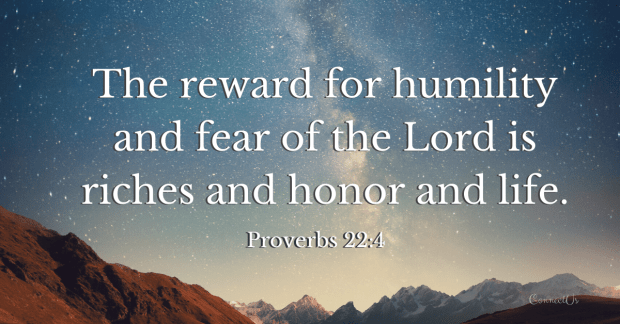
“Humility is the fear of the Lord; it’s wages are riches and honor in life.” Proverbs 22:4
Proverbs gives us a deeper look into the biblical meaning of humility as we are given a direct exclamation. “Humility is a fear of the Lord,” provides an precise definition. Not only does being humble consist of trust in God and following his will, but furthermore fearing the consequences of neglecting His Commands of truth, love, work ethic, mercy, and beyond. Humility is recognizing the magnificent power of God and the potential retribution He will Condemn upon us If we do not aim our purposes toward righteousness.
The Webster dictionary simply defines humility as “ freedom from pride or arrogance: The quality or state of being humble.” This work at three senses of which humility is defined:
1. Not proud or haughty: Not arrogant or assertive.
2. Reflecting, expressing, or offered in the spirit of deference or submission; a humble apology.
3. Ranking low in hierarchy or scale; not costly or luxurious.
The importance Of Humility
The importance of humility is directly related to deadly consequences of pride. Pride separates us from God as we do not acknowledge or appreciate the eternal sovereignty of our Lord. Therefore, the importance of humility is seen in a deep gratitude way home and proper recognition of God’s divinity and love for us. Humility is important is also found in recognizing our flawed nature as humans on earth for our susceptibility to sin if not vigilant against temptation. “Be sober minded; be watchful. Your adversary the devil prowls around like a roaring lion, seeking someone to devour.” (1Peter 5:8)
Humility is frequently mentioned in scripture as it relates to our salvation in Christ. Here is a summary of the significance are you humble in our relationship with God:
1. To enter God‘s presence we must come humbly to the throne.
2. God says the meek shall inherit the earth.
3. The proud or cast down and will be humbled.
4. When we are humbled or even when we suffer, we need to remember we will ultimately reign with Christ.
5. Jesus even humbled Himself, Therefore we should also have the mind of humility.
Humility In The Bible
Do you nothing out of selfish ambition or vain conceit. Rather, and humility value others as yourselves, not looking to our own interests but each of you to the interest of others. In your relationships with one another,Have the same mindset as Christ. Who, being in very nature God, did not consider equality with God something to be used to his own advantage. Rather He made himself nothing by taking the very nature of the servant, being made in human likeness. And being found in appearance as a man, he humbled himself to becoming obedient to death even death on the cross. Therefore God exalted Him to the highest place and gave him the name that is above every name by taking the very nature of the servant, and human likeness. And being found in appearance as a man, he humbled himself to becoming obedient to death even death on the cross. Therefore God exalted him to the highest place and gave him the name that is above every name, that the of name Jesus every knee should bow, in heaven and on earth and under the earth, and every tongue acknowledge that Jesus Christ is Lord, to the glory of God the Father. (Philippians 2:3-11)
But he give us a more grace. That is why Scripture says: “ God opposes the proud but shows favor to the humble. ( James 4:6)
“For all those who exalt them selves will be humbled, and those who humble themselves will be exalted.“ (Luke 14:11)
“ humble yourselves, therefore, under God‘s mighty hand, that he may lift you up in due time.” (1 Peter 5:6)
“ therefore, as God‘s chosen people, holy and dearly loved, clothe yourselves with compassion, kindness, humility, gentleness and patience. Bear with each other and forgive one another if any of you have a grievance against someone. Forgive as the Lord for gave you. And over all these virtues put on love, which binds them together in perfect unity.” (Colossians 3:12-14)
“ when pride comes, then comes disgrace, but with humility comes wisdom“ (Proverbs 11:2)
“Before a downfall the heart is haughty, but humility comes before honor.“ (Proverbs 18:12)
“ if my people who are called by my name, will humble themselves and pray and seek my face and turn from their wicked ways, then I will hear from heaven, and I will forgive their sin and heal their land.“ (2 chronicles 7:14)
“You can have no greater sign of confirmed pride that when you think you are humble enough.”
William Law.
Wasatch Mountians In Utah

A Story Redeemed

A Story Redeemed
We all love a good story. But not everyone likes their own story. Many of us would not have written the story the way it appears on our life’s pages. Often we struggle with wanting a different story or someone else’s story. We’ve all looked at our lives and wanted to rip a few pages from the narrative.
But it’s difficult to understand a story if there are missing chapters and pages. Each chapter helps explain why characters are the way they are, and what brought them to this point. We can’t tear out a page or skip a chapter and still make sense of our story. But we can learn to embrace our story and trust God to keep writing our story into His.
The story of the Samaritan woman who met Jesus at the well didn’t like her story at all, Rather than gathering water in the cool of the morning or evening, she went in the heat if the day to avoid the other women who met at the well. She likely felt thrown away by her previous husbands, and ashamed that she wasn’t married to the man she was currently living with. She may have been the talk of the town. Hers was not a good story.
But Jesus came to change all that. It started with His question to herm “Will you give me a drink?” (John 4:7) And it ended with an astounding revelation, which Jesus had not spoken to another soul. “I, the one speaking to you – I am He.” (John 4:7) She dropped her water pot on the ground and ran into the to tell everyone about this new chapter in her story.
When we drop our water pots filled with anger, shame, condemnation, regret and bitterness, the Living Water cuts a trail in the dust and send us on a new course for life.
What’s your story? Whatever it is the pages you wish you could rip out of the narrative are the pages that matter. Every crossed-out word and every ripped-out page. You can change the ending of your story, just like the Samaritan woman, even if it feels like you’re trapped in a cheaper that had come to a dead stop.
Die To Yourself Without Losing Yourself
Self-sacrifice can be exhausting. It can be painful, difficult, and largely thankless. Moreover, no shortage of people stands ready to take advantage of our willingness to serve. Nonetheless, few messages are more consistent in the New Testament than believers being known for our sacrificial spirit. (Romans 12:10)
A picture intrinsic to our sacrifices reflects the nature of Christ. (John 13:34) In fact, in his letter to the Philippians, Paul exhorts us to “in humility count others more significant than yourselves.” (Philippians 2:3) How do we do this and not lose ourselves? In other words, in other words, is it possible to be self-obliterating?
Anchor Your Worth In God
First, in order to be confidently sacrificial, we must rest assuredly in our true value. Often times people are sacrificial in order to feel valuable – either internally (to themselves ) or externally (to the world and to God). But we can never do enough to fill the giant void that the craving for self-worth creates. While we may have moments when our sacrifice is emotionally rewarding, those moments are fleeting and insufficient. We will inevitably find ourselves empty and hurt.
On the other hand, if we allow God to shape and define our worth, we are free to empty ourselves without the fear of losing ourselves. My value comes not finally from what I bring to the table, but from the one who brought me there,
God has made us in His image, a gift unique to humankind thought-out all creation. (Genesis 1: 26-28) More than that, he has seen me – the very real, very selfish, sinful me. He’s even seen the me that I haven’t seen yet because He knows every single thought I will ever think and every action I will ever take. (Psalm 139:1-6)
My thoughts and actions habitually betray my lack of love and trust, and yet God willingly gave up that which He loved most so that I might be His, (John 3:16) – not just some certainty that I would be His and become a part of His family, a fellow heir with Christ. (Romand 8:16-27)
This is the place – the place of God’s own self-sacrifice – where I find my real value. And knowing that God grounds my salvation in His own heart to be self-sacrificial is the foundation for my own self-sacrifice.
Draw Your Energy From God
Second, we must know from where the energy to be held-sacrificing comes. Too often we strive for self-denial in our own strength. But trusting in ourselves to deny ourselves is an oxymoron. Self-sacrifice is line death. And doubly so when our sacrifice seems to be in vain.
While our own effort is vitally important it is empty without the catalyzing of the Holy Spirit. (Galatians 5:22-23) Counting others more significant than ourselves is an activity that starts with, is borne along by, and finds it’s fulfillment in the ministry of the Holy Spirit. Therefore, sacrifice which doesn’t start with Spirit-dependant prayer and trust should not be expected to yield spiritual satisfaction.
It is often when we find ourselves at the end of our own abilities that God’s grace in us superabounds. (Ephesians 3:14-21) So, let us not too quickly withdraw when we find ourselves gassed in the marathon of lifelong sacri, but rather redouble our efforts through God’s word and prayer. Through God’s perseverance, God’s grace may be made more apparent to the world and ourselves.
Sacrifice Yourself For God
Third, we need to understand our own heart when I comes to self-sacrifice. Too often our self-denial is little more than window dressing on our desire to please people or control them, we feel hurt. We may even blame God (which is always a sin)
What makes this even more complicated is that even rightly intended motivations are often wrongly prioritized. Wanting someone to be helped, get better, or feel more loved becomes the primary focus, not bringing honor to God, (Colossians3:17) And when motivations, even good ones, get top billing over the glory of God, we care setting ourselves up for the sort of disappointment that leads to weariness well-doing. (Galatians 6:9)
Set boundaries With God’s Help
Lastly, we have biblical grounds for proper boundaries. Not every relationship that requires self-sacrifice is in itself sustainable. If the relationship is with someone who makes a profession of faith, then they too are required to show love and respect our involvement. (Romans 16:17-18) That should not end our kind acts of self-denial, but rather refocus them in areas where fruit seems to be more forthcoming through the leading of the spirit.
It also doesn’t necessarily mean the death of those relationships. Paul, for example, was frustrated with the lack of maturity in John and refused to let him go on one of his missionary journeys (Acts 15:36-40) But later Paul counted his as invaluable to his ministry. (2 Timothy 4:11)
It is a little trickier when exercising appropriate boundaries with non-believers. On one hand, we are told to go the extra mile – so that the aroma of God may be perceived in us. (Matthew 5:38-42) We reflect something almost unspeakably beautiful in the grace, mercy, and love of Christ as we lay down our lives not just for friends and family, but also for those who would consider themselves our enemies. ( Romans 5:8-10)
While we are to be poured out, we are not to be unwisely used up. Times comes when we must cut ourselves off from these outside the body of Christ. (2 Corinthians 6:14+18; Titus 3:20; 2 Timothy 3:1-9) The key seems to be sanctification and glory. If the relationship is not helping in our own identification and bringing glory to Christ, then it’s time to reevaluate.
That said, do not be hasty in boundary-making. It is easy to get hurt, scared, or offended and decide that a relationship must come to an end. Sometimes our sanctification and God’s glory take a long, tortuous route. Let the Holy Spirit guide you through Bible-soaked prayer over this relationship. Making a boundary too quickly can be just as detrimental as not making one at all.
Self-sacrifice is painful, problematic, and peculiar, but it is part and parcel to the believer’s life. Understanding where our value, energy, motivation, and end boundaries come from helps us to ground our giving in the grace of God, which is the one place where we will never find ourselves completely empty.
Die To Yourself
If You Believe
Believe And You Will Receive
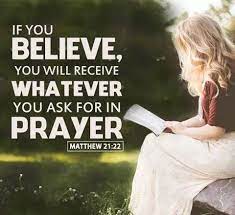
“Therefore I say unto you, What things soever you desire when you pray, believe that you receive them, and you shall have them. Mark 11:24
Some of the most thought-provoking Biblical studies are based on the concept of believing we receive, from the passage found in Mark 11:24. Believing to receive from God is something that the Master Himself taught Hid disciples about. And not only did He teach it in this section of Scripture, but He also taught it throughout His earthly ministry.
Some are those who would view this portion of Scripture in Mark 11:22-24 as isolated teaching, and not suitable for building a doctrine upon. However, if we look closer, we can clearly see that this message was not isolated at all, but was taught at several crucial points in Jesus’s ministry.
In the early part of His ministry, when Jesus was training Hid disciples His disciples asked Him to teach them how to have more faith.
Like 17: 5-6 says, “And the apostles said unto the Lord, increase our faith. And the Lord said, if you had faith as a grain of a mustard seed, you might say unto the mulberry tree. Be uprooted and be planted in the sea; and it will obey you.
What’s the principle He is teaching? The essence of His statement, to break it down to its simplest form, is that if you had faith, you would say, and it would obey. This undergirds the notion that the release of faith has something to do with speaking words of faith, or speaking faith-filled words. And this was spoken by the Lord while He was raising up His disciples. Jesus taught faith, and He illustrated it in His teachings and demonstrated how it worked. He was and is the authority on how faith works. the Bible say that He is both the author and finisher or perfectly, of our faith.
Jesus taught this principle of faith again on another occasion, after his had sent forth His disciples two by two to heal the sick, and to cast of demons and raise the dead. They were initially very successful in their endeavors, but then, at a certain place mentioned in the ninth chapter of Mark, came upon an unclean spirit that would not come out when they commanded it to. Jesus ultimately resolved the situation by casting out the unclean spirit, and the disciples room their question to Him.
“Then came the disciples to Jesus apart, and said, Why could not we cast Him out? And Jesus said to them, because of your unbelief: for verily I say if you have faith of a mustard seed, you shall say to this mountain, Move from here to there; and it will move. Nothing will be impossible for you, Matthew 17: 19-20
He told them it was their unbelief that had hindered them. Jesus had evidently not been told the cardinal rule that you should never suggest that someone’s faith may be at fault when they don’t get results. No one has told Him that it might hurt their feelings of make them feel bad. He just came right out and said it, “ Because of your unbelief…”
Because of your unbelief. You know, if you stop and think about it, that’s another way of saying that the devil would not come out because you didn’t believe he would. You could say, and probably be accurate, that the disciples made a command of faith they didn’t believe would come to pass. The incident took place in the middle of Jesus’s ministry. So then Jesus taught this principle of faith from the start to the finish of His earthly ministry.
Hebrews 10:36 says “Patient endurance is what you need now so that you will continue to do God’s will. Then you will receive all that He promised.”
You see, there is a patience factor in the faith process. You can believe in your heart that you’re healed, even with your body and head telling you that your not. So, we must indeed that faith is of the heart, not the head. And we must believe we receive when we pray
Choose Life

The Power Of The Tongue
The Power Of The Tongue
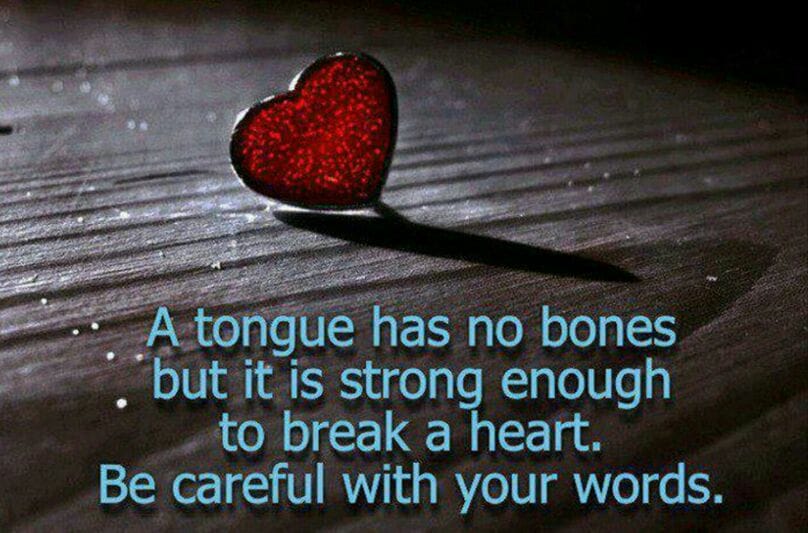
One of the most important things we can discuss as believers are the power of the tongue, or that is the power of our words. Man was made in the image of God. A comparison of men and animals will reveal numerous similarities in anatomy and even in the ability to exhibit emotions. But there is one striking difference between men and animals. Men were given the ability to form words and speak them into the natural world. No animal can to that.
God has communicated with men by the way of words since the beginning. But we also understand that God used His words to create all things. God said and it was so, the book of Genesis tells us.
Genesis 1:3: “And God said, “Let there blight: and there was light.“
Genesis 1:6: And God said, “Let there be a firmament amid the waters, and let it divide the waters from the waters.”
Genesis 1:9: And God said, “Let the waters under the heaven be gathered together unto one place, and let the dry land appear: and it was so.”
Let us understand the power of the tongue and the ability to speak. Is a God-like characteristic that men are endowed with by the Creator. It’s the thing that makes us be in His image and His likeness and separates us from the animal kingdom. Man is a spirit who has a soul and lives in a body. Man was made a speaking spirit like unto God Himself.
Proverbs 18:21: “Life and Death are in the power of the tongue: and they that love it shall eat the fruit thereof.”
We can easily see four things in the scripture:
Our words have power of some kind. We can either speak death or life. Our words produce fruit. And we are required to eat that fruit of our words whether good or bad.
Proverbs 10:19 “In the multitude of words there wanteth not sin: but he refrains his lips is wise.
Translation: when we take too much we sin. In the multitude of words, there is no lack of sin. Most sin, actually all sin, begins with words.
Matthew 15:18: “But those things with proceed out of the mouth come forth from the heart; and the defile a man.
What things proceed out of the mouth? Words come out of the mouth. Words are the things that defile a man. Does it matter what we say? Yes, very much so.
James 1:26: “If any man among you seem to be religious, and bridle not your tongue, but deceived his own heart, this man’s religion is vain.
James 3:2 “For in many things we offend all. If any man offend not in word, the same is a perfect man, and also to bridle the whole body
James 3:3 “Behold, we put bits in the horse’s mouths that they may obey us; and we turn about their whole body.”
James 3:4: “Behold also the ships which though they are so great, and are driven of fierce winds, yet are they turned about with a very small help, which so ever the governor listen.
There are two points that we can immediately see from these scriptures. The first is that if we don’t stumble in what we say we are mature, and we are able to bridle the whole body, which is a picture represents our whole life. A mature person, one who is grown up in Christ, had brought his tongue under control.
The second point is that our words determine the direction of our life. Out tongue is like the bit in the horse’s mouth and like the rudder that steers the ship.
The captain of a ship must change the direction of the rudder to change the direction of the ship. In the same way we must change the direction of our words to change our direction.. Out life follows our words. So what does this say to us? We need to guard our lips against saying wrong things. And we need to put the right words in our mouth at all times.
James 3:8: “But the tongue can no man tame: it is an unruly evil, full of deadly poison.”
If the tongue cannot be tamed then why are we discussing the bridling of the tongue? God will give us the ability to take our tongues by His grace, but we are not able to tame someone else’s tongue. The taming of the tongue is a personal matter and must be done by a quality decision made by an individual. The tongue can be tamed, but only by personal decision and commitment.
Example: A woman who is severely depressed asked me. Why is my life so awful “nothing ever turns out good for me” Being negative all the time results in negative situations and negative thoughts. How can a person be happy if they speak negatively over their lives all the time? It’s the power of her words.
 From Pity to Praise