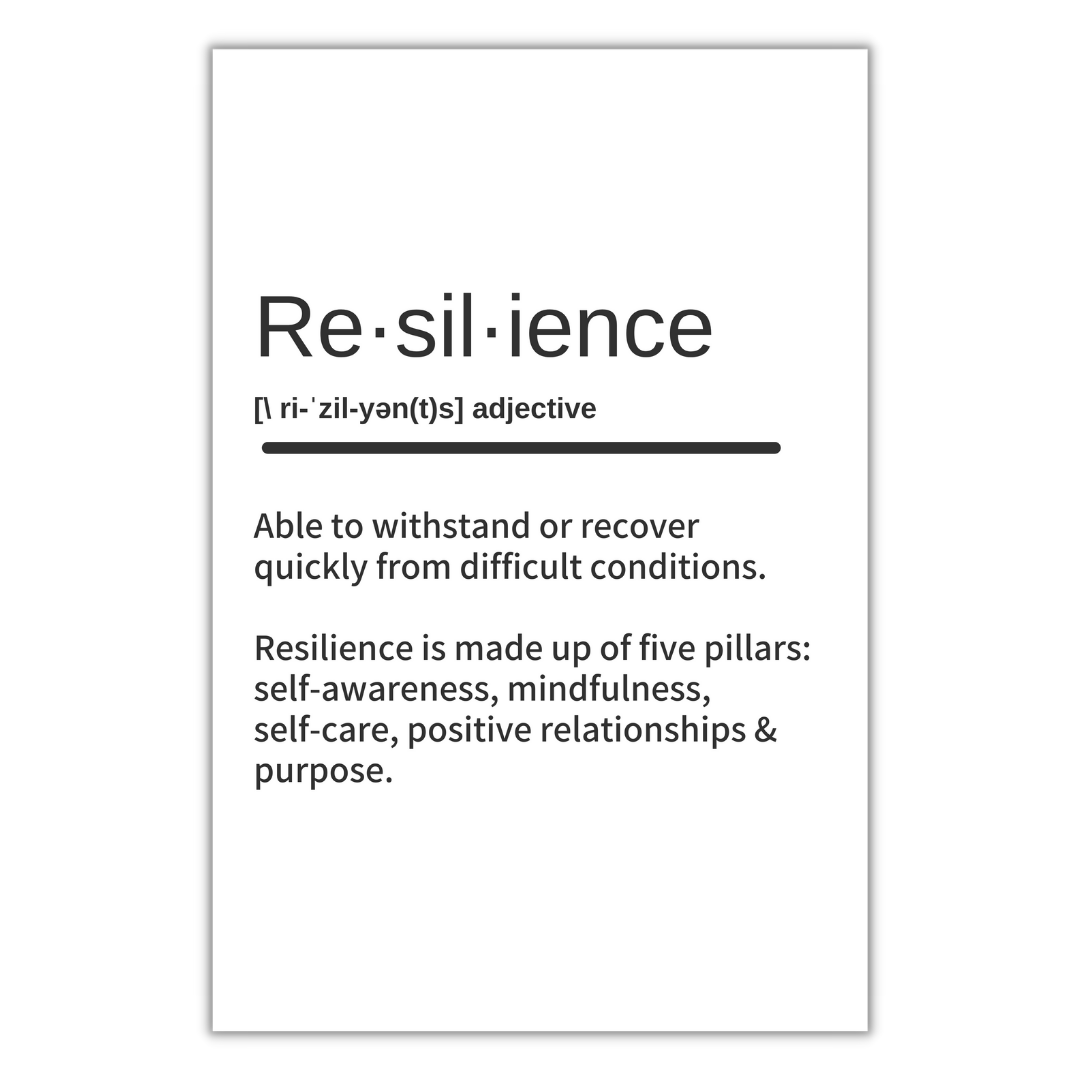
What Is resilience? It is what gives people the physiological strength to cope with stress and hardship. It is the mental reservoir of strength that people are able to call in in times of need to carry them through without falling apart. Psychologicogists believe that resilient individuals are better able to handle adversity and rebuild their lives after a struggle.
Dealing with change or loss is an inevitable part of life. At some point everyone experiences varying degrees of setbacks. Some of these challenges might be relatively minor with others are disastrous on a much larger scale,
How we deal with these problems can play a significant role in not only the outcome but also the long-term psychological consequences. The good news is that there are things we can do to become more resilient.
People who remain calm in the face of disaster have what is called resilience. Resilient people are able to utilize their skills and strengths to cope and recover from problems and challenges.
These problems may include:
- Job loss
- Financial problems
- Illness
- Natural disasters
- Medical emergencies
- Divorce
- Death of loved ones
Instead of falling into despair or hiding from problems with unhealthy coping strategies, resilient people face life’s difficulties head on.
This does not mean that they experience less distress, grief, or anxiety than other people do. It means that they use healthy coping skills to handle such difficulties in ways that foster strength and growth. In many cases, they may emerge even stronger than they were before.
Have you ever heard the saying “What doesn’t kill you makes you stronger?” Resilient people more than likely believe this is true.
Those who lack this resistance may instead become overwhelmed by such experiences. They may dwell on problems and use unhelpful coping mechanisms to deal with life’s challenges.
Disappointment or failure might drive them to unhealthy, destructive, or even dangerous behaviors. These individuals are slower to recover from setbacks and may experience more psychological distress as a result.
What Resilience Provides
Resilience does not eliminate stress or erase life’s difficulties. People who possess this quality don’t see life through rose-colored lenses; they understand that setbacks happen and that sometimes life is hard and painful. They still experience the negative emotions that come after a tragedy, but their mental outlook allows them to work through these feeling and recover.
Believe me when I tell you for the first 37 years of my life I was far from being resilient. I had to teach myself.
Resilience gives people the strength to tackle problems head-on and overcome adversity, and move on with their lives.
In the wake of the Hurricanes, and the 9/11 attack many people demonstrated the behaviors that show resilience and they experienced few symptoms of depression as a result.
Even in the face of events that seem utterly unimaginable, resilience allows people to marshal the strength to not just survive but to prosper
Who Is Resilient, And Why?
Some people come by these abilities naturally with personality traits that help them remain unflappable in the face of a challenge. However, these behaviors are not just inborn traits found in a select few. Resilience is a result of the complex series of internal and external characteristics, including genetics, physical fitness, mental health, and environment.
Social support is another critical variable that contributed to resilience. Mentally strong people tend to have the support of family and friends who help lift them up in times of trouble.
To become resilient you have to change your perspective on life. Be able to face your fears and push through life’s most difficult times.
Here are a few characteristics that resilient people show:
- They hold positive views of themselves and their abilities
- They possess the capacity to make realistic plans and stick to them.
- They have an internal focus on control.
- They are good communicators
- They view themselves as fighters rather than victims
- They have emotional intelligence and learn how to manga their emotions effectively.
How To Build Resilience
Fortunately, resilience is something that you can build both in yourself and in your children. There are distinct steps that you can take to become more resilient.
1. Reframe Your Thoughts
Resilient people are able to look at negative situations realistically, but in a way that doesn’t center on blame or brooding over what cannot be changed. Instead of viewing adversity as insurmountable, reframe your thoughts to look for small ways that you can tackle the problems and make changes that will help.
Focusing on the positive things you can do will help you get out of a negative mindset.
You can also use this approach to help children learn how to better cope with challenges. Encourage them to think about challenges in a more positive, hopeful ways. This way, instead of getting stuck in a vicious loop of negative emotions, your child can learn to see these events as opportunities to challenge themselves and develop ow skills.
2. Seek Support
Talking about the difficulties you are coping with doesn’t make them go away, but sharing with a supportive friend or loved one can make you feel like you have someone in your corner, which could help you build your resilience. Discussing tings with other people can also help you better manage the challenges you’re dealing with.
I have a resilience partner – it’s my son. I talk to him everyday and we discuss things that are going on I. Our lives. And bounce things off each other when we have challenges to deal with.
3. Focus On What You Can Control
This is a huge one for some. Their minds automatically go to the things they cannot control. When faced with a crisis or problem, it can beat to get overwhelmed by things that feel far beyond your control. Instead of wishing there is someway you could go back and change things, try focusing only on the things you can directly impact. Encourage your child to develop this skill by talking about their situation and helping them make a plan for how they can react.
Even when the situation seems dire, taking realistic steps can be,p improve it. No matter how small theses steps may be, they can improve you or your child’s sense of control and resilience.
4. Manage Stress
Building healthy stress management habits is a effective way to increase your overall resilience. These habits could include behaviors that help your overall health, like getting enough sleep, and exercise, as well as specific actions you can take during moments of stress, like:
- Constructive restructuring
- Breathing exercises
- Expressive writing
- Learning biofeedback techniques
- Practicing effective communication
- Problem solving
- Muscle relaxation
With practice these skills can be learned and mastered by adults and children alike. Eventually, you or your child will feel prepared to face stressful situations and be resilient enough to bounce back quickly. If you need he,o learning to keep stress levels under control consider talking to a cognitive therapist.