
August-14-2022

Beauty in your life- change your thoughts for a positive outlook
August-14-2022
More often than not, our sense of what is available to us, and our belief about how much provision we have, is framed around our perspective. We can either focus our attention on what we lack, or offer gratitude for what we still have available to us.
By reminding ourselves of what God has done in our past, we are better positioned to identify with what we have in our present, and how God will always provide us with what we need in the future,
We see this specifically in Numbers 1:1-4, as God instructs the Israelites to take a detailed census if all the people that had escaped out of Egypt. I can imagine how Moses walked around examine every face, counting every head, he would have been overwhelmed by the magnitude of deliverance that God provided to His people.
God wanted Moses to do an audit and inventory of God’s past blessings, and how those blessings we’re literally standing before him.
This census would be important for Moses to remember, as he attempted to transition the Israelites out of a wilderness mindset and into the promised land. God had prepared for them. There were unprecedented challenges, and circumstances that would require unbelievable levels of trust. As Moses scanned the crowd of people, God wanted to encourage Moses, “If I did it before, I can do it again.”
Of course, there were practical implications for lining the people up, as they would have to go to battle. Knowing who is who, and who can do what, would be a great advantage to them.
But there were also spiritual implications for God’s instruction. Rather that Moses and the Israelites crunching the number of obstacles and adversities they were going to have to overcome. God wanted Moses to be counting heads, as He beckoned them to take the ground and territory He had prepared for them.
It is important today that we make conscious efforts to remember God’s past victories and deliverance in our lives. And resolve to keep His faithfulness front and center, while inviting the Holy Spirit to build our faith as we set out on the next challenge and obstacle we may face. By magnifying our provisions, we can mute our problems.
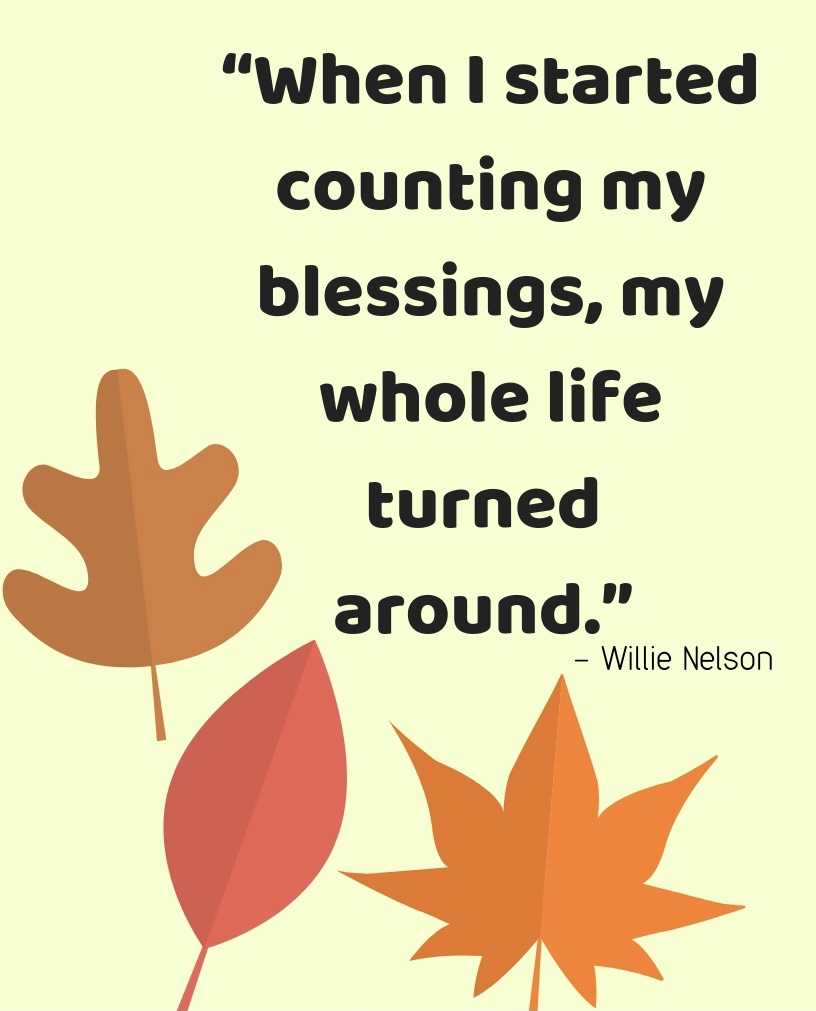
Today, take a moment to do an inventory, audit and census of your life. Count your many blessings; the people in your life, your provision, and all the way God protects you and your family.
Praise the One who blesses you, so that you can go on and be a blessing to others.
Three Thought Patterns To Correct
How do you see yourself? Pause for a minute and think about it. What thoughts have you had about yourself today?
So many of us find ourselves basing our self-worth on how others see us and our accomplishments, feeling shame from our past, defining our value based on our looks, or setting unrealistic standards for ourselves.
But, it shouldn’t be this way. If only we could see ourselves as God sees us.
There are three thought patterns that can act as roadblocks to our thinking and living the way God desires for us. These destructive thought patterns were identified by a psychologist named Albert Ellis in 1873. Contrasting these ideas with what 1 Peter 1 tells us about how we can prepare our minds for action by adjusting our thinking to Scripture is the foundation of being holy in all we do (1 Peter 1:15).
Destructive Thought #1
“I must be loved or approved by virtually every person in my life.“
If we are living to make sure that others love us, we give them permission to evaluate us based on what we do – we give people the power to determine our self-worth.
When we leave home, many of us have “internalized parents” who are now voices in our head that tell us what we should do, what is important, and how we should do things. Have you ever been in a situation where you have to make a decision and you can hear your parents saying “That’s not responsible” or “I told you that would happen?”
Many of us are so concerned about being loved that we give the opposite sex permission to evaluate our self-worth. As adolescents, we might sacrifice our own identity to get attention and acceptance, even to the extent to pretending not to be bright or kind because we think the opposite sex won’t be impressed. Our we might deny ourselves food to lose weight to try and fit in with body images portrayed on TV or in magazines. Even as adults, we buy into the beauty myth, thinking that our appearance is our number one asset, and that it will bring us acceptance and approval from a spouse. Eating disorders about – anorexia, bulimia, and binge eating to name a few.
If we are living to make sure that others love us, we give people power to determine our self-worth.
We may even feel pressure from our church community to measure ourselves according to certain stereotypes – women are supposed to be nurturing, quiet and gentle, raise well- behaved children, and maybe even do crafts. And men should be competent spiritual leaders, provide for and protect their families, to be a manly man plus be in touch with their sensitive side.
As a woman I’ve never been quiet or gentle, I work just as hard as any man. I enjoy hunting, fishing, and love to barbecue my own food. Many find themselves negating the interests or gifts God has given us.
Destructive Thought #2
My past history is an all – Important determiner of my present behavior: because something once strongly affected my life, it should definitely continue to do so.
You may feel controlled by a secret. You may have had some happen to you that you have revealed to no one or perhaps to only a few people. Perhaps you feel shame about certain aspects of the family you grew up in, or maybe you have sinful habits you feel embarrassed about, such as gossip, lust, pornography, or a critical spirit. Maybe you are ashamed of some things you’ve done in the past. Or something that has been done to you.
If we don’t deal with issues I our past, they will continue to contribute us in some way in our present. But they don’t have to. We can deal with past sin, our family histories, as well as past violations to our bodies and minds.
It is important to identify whether our feelings in these situations are destructive shame or healthy convictions. Healthy conviction always separates our identity from our behavior. Shame links these two, so wring behavior taints our image of ourselves. Healthy conviction alerts us to the fact that we have done something that goes against our internalized values.
Biblical conviction is a God-given emotion that “red flags” a behavior and tells us it is an act of rebellion against God. It spurs us to confess our sin and experience the love and forgiveness God has provided for us through Jesus. 1 John 1:9 tells us, “If we confess our sins, God is faithful and just to forgive us our sins and cleanses us from all unrighteousness.”
Biblical conviction is a God-given emotion that ‘red flags’ a behavior and tells us it is an act of rebellion against God. It is possible to silence God’s conviction by ignoring it.
Any feelings of guilt that come after we’ve confessed our sin are not from God, but may be from ourselves or from the evil one. We still have to live with the consequences of our sin, but God does not punish us for our sin, God disciplines us to get us back on track so we can continue to experience God’s love and plan for our lives. Our struggles can bring us closer to God and heighten our faith as we experience His faithfulness in forgiving us and drawing us closer to Him (Hebrews 12:4-13).
Destructive Thought #3
I should be thoroughly competent, adequate, and successful in all possible respects in order to consider myself worthwhile.
Ten percent of people will struggle with some form of clinical depression in their lifetime. Depression can be biological or situational, and often can be the result of both. However, one of the leading causes of depression is setting your standards so high that you cannot possibly live up to them. You are constantly striving for a standard that is unattainable, but you wear yourself out trying anyway. One of the messages that can play over and over in our minds is that we have to “be perfect.”
We often fall into the trap of feeling responsible not just for ourselves, but the lives of others, whether our co-workers, friend, children, or spouses. We take on the weight of the world.
It’s often difficult for us to separate our identity from our behavior. We feel if we don’t measure up, it reflects on who we are as individuals.
God’s grace is a gift, in and through His grace, God heals us and brings us freedom to live a new life. Sometimes grace does not come easily to us. We have to work on changing our perspective and our thoughts. We need to humble ourselves to accept God’s grace and extend grace to ourselves when we don’t measure up, knowing that God already sees us as the perfect reflections of Christ that we are, (1 John 3:1-3).
Once we extend grace to ourselves we will be able to extend grace to those around us. We need to cease trying to live up to these distorted beliefs and learn to line our thinking up with the way God views us,
Instead of being so focused on ourselves and our fail, we will be able to extend a helping hand to those around us and be a vessel for God’s grace to those who we come in contact with wherever we go.
August-13-2022
Breaking free from a. “man fearing” spirit. Learning to live for the Lord because you love Him.
If imagination is the biggest nation in the world today, then intimidation is the second largest. The dictionary defines intimidation as influence or force by fear, verbal or non- verbal, direct or implied. Too many people allow others to control and manipulate them into doing and saying things that they would not normally do. Look at Peter. In a vision the Lord told him not to treat anyone as “unclean” (Act 10). God told him to go to Cornelius’s house and not to worry about what others may say. But in Galatians 2, Pail wrote that Peter was at Antioch, eating and fellowshipping with Gentile believers until people from “church headquarters” came down to see what was going on. When Peter heard they were coming he “separated himself “ from the Gentiles believers. Paul said, in today’s terms, that he “got in his face.” Why? Because Peter had fallen victim to the fear of intimidation.
We all have different opinions and beliefs about many different things. We live our lives according to the moral compass put in us by God called a conscience. The compass points us in the right direction, unless it is influenced by an outside force. The same is true in our lives, no matter how long we’ve been a Christian. There is however a difference in not wanting to offend a “weaker brother “ by not in-gauging in what we would normally do without a problem to our own spirit ie drinking coffee would offered them, so in there presents a changing of who and what we are in our core beliefs to please those who only want to change us to conform to their own convictions. Philippians 2:13 says “work our your own salvation with fear and trembling.” There is only one way to be saved, but once that salvation is come into your life, it’s now your responsible to “work it out.” We all have our own personal convictions. Somethings I’ve done or haven’t done were because of a “man fearing spirit “ or if you will intimidation, intimidation leads to hypocrisy. The living and doing of one thing for certain people, and doing the opposite for others.
God hates hypocrisy! The greater sources of intimidation come from the world and its ungodly system. Such as advertisement making people feel that they will be accepted if they don’t wear this, or eat that, or have this body shape, or drive these cars. Socially they must be in the “in crowd.”
Spiritually the word tells us “Everyone goes to heaven, all religions lead to God which intimidates Christians into not standing up for what it right and for truth. All virtue have been cast off by the world we live in, but one- tolerance. Today if we as believers speak out in the free market place of ideas conserving any issue we are the ones branded as “closed-minded.” We are told that Spiritual matters should stay in the four walks of the church. The world has pushed us in a corner through fear. It’s time to stand up. To stand up for truth, righteousness, and live a life that is free from intimidation. Are you living two lives? One you show on Sunday and the other on Monday through Saturday. Do you feel the need to impress people you don’t like, with money you don’t have? Too many people are bound with a “man-fearing spirit, and it’s time to be set free in Jesus!

August-12-2022
August-12-2022
We’ve all had situations where our emotions have gotten the best of us, whether we were sitting in traffic, dealing with a difficult co-worker and arguing with someone. Often it’s because we went to far down the emotional train to realize what we said. We all say thing we don’t mean and that we later regret, and that we were on a emotional roller coaster of feelings. If you haven’t learned way to master your emotions it happens more often than not.
Emotions are complex states involving both physical and psychological changes that influence our mood and behavior. An emotion is sparked by a particular event or object, which causes a physiological response in our body – both happiness and sadness can makes us cry, fear, and makes or heart race, anger makes us feel hot. Then we change our behavior in accordance with the emotion. We might hug someone, run away or yell and fight. The behavior stage is the point at which emotional mastery plays a role. When you know how to master your emotions, you can cat h them before they affect your behavior.
Beyond this definition there are many theories of what causes emotion and why we respond to certain experiences the way we do. But, one things for sure, human emotion is a powerful force to be reckoned with.
Concerning emotional mastering the concept wasn’t introducted until the 1960’s. Researchers learned that emotions are influenced by outer as well as inner stimuli and demonstrates that thoughts, peer influence and circumstance shape emotions.
So, what is Emotional Mastery Important?
Feelings and emotional mastery play a role in our subjective experience of the world – that is the way we interpret the things that happen to us, as opposed to objective experience, which is the facts of what actually happened. This is why psychologists recognize that the answer to “What is an emotion?” Includes the ability to influence the way we think and act.
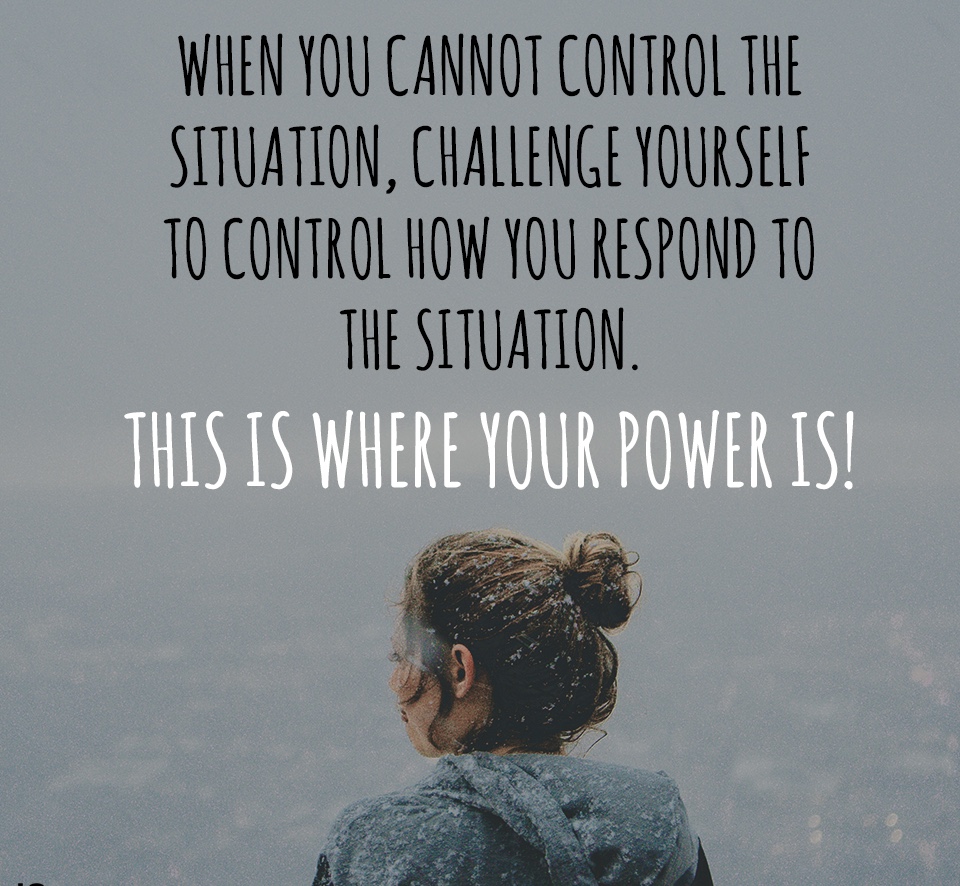
We cannot change our objective experience. Things happen every day that are out of our control. But we can change our subjective experience; the way we assign these things . That is emotional mastery, and it has a massive impact on our interpersonal relationships, self-worth, communication skills, and overall fulfillment in life.
Emotions Unify us across cultural lines.
There are six basic emotions in all cultures: happiness, sadness, fear, anger, surprise and disgust. We all experience these feelings, although there are cultural differences regarding what’s an appropriate display of emotion.
Emotions Govern Our Sense Of Well-Being
Since emotions are a product of our experiences and how we perceive those experiences, we can cultivate positive emotions by focusing on them. There are 10 “power emotions” that cultivate emotional mastery by creating a base of positive effect. When we incorporate even small doses of gratitude, passion, love, hunger, curiosity, confidence, flexibility, cheerfulness, vitality and a sense of contribution, we set the stage for feeling good about ourselves.
Emotional Mastery Supports Healthy Relationships
When we are able to demonstrate emotions that are appropriate to the situation, we’re able to nurture our relationships. When we don’t know how to master our emotions, the opposite occurs: We might fly of the handle at minor annoyances or react with anger when sadness is a more appropriate response. Our emotional response affects those around us, which shapes our relationships for better or worse.
The best time to handle an emotion is when we first begin to feel and experience it fully. That way it won’t keep popping up time after time. By following six steps we can learn to master our emotions and take better care of our life.
Identify What You’re Really Feeling
The first in learning how to master your emotions is by identifying what your feelings are. To take that step toward emotional mastery, ask yourself:
Acknowledge And Appreciate Your Emotions, Knowing They Support You
Emotional mastery does not mean shutting down or denying your feelings. Instead, learning how to master your emotions means appreciating them as part of yourself.
Get Curious About The Message This Emotion Suggest To You
Emotional mastery means approaching your feeling with a sense of curiosity. Your feelings will teach you a lot about yourself if you let them. Getting curious can help you:
Get Confident
The quickest and most powerful route to emotional mastery over any feeling is to remember a time when you felt a similar emotion and handle it successfully. Since you managed the emotion in the past, surely you can handle it today.
Get Certain You Can Handle This Not Only Today, But Also In The Future.
To master your emotions, build confidence by rehearsing handling situations where this emotion might come up in the future. See, hear, and feel yourself handling the situation. This is the equivalent of lifting emotional weights, so you’ll build the muscle you need to handle your feelings successfully.
Get Excited And Take Action
Now that you have learned how to master your emotions, it’s time to get excited about the fact that you can:
Emotional mastery is one of the most powerful skills you can learn to create which is authentic and fulfilling life.
August-11-2022

 From Pity to Praise